How to Use a Japanese Toilet: Bidet Seat Buttons, Flushing and the Call Button
Japanese toilets are famously clean and comfortable, and also famously full of buttons. Most have an electronic bidet toilet seat (warm-water washing seat), sold under names such as TOTO's WASHLET. The buttons can be confusing the first time, and in public toilets there is one button you really don't want to press by mistake. This guide explains the common symbols, how to flush, what can go down the toilet, and how to use the traditional squat toilet you may still meet at some stations.
This page may contain affiliate links. If you buy through them, we may earn a commission at no extra cost to you.
- The standard button symbols, and what each one does
- Flush button or call button? How to tell them apart
- Toilet paper goes in the toilet
- Squat toilets, and the "privacy" sound button
The buttons on a bidet seat
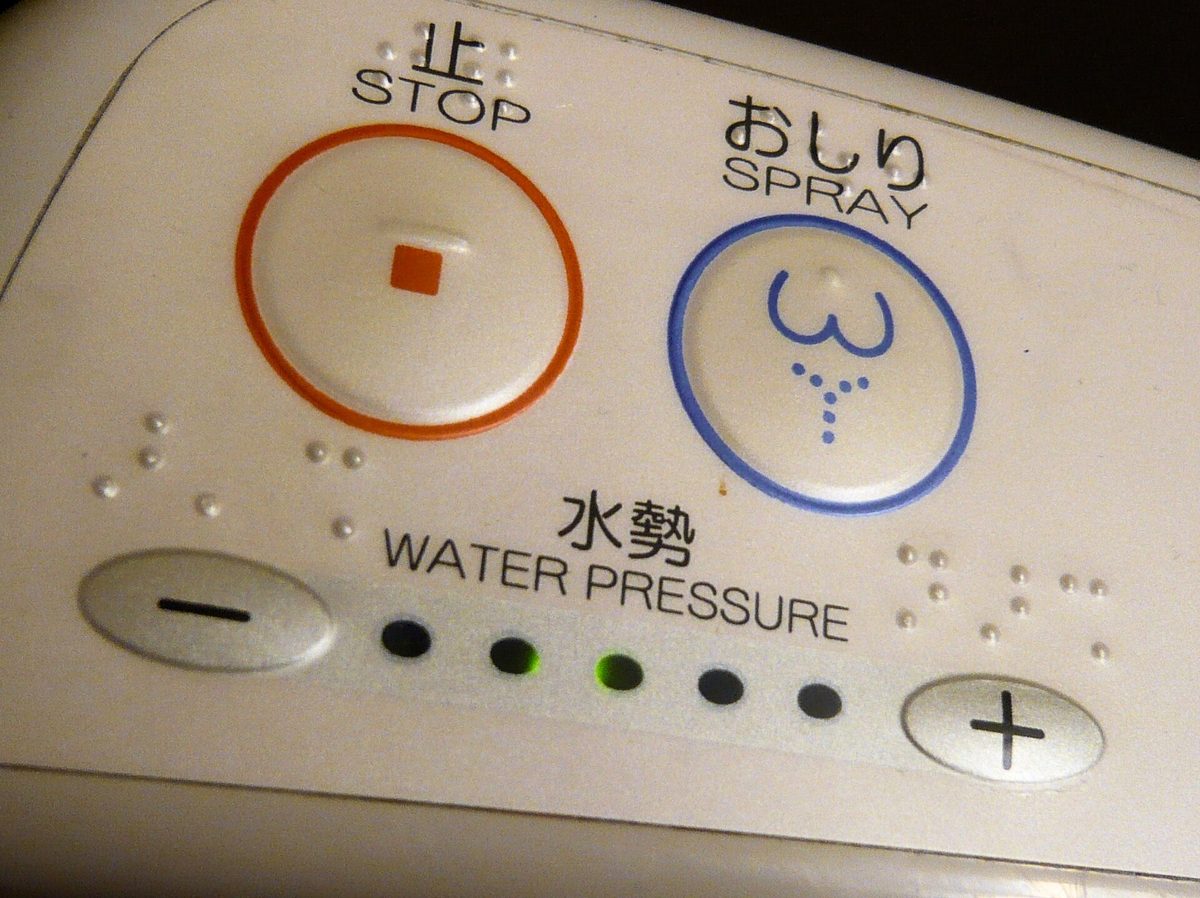
In 2017, the Japan Sanitary Equipment Industry Association published eight standard pictograms for the main bidet seat controls: lid open/close, seat open/close, full flush, light flush, rear washing, front washing (bidet), dryer and stop, used from April 1, 2017. Most of these were later added to Japanese Industrial Standards (JIS S 0103) and the international standard ISO 7000. So even with different brands, the symbols usually look alike.
TOTO's English guide describes the main functions: rear cleansing washes the rear; stop stops the operation; front cleansing serves as a bidet for women; the warm air dryer dries you; flush and light flush flush the toilet. Many models also let you adjust water pressure, nozzle position and the seat temperature. Sit down before you press a washing button, and press Stop when you're done.
Flushing
Japan's Consumer Hotline for Tourists says there are several ways to flush: pushing a lever, pressing a button, or holding your hand over a sensor on the wall or on the back of the toilet. Many toilets have a large (大, dai) and small (小, sho) flush. Some flush automatically when you stand up.
Flush button or call button?
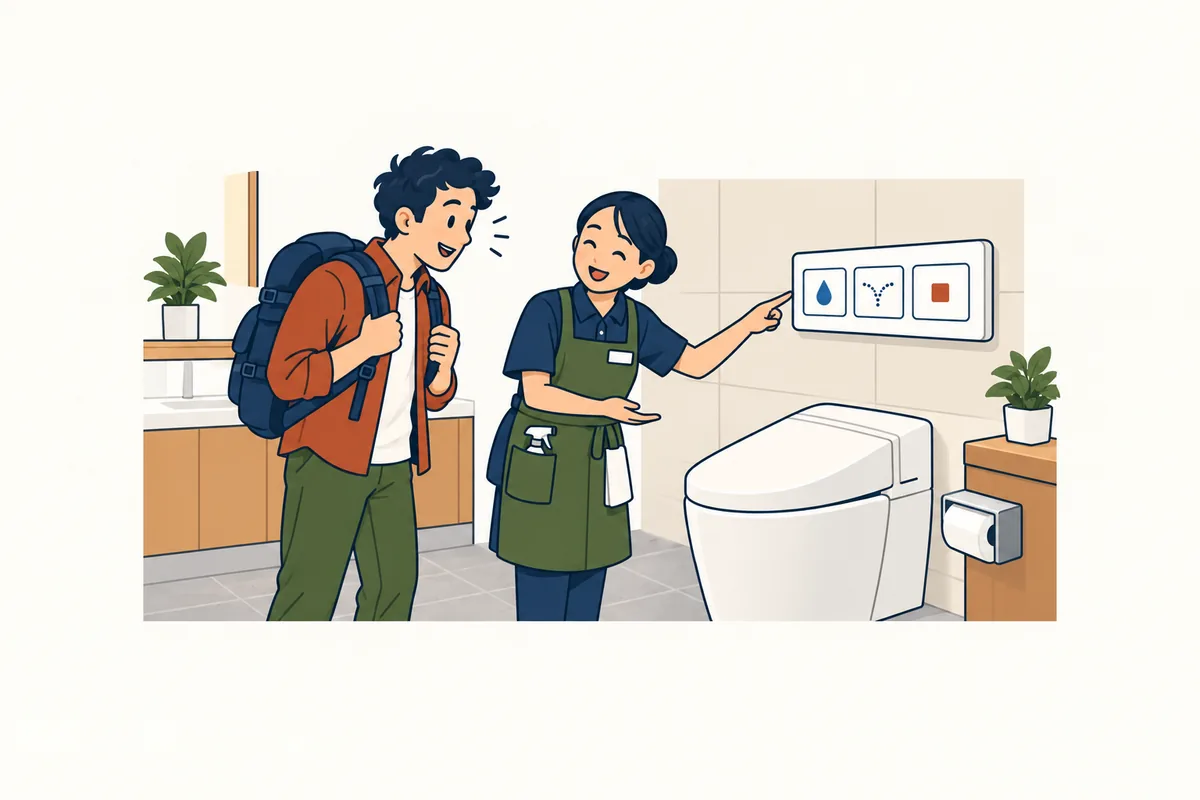
The industry association explains that a common layout for public toilets was created because people couldn't find how to flush, or pressed the call button thinking it was the flush. Under the Japanese standard JIS S 0026 (2007), the paper holder, flush button and call button are grouped on one wall: the flush button sits above the paper holder and is round, in a neutral or cool color; the call button is at the same height further back, in a different shape such as a square or triangle, preferably in a warm color. JNTO notes that some toilets also have an emergency button or cord near the floor, in case someone falls. If you press the call button by accident, don't worry; just tell the staff who respond.
What goes in the toilet
Japan's Consumer Hotline for Tourists says toilet paper dissolves in water and should be flushed down the toilet, not put in the trash. The Tokyo Metropolitan Sewerage Bureau adds that nothing other than waste and toilet paper should be flushed: no diapers, tissues that don't dissolve in water, plastic and so on. Use the small bin in the stall for sanitary products. Kyoto City (Kyoto), Fukuoka City (Fukuoka) and Sapporo (Hokkaido) have made multilingual stickers to explain this to visitors.
Squat toilets
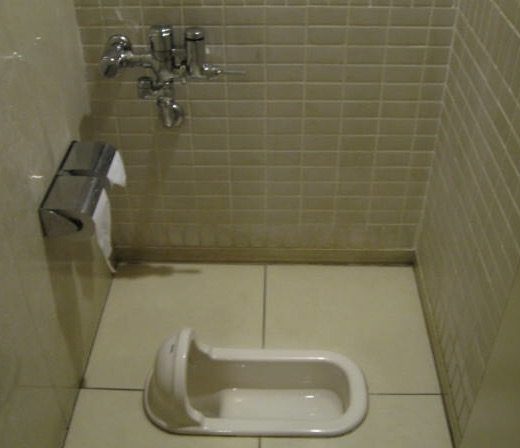
You may still find Japanese-style squat toilets at some stations and older buildings. The Tokyo Metropolitan Government's official guidebook says to face the hood of the toilet (the raised, rounded end) when you squat. Stand with one foot on each side, squat low, and keep your clothes clear. If you'd rather not, check the next stall: public toilets often have both Western and squat styles, and the door may show which.
The privacy sound button
Some stalls have a button or sensor that plays the sound of flowing water to cover other sounds. TOTO calls its device "Otohime" and says it was launched in 1988 to save the water people wasted by flushing just for the sound; its English guide calls the function "privacy." Wave your hand over the sensor or press the button.
Keep it clean
- Sit, wash, press Stop, dry with paper, then flush.
- Close the lid after use if the toilet has one.
- Carrying a small pack of tissues is handy, just in case.
Last reviewed: October 4, 2026. Designs differ by maker and building.
References
- Japan Sanitary Equipment Industry Association: Standard pictograms (English)
- Japan Sanitary Equipment Industry Association: News release on the eight pictograms (Japanese, PDF, 2017)
- Japan Sanitary Equipment Industry Association: JIS S 0103 (Japanese)
- Japan Sanitary Equipment Industry Association: Common rules for public toilets (Japanese)
- TOTO: Try WASHLET (English)
- Consumer Hotline for Tourists: Using toilets (English)
- Tokyo Metropolitan Sewerage Bureau: Guide (English, PDF)
- GO TOKYO: How to Enjoy Tokyo (Tokyo) guidebook (English, PDF)
- JNTO: Beyond the bidet
- TOTO FAQ: What is Otohime? (Japanese)
- Kyoto City (Kyoto): Toilet stickers for visitors (Japanese)