Why Do You Take Your Shoes Off So Often in Japan? Reasons, Places and Simple How-To
In Japan you'll be asked to take your shoes off more often than you might expect: at the door of a home, at a ryokan, in some restaurants, inside temples and old castles, even in the fitting room of a clothes shop. It can feel like a lot of rules at once, but there is one simple idea behind all of them: the floor you step up onto is "inside," and it's kept clean because people sit and sleep close to it. This guide explains why the custom exists, where you'll meet it, how to spot the place to take your shoes off, and what to do with slippers, tatami and toilet slippers.
This page may contain affiliate links. If you buy through them, we may earn a commission at no extra cost to you.
- Why: raised floors for a humid climate, a clean floor for sitting and sleeping, and the genkan as the line between outside and inside
- Where: homes, ryokan, tatami rooms in restaurants, temples and castles, fitting rooms, schools
- How to spot it: a step up, shoe shelves or lockers, slippers set out
- Slippers come off on tatami, and toilet slippers stay in the toilet
Why shoes come off: the main reasons
- Raised floors for a humid climate. Kokugakuin University explains that, to cope with Japan's hot and humid summers, a typical Japanese house has a raised floor to let air circulate under it. That makes the entrance lower than the rooms, so people take off their shoes there. Nippon.com adds that houses were raised to keep the foundation dry and prevent rot.
- A clean floor for sitting and sleeping. In traditional homes people sat on the floor to eat and laid out futons in the same room to sleep, so it mattered to keep the floor clean, and shoes weren't worn inside (Nippon.com). JNTO also traces the custom to a history of sitting and sleeping on tatami.
- Rain and mud. The Japan Forum, a cultural education foundation, notes that heavy rain and a damp climate would quickly dirty a house if people walked in with muddy footwear. It says the custom goes back at least to the upper classes of the Heian period.
- The genkan marks outside and inside. The entrance, the genkan, has a lower floor for shoes and a step up into the home. Nippon.com compares it to a shrine's torii gate: a boundary between the outer and inner worlds. Even modern apartments, which don't need raised floors, still have this step.
The custom stayed even as homes changed to wooden floors, beds and chairs. In a survey The Japan Forum reports, keeping the house clean was the most common answer to why people take their shoes off, followed by "to relax."
Where you'll be asked to take them off
- Homes. In the vast majority of Japanese homes, you take your shoes off at the entrance, says JNTO. It's polite to say "ojamashimasu" (sorry to intrude) as you step in.
- Ryokan (Japanese inns). The Japan Ryokan Association says some ryokan ask you to take your shoes off at the entrance and wear slippers, while others let you keep your shoes on as far as your room. Corridors with wooden floors usually mean slippers; tatami corridors mean no shoes or slippers at all.
- Restaurants with tatami rooms. JNTO notes that many Japanese-style restaurants, temples and hot springs have no-shoe policies. In a restaurant you often meet it in rooms with tatami seating (zashiki).
- Temples and castles. At Matsumoto Castle in Matsumoto (Nagano), shoes must come off inside the keep; you're handed a bag and carry them with you. The rebuilt main hall of Shuri Castle in Naha (Okinawa) opens to visitors on November 23, 2026; the park's group booking guide says you go in without shoes and asks you to bring a bag for them. For zazen at a temple, you take your shoes off before entering the hall.
- Fitting rooms. JNTO's responsible travel guide says you may be asked to remove your shoes before stepping into a fitting room, to avoid dirtying the floor.
- Schools and some clinics. The Japan Forum describes how students change into indoor shoes at a large entrance with shoe lockers, and lists some clinics and hospitals among places where shoes come off. Most offices and university buildings are shoes-on.
JNTO's simple advice works everywhere: look for signs, and watch what people around you are doing.
How to spot the place to take your shoes off
Look for these signs that you've reached the place to take your shoes off:
- A step up. Nippon.com describes the step at the genkan, the agari-kamachi, as the boundary between indoors and outdoors.
- Shoe shelves, cupboards or lockers. JNTO notes that there are usually shoe racks where you're asked to take your shoes off. Onsen and sento often have shoe lockers, and some castles hand you a bag to carry your shoes in.
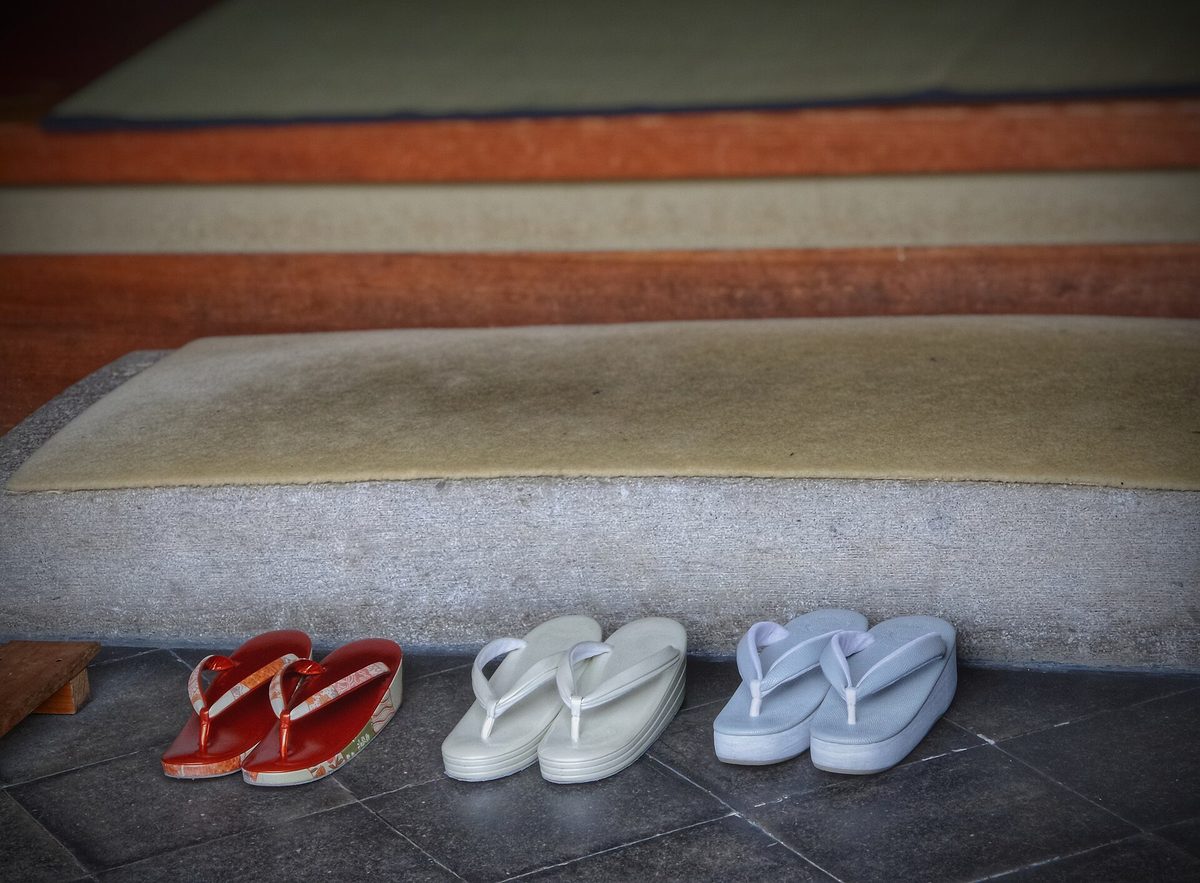
- Slippers lined up. Nippon.com notes that slippers are laid out for visitors on the floor beyond the step.
- A sign with a crossed-out shoe, or the words 土足厳禁 (dosoku genkin, no outdoor shoes).
Step by step at the entrance
- Take your shoes off on the low floor, then step straight up. japan-guide.com advises not stepping onto the raised floor in outdoor shoes, and not stepping back down onto the low floor in your socks.
- If you're visiting a home, Nippon.com suggests crouching or sitting sideways on the step rather than turning your back on your host.
- Turn your shoes to face the door and place them neatly to one side (Nippon.com). At a shoe shelf or locker, just put them away.
- Put on the slippers if they're offered.
Slippers, tatami and toilet slippers
Indoor slippers are fine on wooden floors, but not on tatami. JNTO says it's customary to remove your slippers when on tatami mats, and japan-guide.com suggests placing them neatly outside the tatami room. The Japan Forum explains why: scuffing easily damages the surface of the mats. Go! NAGANO's ryokan guide and Aichi Now say the same for ryokan guest rooms.
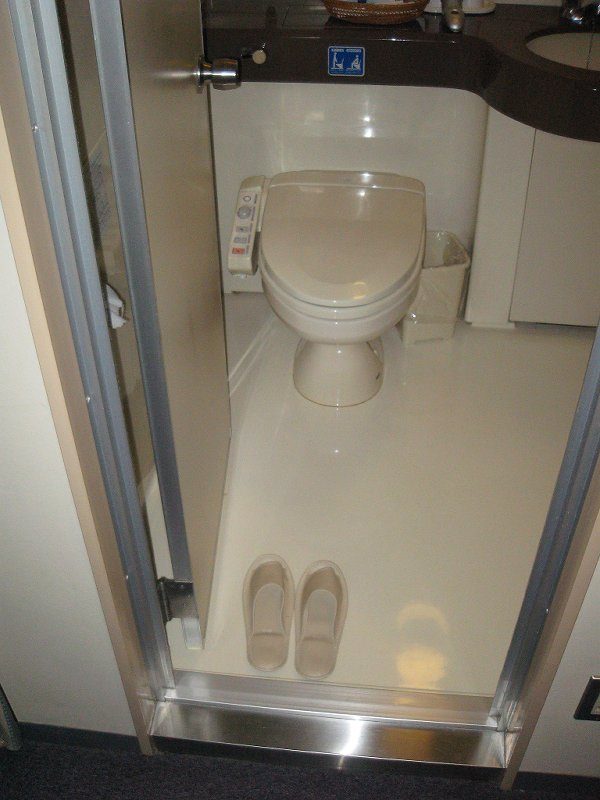
In homes, ryokan and minshuku you will often find toilet slippers just inside the toilet door. Leave your usual slippers outside, wear the toilet slippers inside, and change back when you leave. japan-guide.com calls walking out in toilet slippers an often committed faux pas. If it happens, don't worry; just take them back. For buttons and flushing, see how to use a Japanese toilet.
Easy ways to prepare
- Wear shoes that come off easily. JNTO says easy-to-slip-on shoes make life easier while traveling, and Matsumoto Castle visitors take theirs off at the entrance of the keep.
- Wear clean socks. japan-guide.com suggests socks that are neat and free of holes, and Nippon.com says to avoid bare feet when visiting a home; if you're in sandals, carry a pair of socks to put on.
- Keep a small bag handy for places where you carry your shoes, like Matsumoto Castle or the main hall of Shuri Castle.
- If you're not sure, ask. JNTO's advice for ryokan is simple: if in doubt, ask, and the staff will be happy to help.
Last reviewed: October 4, 2026. Rules differ from place to place; follow signs and staff on the day.
References
- Kokugakuin University: Why the genkan has a different floor level and shoes come off
- Nippon.com: The genkan, Japan's traditional entryway and footwear etiquette
- The Japan Forum: Taking off shoes
- JNTO: Understanding and mastering Japanese manners and etiquette
- JNTO: Japanese manners do's and don'ts
- JNTO: Japanese customs and etiquette (responsible travel guide)
- Japan Ryokan Association: On the way to your guestroom
- Go! NAGANO: How to stay in a Japanese ryokan
- Aichi Now: Etiquette for an enjoyable stay at a ryokan
- japan-guide.com: Indoor etiquette
- japan-guide.com: Japanese toilets
- Matsumoto Castle: General information (English)
- Shuri Castle Park: Main hall reservations and tickets (Japanese)