No Trash Cans? How to Handle Garbage in Japan Without Stress
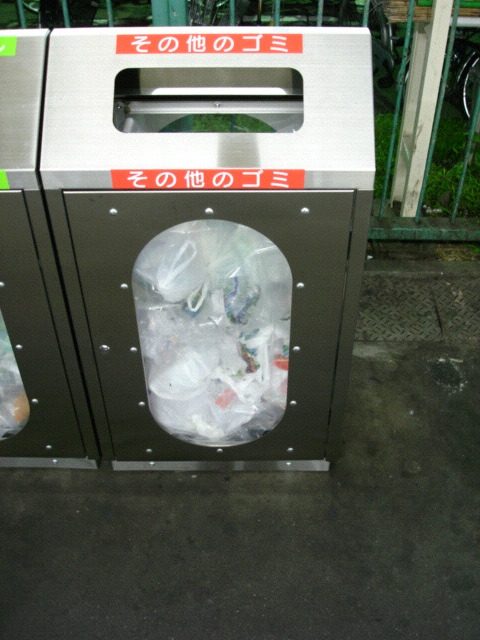
Japan's streets are famously clean, yet public trash cans are hard to find. If you've ever walked around holding an empty bottle for an hour, you're not alone: in the Japan Tourism Agency's latest survey of visitors leaving Japan, "few trash cans" was again the most common problem during their trip. The good news is that a small bag and a few habits solve almost everything. This guide explains where bins are, how sorting works, what the box next to a vending machine is really for, and why leaving trash behind can be a legal problem.
This page may contain affiliate links. If you buy through them, we may earn a commission at no extra cost to you.
- Why visitors struggle, and the simple fix: carry it with you
- Where you can usually throw things away
- Reading the labels on bins
- The vending machine box is for drink containers only
You're not the only one looking for a bin
The Japan Tourism Agency surveyed 4,110 visitors at five airports before they left Japan (November 18, 2025 to January 13, 2026). "Few trash cans" was the top problem, chosen by 17.2%, down 4.7 points from the previous survey but still first. In the previous survey, more than 70% of the visitors who had this problem said they gave up and took their trash with them.
That's exactly what Japan asks of everyone. The agency's Travel Etiquette for the Future says: put your waste in trash cans if there are any, or take it with you and throw it away later, and put cans, glass and plastic bottles separately in the right recycling bins.
A simple plan for the day
- Carry a bag. A small foldable bag (plus a zip bag for anything wet or sticky) means you never have to hunt for a bin.
- Throw things away where you got them. Bins are more common inside stations, shopping centers, food courts and some convenience stores. Shop bins are meant for that shop's customers, so use them for what you bought there and follow their labels. At a food stall, finishing your snack at the stall and handing back the cup or skewer, if they collect them, is the easiest way.
- Finish the job at your hotel. Your room's bin, or the hotel's sorting corner, takes care of the rest. If you're not sure what goes where, ask at the front desk.
Eating on the move makes trash appear in places without bins; see what Kamakura (Kanagawa) asks about eating while walking. Smokers should also know that cigarette butts can't be dropped on the street; see where you can smoke in Japan.
Reading the labels on bins
Sorting rules differ from town to town and building to building, so the label on the bin is always your best guide. These Japanese words come up most often:
Drink the bottle or can empty before you throw it away. If a bin shows pictures, they are the quickest way to tell what goes in.
The box next to a vending machine
The box beside a drink vending machine looks like a trash can, but it isn't. The Japan Soft Drink Association explains that it's a recycling box for empty drink containers only; the staff who refill the machine collect it, and the containers are recycled. It asks people not to put in bottles with drink left in them. The association says other trash makes up about 30% to 50% of what ends up in these boxes, which blocks the slot and causes litter, so please keep snack wrappers and cups out.
Please don't leave trash behind
When a bin is full, it's tempting to leave a bag next to it, but please take it with you instead. Japan's Waste Management and Public Cleansing Act says no one may dump waste without good reason (Article 16), and the penalty for illegal dumping can be up to 5 years in prison, a fine of up to 10,000,000 yen, or both (Article 25). Local governments such as Kotoura Town (Tottori) remind residents that throwing away plastic bottles, plastic bags or cigarette butts also counts as illegal dumping. Nobody expects visitors to know every local rule, but carrying your trash keeps you, and the streets, out of trouble.
Using a public toilet for the first time? See how to use a Japanese toilet.
Last reviewed: October 4, 2026. Sorting rules differ by municipality and facility; follow the labels where you are.
References
- Japan Tourism Agency: Survey on the environment for international visitors, FY2025 (Japanese)
- Japan Tourism Agency: Survey on the environment for international visitors, FY2024 (Japanese)
- Japan Tourism Agency: Travel Etiquette for the Future
- Japan Soft Drink Association: Do you know what the box next to the vending machine is? (Japanese)
- e-Gov: Waste Management and Public Cleansing Act (Japanese)
- Kotoura Town (Tottori): Illegal dumping and littering are crimes (Japanese)