Children's Day in Japan (May 5): Carp Streamers, Samurai Helmets, Kashiwa Mochi and the Golden Week Crowds
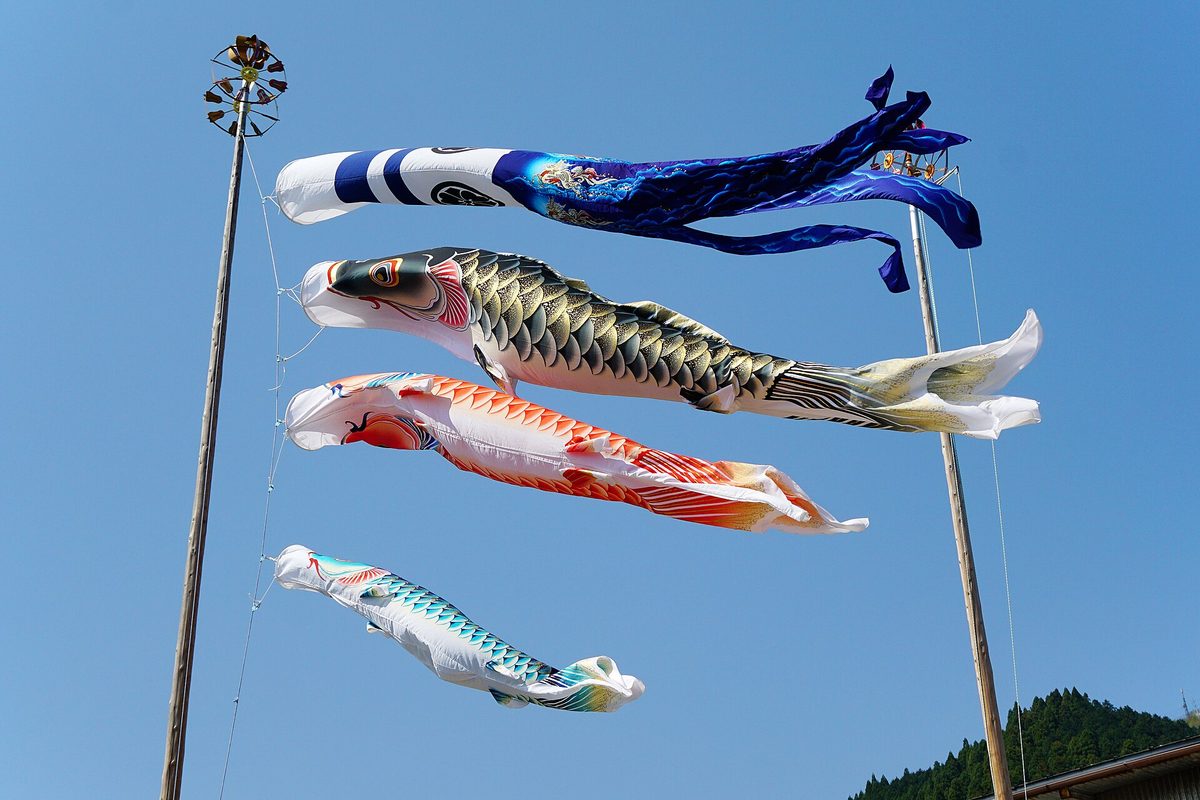
Short answer: May 5 is Children's Day (Kodomo no Hi), a national holiday. By law, its purpose is to respect children as individuals, look after their happiness, and thank mothers. It falls on the old seasonal festival Tango no Sekku, traditionally the boys' festival, which is why you'll see koinobori (carp streamers) flying, helmets and armor on display, and oak-leaf rice cakes in shops. It is also the last of the Golden Week holidays (a run of holidays from the end of April to the start of May), one of the busiest travel times of the year.
Here is what the carp, the helmet and the iris leaves stand for, what people eat, and how to plan a trip around Golden Week.
- Children's Day and Tango no Sekku: what they are
- Carp streamers, helmets and iris baths, and what each wishes for
- Kashiwa mochi and chimaki
- Golden Week crowds and how to plan around them
Children's Day and Tango no Sekku
The Cabinet Office lists Children's Day on May 5 among Japan's national holidays, with the purpose "to respect children's personalities, to plan for their happiness, and to thank mothers". The holiday sits on a much older festival. The Japan Doll Association explains that tango once meant the first day of the horse in the fifth month of the old calendar; because the sound "go" is also the word for five, the festival settled on the fifth day of the fifth month from the Nara period onward. In the Edo period, samurai families celebrated it widely, and it became a day to wish for boys' growth and the family's success.
Carp streamers, helmets and iris leaves
Families with children decorate their homes in the weeks before May 5. According to the Japan Doll Association, May dolls, helmets and carp streamers usually go up after the spring equinox week, and ideally by mid-April. Each one carries a wish:
- Koinobori (carp streamers): born among townspeople in the Edo period. They come from a Chinese legend in which a carp that swims up a waterfall becomes a dragon, so they carry the wish that a child will grow strong enough to face any challenge and do well in life.
- Kabuto and yoroi (helmets and armor): from the samurai custom of offering armor and helmets at shrines to pray for safety. Today they're displayed with the wish that the child is protected from accidents and illness.
- Shobu (iris leaves): the word sounds like shobu, "respect for martial spirit", and the strong scent of the leaves was believed to drive away evil. People hang them under the eaves or put them in the bath.
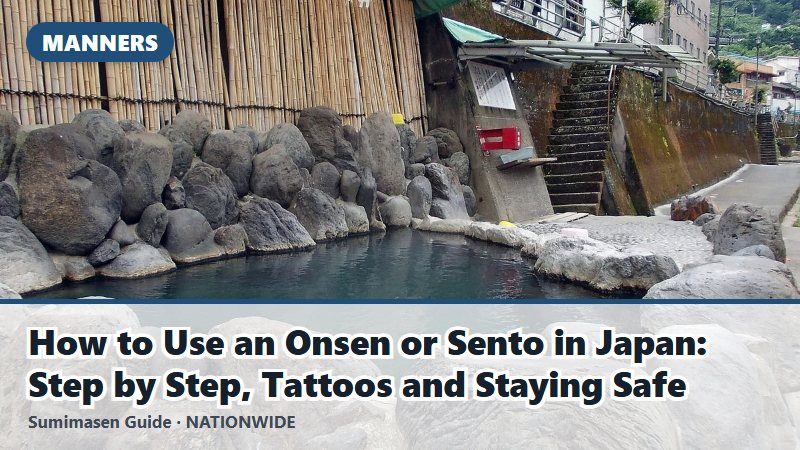
Iris baths (shobu-yu): on May 5, some households and public bathhouses (sento) put iris leaves in the bath. In Setagaya, a ward of Tokyo, the local bathhouses ran iris baths on May 5, 2026, with free entry for children of elementary school age and younger. If you try one at a sento, the usual bath manners apply: see our guide to onsen and sento manners.
Kashiwa mochi and chimaki
- Kashiwa mochi: a rice cake filled with sweet bean paste and wrapped in an oak leaf. MAFF explains that the oak tree doesn't drop its old leaves until new buds appear, so the cake carries the wish that life passes on from parents to children and grandchildren.
- Chimaki: rice dumplings wrapped in leaves. Setagaya City explains that they come from an old Chinese story and are said to ward off evil.
Both are sold at Japanese sweet shops and supermarkets in the days around May 5, so it's an easy seasonal snack to try.
Where to see carp streamers
You'll see koinobori above houses, along rivers and at parks in April and in May. In Tokyo, Tokyo Tower flies 333 carp streamers, a number chosen to match the tower's height of 333 m. According to GO TOKYO, the official Tokyo travel guide, the 2026 display ran from March 18 to May 6, with the streamers up all day. Check the dates for the next year before you go.
Carp streamers at private homes are part of the family's celebration. Photos from the street are fine, but don't step into gardens or driveways for a better angle.
If you're in Japan during Golden Week
Children's Day comes at the end of Golden Week. In 2026, the holidays were April 29 (Showa Day), May 3 (Constitution Memorial Day), May 4 (Greenery Day), May 5 (Children's Day) and May 6 (a substitute holiday, because May 3 fell on a Sunday). Many people travel in this period, so plan ahead:
- Shinkansen: JR Central made every Nozomi train between Tokyo and Hakata (Fukuoka) all-reserved from April 24 to May 6, 2026, so you need a reserved seat. Hikari and Kodama kept their unreserved cars but run less often. Reserve early; see Shinkansen tickets and the JR Pass.
- Rooms and sights: hotels and popular sights fill up quickly. Book rooms early, and visit big attractions early in the morning.
- In 2027: Showa Day is April 29, and May 3, 4 and 5 are holidays, with no substitute holiday listed.
- Photos and manners: festivals, parks and shrines are full of families. Ask before photographing children, and keep paths clear.
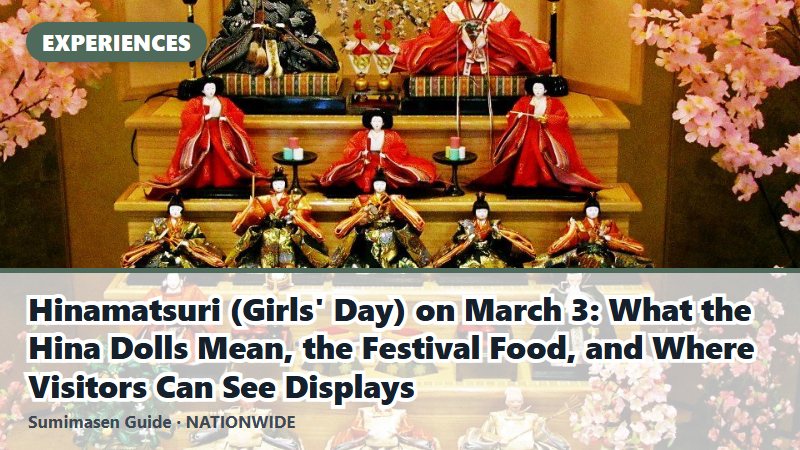
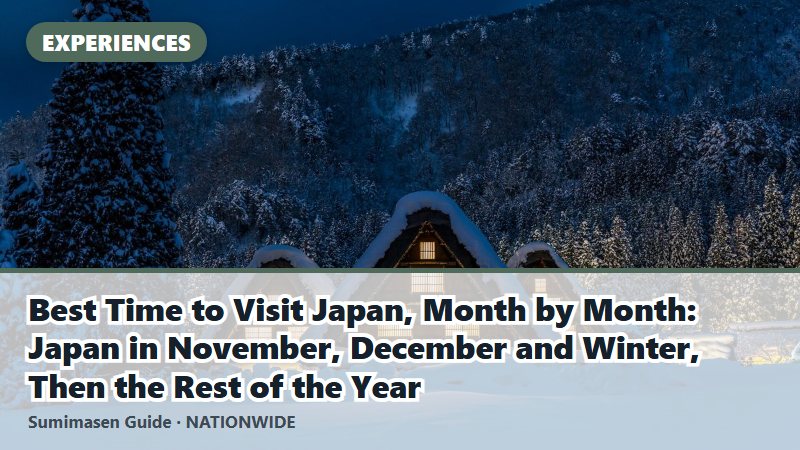
The girls' side of the calendar is on March 3: read about Hinamatsuri and the hina dolls. To compare crowds and weather across the year, see the best time to visit Japan.
Last reviewed: October 18, 2026. Holiday dates for later years, event dates and train rules can change. Please check the official pages below before you go.
References
- Cabinet Office: National holidays (Japanese)
- Japan Doll Association: Tango no Sekku and May dolls (Japanese)
- Japan Doll Association: Frequently asked questions (Japanese)
- Ministry of Agriculture, Forestry and Fisheries: Seasonal event foods, for children (Japanese)
- Setagaya City: Seasonal festival food, Tango no Sekku (Japanese, PDF)
- Setagaya City: Public bathhouses, iris baths (Japanese)
- GO TOKYO (official Tokyo travel guide): Tokyo Tower's 333 carp streamers
- JR Central: Periods when all Nozomi seats are reserved (Japanese)