Iekei Ramen Family Tree: Yoshimuraya, Its Lines, and How to Order Your First Bowl
Quick answer
- Iekei ramen grew out of Yoshimuraya, opened in 1974 in Shin-Sugita, Yokohama (Kanagawa): pork-and-chicken-bone soy soup, thick noodles, spinach and nori.
- Three kinds of shop: direct shops licensed by Yoshimuraya (such as Sugitaya), apprentice lines (such as Rokkakuya), and company chains (such as Machida Shoten).
- First bowl, my way: less oil, regular flavor, firm noodles. Then try it with rice and the seasonings on the table.
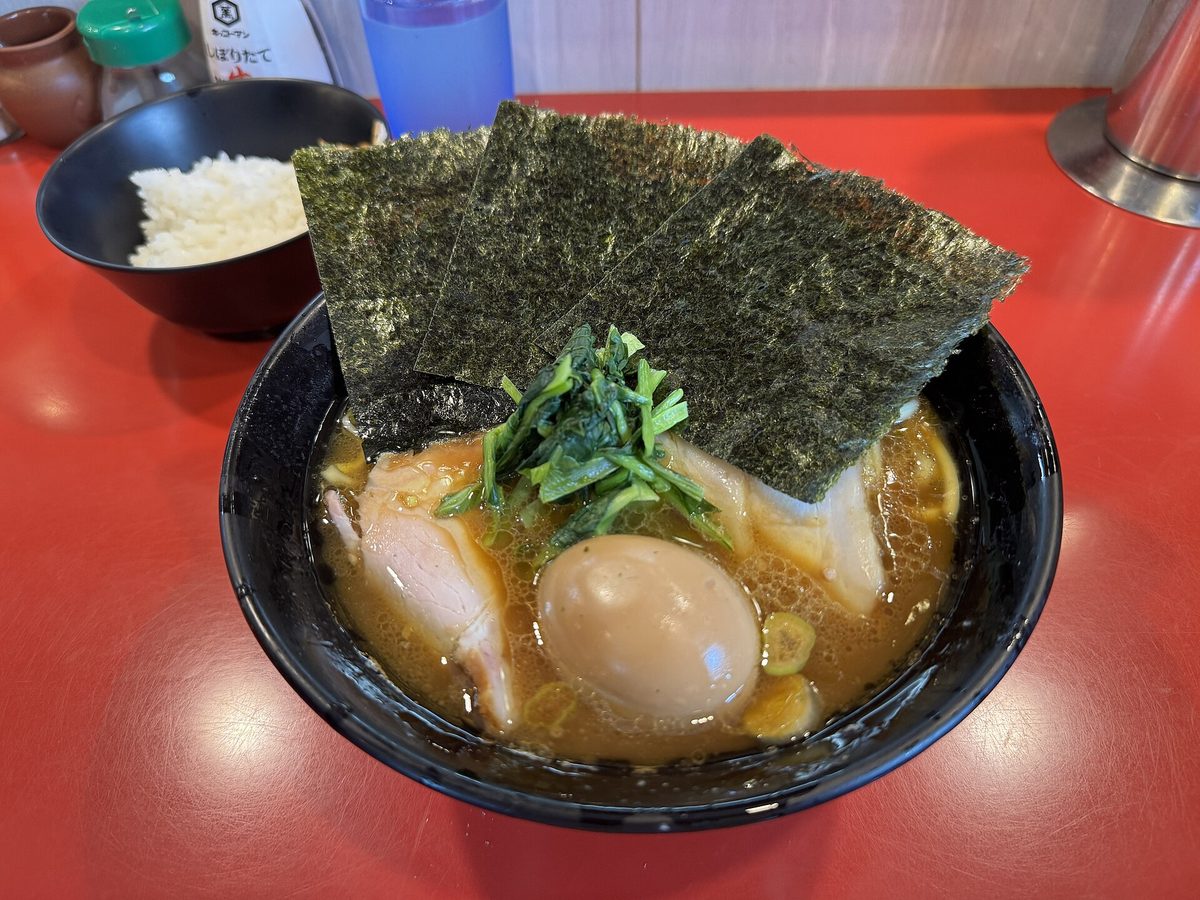
Iekei ramen is the rich pork-bone and soy-sauce ramen that grew out of one shop, Yoshimuraya (吉村家), which opened in 1974 near Shin-Sugita Station in Yokohama (Kanagawa). The soup is cooked from pork and chicken bones and served with thick noodles, spinach, nori and chashu, and at many shops you can choose how firm the noodles are, how strong the flavor is and how much oil goes on top. This guide explains the family tree in simple terms, how to tell what kind of iekei shop you are looking at, and how to order your first bowl.
- Where it started: Yoshimuraya, founded in 1974 by Minoru Yoshimura in Shin-Sugita, Yokohama (Kanagawa). It now stands near Yokohama Station.
- Why "iekei": so many of these shops have names ending in -ya (家, "house") that people started calling them the ie (家) family, iekei.
- Three kinds of shop: direct shops licensed by Yoshimuraya, shops from other apprentices and their apprentices, and company chains such as Machida Shoten.
- If you know Hakata-style tonkotsu from home: iekei soup uses chicken bones as well as pork, and it's the style I recommend.
- First bowl, my way: less oil, regular flavor, firm noodles. Then try it with rice, and change the flavor with what's on the table.
What iekei ramen is: soup, noodles and toppings
Sugitaya, the first direct shop of Yoshimuraya, describes its soup on its official site as made by cooking a pot full of pork and chicken bones for a long time. The Shin-Yokohama Ramen Museum describes the toppings as chashu (sliced pork), green onion, spinach and large square sheets of nori, and the style as one where you can choose how strong the flavor is, how much fat goes in and how firm the noodles are. The noodles are thick and straight.
Why I recommend iekei if you've had Hakata-style tonkotsu abroad
Many visitors first meet Japanese ramen at a tonkotsu (pork-bone) chain from Hakata (Fukuoka). Ippudo, for example, was founded in 1985 in Daimyo, Fukuoka, is known for its smooth tonkotsu soup and thin noodles, and now has shops in 16 countries and regions, as reported in September 2026. Ichiran, another tonkotsu specialist, lists official sites for the USA, Hong Kong and Taiwan on its official site. Iekei is a different branch of the pork-bone family: the soup uses chicken bones as well as pork, with soy-sauce seasoning and thick noodles. If you liked tonkotsu at home, iekei is a good next bowl to try in Japan.
My visit
Many of the chains that have opened abroad serve Hakata-style tonkotsu. Iekei is a hybrid of pork bones and chicken bones. Compared with a soup that puts pork right at the front, the chicken makes it easier to eat. It was born in Yokohama (Kanagawa), but I'm sure the golden ratio of this soup will win you over.
Hakata-style tonkotsu and tori paitan are wonderful too, but I'm sure this hybrid soup will win you over, because of how iekei ramen is designed. It's great on its own, and it's also built to be eaten with white rice. Above all, nori soaked in the soup with white rice. Moist chashu, and the harmony of the vegetables with rice. And the range of ways to change the flavor, with grated garlic, vinegar and black pepper, is a big part of its charm.
After drinking, when you're a little hungry: iekei covers every situation you can imagine.
Hours vary a lot between shops. Sugitaya's main shop in Shin-Sugita, for example, is open from 5:00 in the morning to 22:30 (closed on Sundays), according to its official site.
Where it started: Yoshimuraya, 1974
According to Sugitaya, iekei means the group of ramen shops whose source is Yoshimuraya, founded in Yokohama (Kanagawa) in 1974, and it spread mainly around Kanagawa. The Kanagawa Shimbun, the local newspaper, reported in March 2023 that the founder, Minoru Yoshimura, started in Shin-Sugita in Isogo Ward, moved to Okano in Nishi Ward, near Yokohama Station, and had been there for 24 years when the shop moved again in March 2023 to a new building a minute or two's walk away, across the Okano crossing.
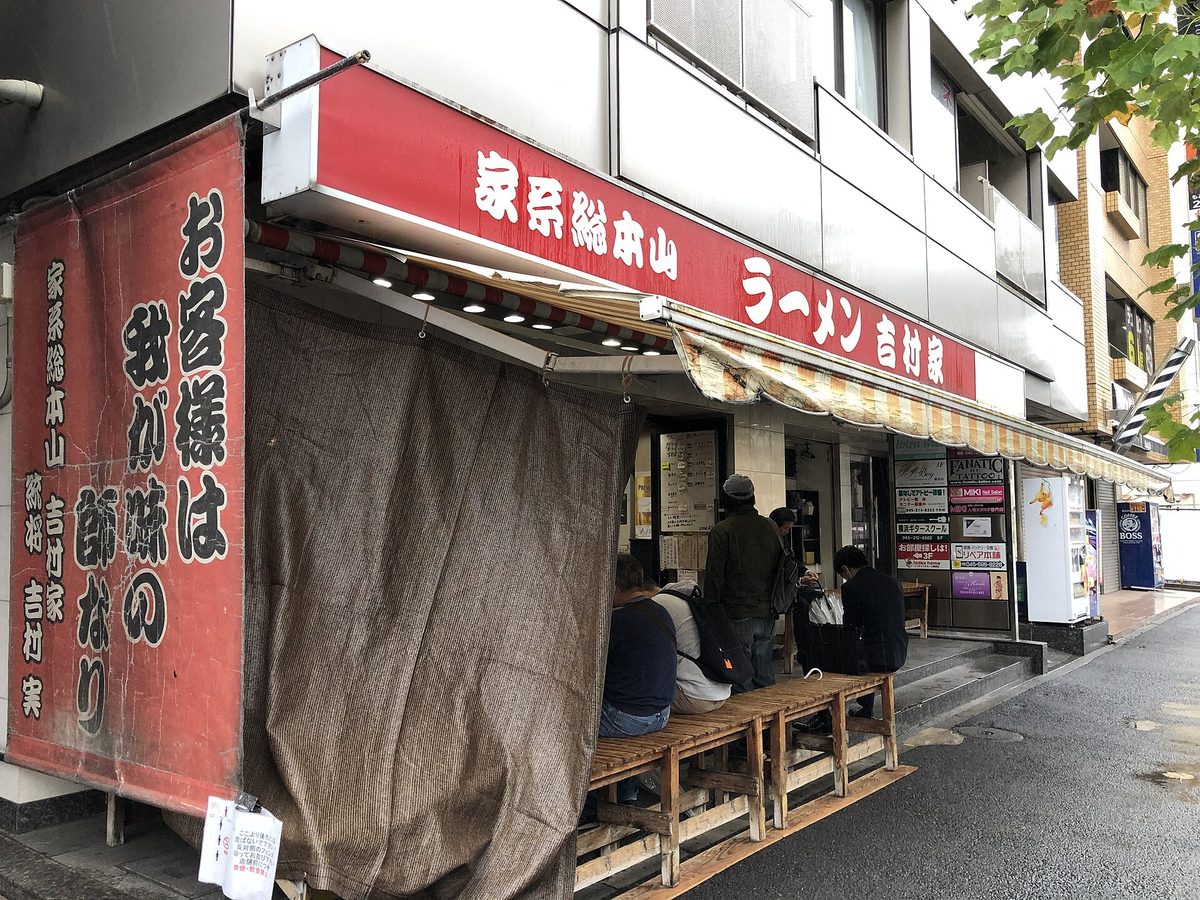
Why -ya? Sugitaya explains that iekei got its name because so many of these shops had names ending in 家 (-ya, "house"), like Yoshimuraya itself. The Ramen Museum adds that apprentices, their apprentices and even unrelated shops have used names ending in 家, while some newer shops serve the same style without it. So the name is a hint, not proof.
The family tree, in simple terms
Hundreds of shops serve iekei ramen, so this chart shows only the best-known lines whose links are stated by the shops themselves or by the Shin-Yokohama Ramen Museum.
Line 1: Honmokuya and Rokkakuya. The Shin-Yokohama Ramen Museum says Takashi Shindo trained at Yoshimuraya, managed its 2nd shop, Honmokuya, and opened Rokkakuya in Rokkakubashi in 1988. Rokkakuya was one of the museum's opening shops in 1994. Its main shop closed at the end of October 2017 and the company went through bankruptcy in 2020. The name lives on at Rokkakuya Totsuka, run separately by his younger brother, and at Rokkakuya 1994+, a revival inside the museum.
Line 2: the direct shops. Sugitaya's official site says Minoru Yoshimura gives direct shops a license called menkyo kaiden (免許皆伝, "full mastery"), and calls Sugitaya the first direct shop. Its main shop is at 3-5 Shinsugita-cho, Isogo Ward, and opens early: 5:00 to 22:30, closed on Sundays. It also has two shops in Chiba. The list of direct shops changes over time, so this guide doesn't list them all.
A separate kind: company chains. Gift Holdings began in January 2008, when its president opened the first Machida Shoten (町田商店), a Yokohama-style iekei shop, in Machida, Tokyo. The company says Machida Shoten has more than 100 shops in Japan, and it also runs Machida Shoten abroad. Through its "produce" business, it supplies its own noodles, tare and soup to partner shops, which are free to choose their own shop names. This is simply a different way of growing from master and apprentice.
How to read the sign: clues to what kind of shop it is
- 直系 (chokkei, "direct line") or 吉村家直系 on the sign or official site: a direct shop. Sugitaya, for example, calls itself 家系総本山吉村家直系1号店, "the first direct shop of Yoshimuraya, the head of iekei".
- 家系総本山 (iekei sōhonzan, "head temple of iekei"): Yoshimuraya's own title.
- 横浜家系ラーメン (yokohama iekei rāmen) and a name ending in 家: an iekei-style shop. The name alone doesn't tell you its line; check the shop's own site, which may say where the owner trained.
- The same name in many cities, such as 町田商店: a company chain. The company's site lists its shops. A shop with a name you've never seen can also be supplied by a company.
Whichever kind you walk into, the ordering system is much the same.
Iekei in Matsumoto and Shiojiri (Nagano)
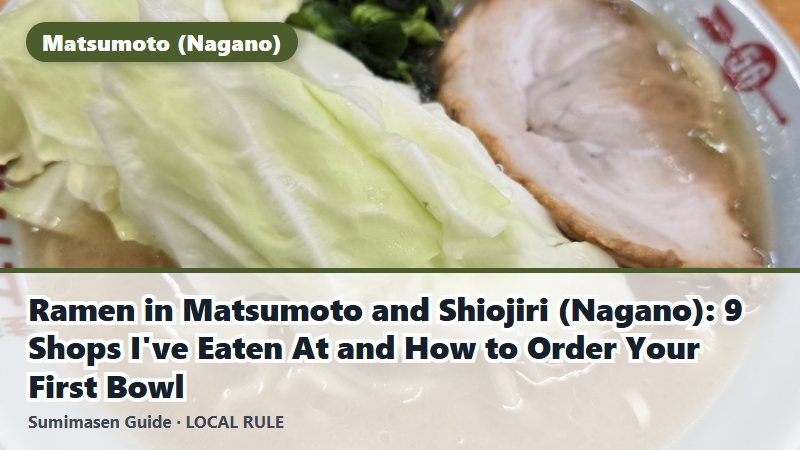
Three of the shops in my guide to ramen in Matsumoto and Shiojiri (Nagano) serve this pork-bone and soy style with spinach and nori. Itadakiya Matsumoto Shop puts it in its name: 横浜家系ラーメン頂家, "Yokohama-style iekei ramen, Itadakiya". Majimeya calls itself 豚骨醤油ラーメン, "pork-bone shoyu ramen". Shinshu Isorokuya in Shiojiri (Nagano), my favorite in the area, serves its bowl with cabbage. None of the three says which line it comes from in what it publishes, so this guide doesn't place them on the tree.
How to order your first iekei bowl
Buy a ticket for the regular ramen at the machine, then tell the staff your preferences when you hand it over. Sugitaya recommends the normal bowl on a first visit, and says you can ask for a stronger or lighter flavor and more or less oil. The words and the full order, in Japanese and romaji, are in the ordering chart in my Matsumoto (Nagano) guide: 麺かため、味ふつう、油少なめで (Men katame, aji futsū, abura sukuname de), "firm noodles, regular flavor, less oil, please".
My visit
If it's your first iekei bowl, I recommend less oil, regular flavor and firm noodles. Order the normal ramen, the one the shop always serves, and add whatever toppings you like. And if you're not used to eating ramen, ask for firm noodles!
How I eat it: on its own, with rice, then change the flavor
If a shop sells rice (ライス, raisu), you'll find it on the ticket machine or menu. Whether it costs extra depends on the shop: Itadakiya Matsumoto Shop in Matsumoto (Nagano), for example, highlights free rice on its Google Maps listing. The Shin-Yokohama Ramen Museum notes that Yokohama ramen shops offer plenty of seasonings such as grated garlic, vinegar and doubanjiang (chili bean paste); what's on the table differs from shop to shop.
More ramen guides
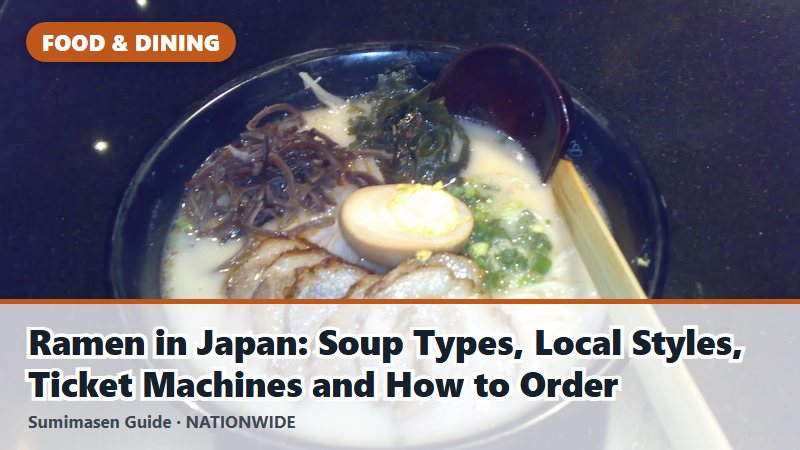
For soup types, local styles and how ticket machines work, read our ramen guide. For nine shops I've eaten at, including three iekei-style bowls, see ramen in Matsumoto and Shiojiri (Nagano). All of our ramen guides are collected in Ramen in Japan. If you have a food allergy, check our guide to food allergies in Japan first: ramen soups often contain wheat, soy and other ingredients.
Last reviewed: October 24, 2026. Shops open, close and move. Please check each shop's official page before you go.
References
- Kanagawa Shimbun (March 10, 2023): Yoshimuraya moves to a new shop (Japanese)
- Ramen Sugitaya: official site (Japanese)
- Ramen Sugitaya: about iekei (Japanese)
- Ramen Sugitaya: shops and hours (Japanese)
- Shin-Yokohama Ramen Museum: Yokohama ramen (Japanese)
- Shin-Yokohama Ramen Museum: Rokkakuya 1994+ and its history (Japanese)
- Gift Holdings: company history (Japanese)
- Gift Holdings: business and the produce model (Japanese)
- Gift Holdings: brands, including Machida Shoten (Japanese)
- Hokkaido Shimbun (September 16, 2026): Ippudo's history and overseas shops (Japanese)
- Ichiran: official site