Sashimi and Wasabi in Japan: Why They Go Together, How to Eat Them, and Real vs Tube Wasabi
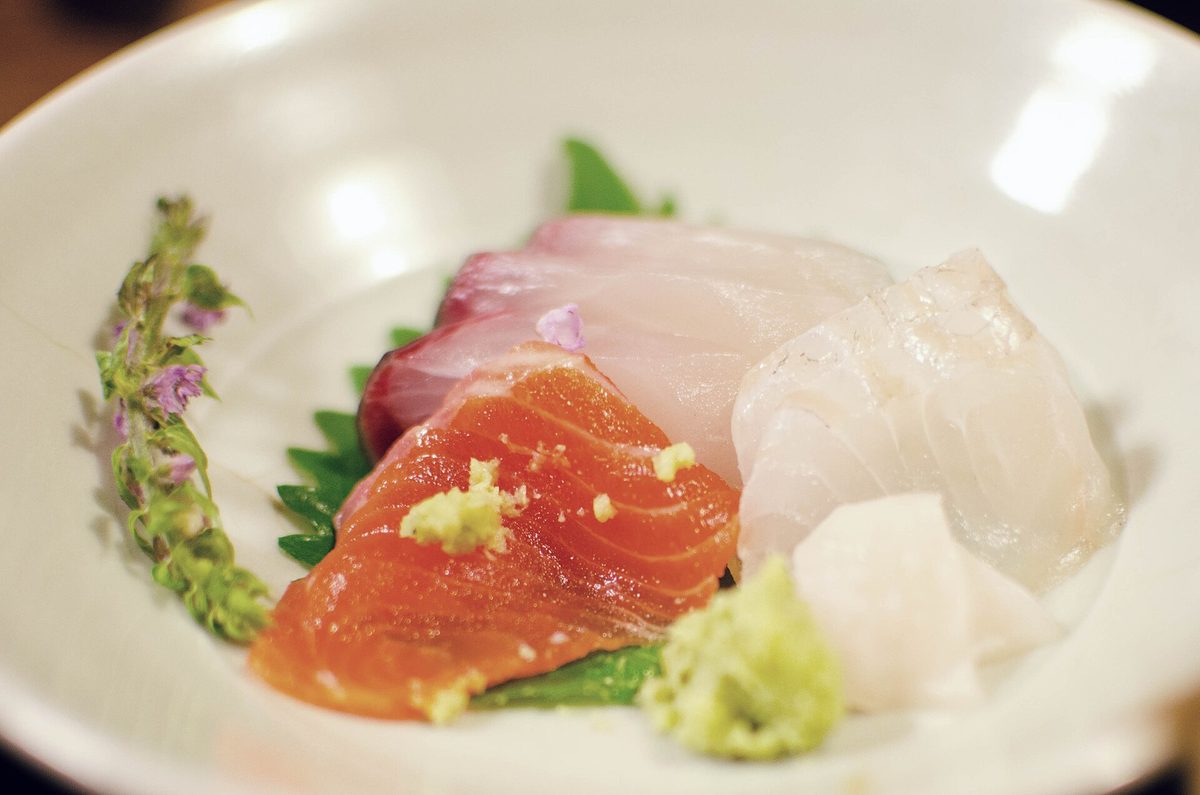
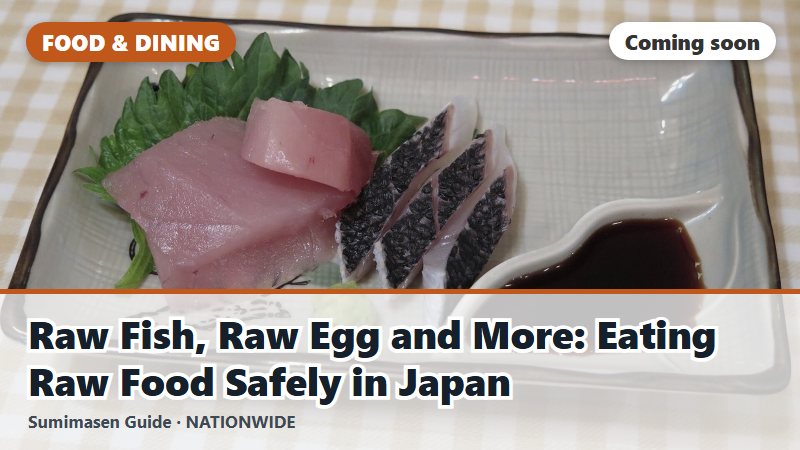
Order sashimi in Japan and it almost always arrives with a small green mound of wasabi, a few garnishes and a little dish for soy sauce. Visitors often wonder why the wasabi is there, how much to use, whether mixing it into soy sauce is "wrong", and whether it's the same stuff they know from home. This column looks at what wasabi does, a few relaxed ways to eat it, how real wasabi differs from tube and powder wasabi, what the garnishes are for, how to ask for no wasabi, and where wasabi is grown.
This page may contain affiliate links. If you buy through them, we may earn a commission at no extra cost to you.
- Why wasabi comes with sashimi, and what it can't do
- Two easy ways to eat it, and why neither is wrong
- Sushi often has wasabi inside; how to ask for none
- Real wasabi vs tube and powder, garnishes, and where wasabi grows
Why wasabi comes with sashimi
Japan's Ministry of Agriculture, Forestry and Fisheries (MAFF) calls wasabi a condiment essential to Japanese cooking, used with sushi, sashimi and soba. Its sharp heat comes from a compound called allyl isothiocyanate, which MAFF notes has antibacterial properties and was long used with the idea of helping to prevent food poisoning. Sushi makers explain the taste side: Japan's national federation of sushi restaurant associations says wasabi's sharp heat and aroma briefly numb the palate, so you don't notice any fishy smell.
One important point: wasabi makes raw fish taste good, but it doesn't make it safe. MAFF states clearly that seasonings such as vinegar, salt, soy sauce and wasabi do not kill anisakis, a parasite found in some fish. Restaurants prevent problems by how they choose and handle fish. More on this: eating raw food safely in Japan.
How to eat sashimi with wasabi
Pour a little soy sauce into the small dish. Then there are two common ways to add wasabi, and both are seen at Japanese tables every day.
- On the fish: put a small dab of wasabi on a slice, then dip the other side or edge of the slice lightly in soy sauce. This keeps the wasabi's fresh aroma and the soy sauce clear.
- Mixed into soy sauce (wasabi-joyu): stir a little wasabi into your soy sauce and dip the fish in it. Plenty of people eat this way, and some find it softens the heat.
Some people prefer not to mix, because wasabi's aroma fades quickly once it's stirred in. A TOKYO GAS food column supervised by the Japanese culture researcher Yasuko Miura explains both views and concludes that neither is the one correct way, so you can choose what you like. Nobody at the next table is checking.
Sushi: the wasabi is often already inside
With nigiri sushi at a sushi counter, the chef usually puts the wasabi on for you. JNTO, Japan's national tourism organization, describes nigiri as usually made "with wasabi added between the fish and the rice", and GO TOKYO, the official travel site for Tokyo (Tokyo), notes that the wasabi is usually added by the chef before the sushi is served. So there's no need to add more unless you want to. For soy sauce, the Fukuoka Prefecture sushi restaurant association suggests turning the piece so the fish is underneath and touching just the tip to the soy sauce; pieces that already have a sweet sauce, such as anago (conger eel) and tamago (egg), are eaten without it.
If you don't want wasabi, ask for sabi-nuki. The dictionary Digital Daijisen defines it as nigiri made without wasabi; sabi is short for wasabi. Say it when you order, because the chef adds wasabi while shaping each piece.
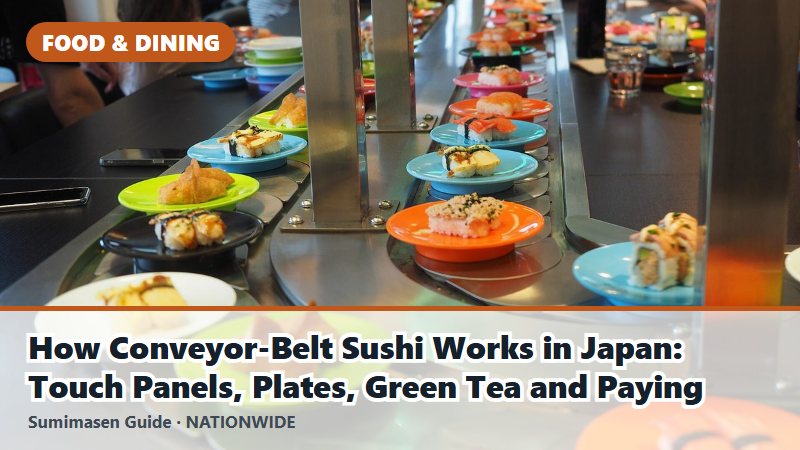
At big conveyor-belt chains it's the other way round. Kura Sushi's official site says its sushi comes without wasabi so children can eat it easily, and you add wasabi yourself just before eating; it also says its wasabi is a blend of real wasabi and horseradish. In a 2016 interview by the Japanese news site Pouch, Kappa Sushi, Kura Sushi and Sushiro all explained why their plates come without wasabi. How the wasabi is provided (a small pot, packets, or a plate on the lane) differs by chain and shop. More on this kind of restaurant: how conveyor-belt sushi works.
Real wasabi, tube wasabi and powder
Real wasabi, hon-wasabi, is a plant native to Japan. The UN Food and Agriculture Organization (FAO) gives its scientific name as Eutrema japonicum (it is also listed as Wasabia japonica), a member of the cabbage family prized for the sharp flavor that comes out when its stem is grated. The wasabi in most tubes and packets is different. The wasabi maker Kinjirushi explains that horseradish (seiyo wasabi, "Western wasabi", Armoracia rusticana) is native to Europe, reached Japan in the early Meiji era, is about 1.5 times as hot as real wasabi, and is the main ingredient of powdered and tube wasabi.
You can see this on the labels. House Foods' powdered wasabi lists horseradish, colorings (safflower yellow and gardenia) and vitamin C, so its green color is added. S&B's "Oroshi Nama Wasabi" tube blends real wasabi with horseradish, while S&B's "Honnama Hon-wasabi" tube is made with 100% real wasabi. A voluntary industry standard set by the Japan Processed Wasabi Association, reported by the Chunichi Shimbun newspaper, decides two label phrases: 本わさび使用 (hon-wasabi shiyo) means real wasabi is 50% or more of the wasabi used, and 本わさび入り (hon-wasabi iri) means less than 50%.
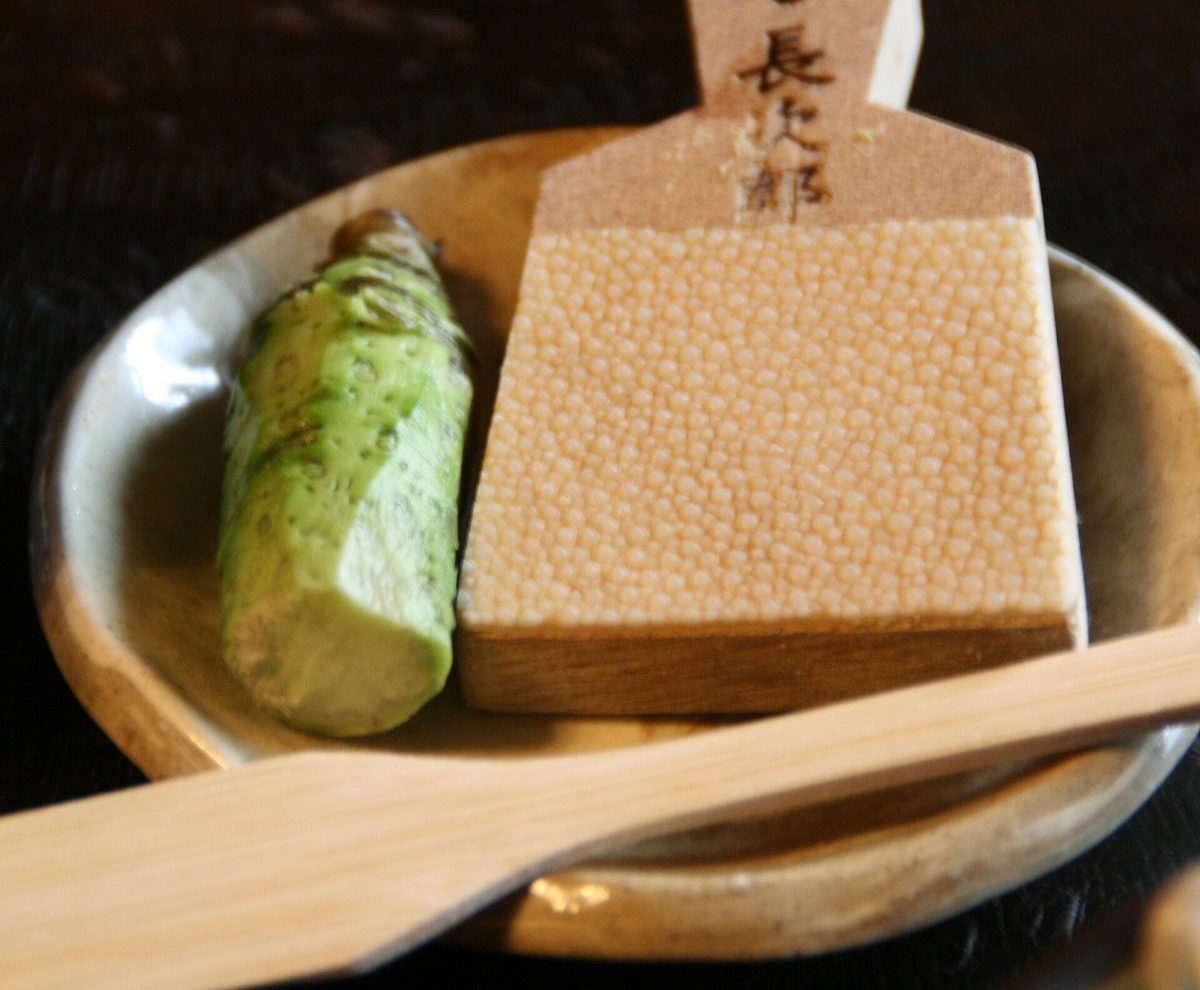
Fresh real wasabi is grated just before eating. S&B's customer help page says to grate it from the stem end in small circles on a grater or a sharkskin grater (samegawa oroshi), and warns that grated wasabi loses its heat if left too long. The Japan Wasabi Association also recommends the finest grater you have, used gently and slowly. The heat appears when the grated wasabi meets the air, as the sushi federation notes, and Kinjirushi's wasabi guide says that with a sharkskin grater the aroma and heat peak after about 1 to 3 minutes (2 to 4 with a metal grater) and taste best for about 10 minutes after that. MAFF describes real wasabi's heat as sweet and refreshing, and Kinjirushi notes that horseradish is the hotter of the two.
The garnishes on the plate
The other bits on a sashimi plate have a name: tsuma. Digital Daijisen defines tsuma as the vegetables or seaweed used to garnish sashimi and clear soups. A National Diet Library reference answer, citing Japanese food dictionaries, explains that garnishes for sashimi are grouped into ken (thin strips, like the shredded white daikon radish), tsuma, and karami, the spicy part, such as wasabi. The word tsuma also means "wife", and the traditional explanation is that the garnish supports the main ingredient by bringing out its flavor and color.
Typical garnishes include the daikon strips, a green shiso leaf, shiso flower sprigs, seaweed and small edible chrysanthemum flowers, as a column by the registered dietitian Megumi Ishimoto lists. They add color, and the crisp daikon freshens your mouth between slices. The same column notes that the daikon is fine to eat. Eat the garnishes if you like, and leaving them is fine too.
Where wasabi grows, and where to try it fresh
Wasabi is grown in cool, clean water, so most of it comes from a few areas. According to a January 2026 JETRO report using MAFF statistics, Japan grew 1,034.2 tonnes of water-grown wasabi in 2024, of which Nagano grew 628.1 tonnes and Shizuoka 330.6 tonnes, together over 90% of the total.
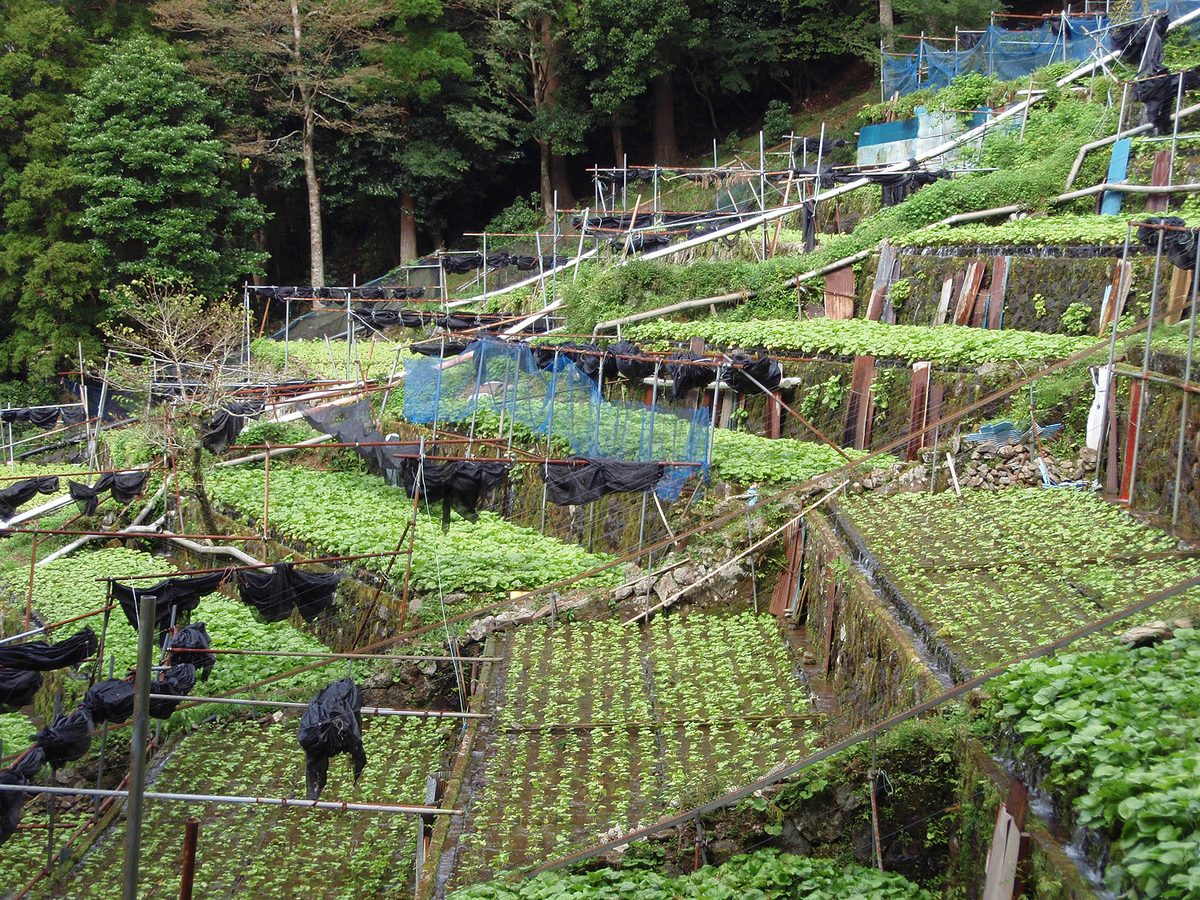
- Shizuoka: in 2018, FAO designated Traditional Wasabi Cultivation in Shizuoka a Globally Important Agricultural Heritage System. Shizuoka Prefecture's food information site says cultivation began over 400 years ago in the Utogi area of Shizuoka (Shizuoka), and that the stepped, stone-layered tatami-ishi fields were devised around 1892 by stoneworkers in the Naka-Izu area. The same page introduces the Izu Wasabi Visitor Center on the Izu Peninsula (Shizuoka), opened in April 2024, where you can compare freshly grated and tube wasabi.
- Nagano: Daio Wasabi Farm in Azumino (Nagano) calls itself Japan's largest wasabi farm and is watered by snowmelt from the Northern Alps that rises as spring water; its official site lists entry as free. It is near Matsumoto (Nagano); see our Matsumoto (Nagano) destination page. The local site matsumotoexp.com describes grating fresh Daio wasabi yourself at a restaurant in Asama Onsen, Matsumoto (Nagano).
These are the famous growing areas, but they aren't the only places to meet real wasabi. Some sushi and soba restaurants around Japan serve freshly grated real wasabi (often called nama-wasabi or hon-wasabi on menus), and some bring a piece of the root with a small grater so you can grate it at the table. For example, SoraNews24 reported in 2025 that Muten Kura, an upmarket Kura Sushi restaurant in Nakameguro, Tokyo (Tokyo), offered fresh wasabi with a sharkskin grater. Menus change, so if you're curious, it's perfectly fine to ask the staff whether the wasabi is real.
Useful phrases
Say each syllable evenly. Onegaishimasu ("please") often sounds like "o-ne-gai-shi-mas".
| Japanese | Reading | Meaning |
|---|---|---|
| さび抜きでお願いします | sa-bi-nu-ki de o-ne-gai-shi-ma-su | No wasabi in my sushi, please |
| わさび抜きでお願いします | wa-sa-bi-nu-ki de o-ne-gai-shi-ma-su | No wasabi, please (works for any dish) |
| わさび少なめでお願いします | wa-sa-bi su-ku-na-me de o-ne-gai-shi-ma-su | Just a little wasabi, please |
| わさびをください | wa-sa-bi o ku-da-sa-i | Could I have some wasabi? |
| これは本わさびですか? | ko-re wa hon-wa-sa-bi de-su ka | Is this real wasabi? |
More on eating out: miso soup across Japan and what itadakimasu and gochisosama mean.
Last reviewed: October 4, 2026. Restaurants, chains and products change; how much wasabi you use is entirely up to you.
References
- MAFF: "aff" magazine, wasabi (Japanese)
- MAFF: Enjoying seafood safely, preventing anisakis (Japanese)
- National Federation of Sushi Restaurant Associations: Sushi's supporting cast (Japanese)
- TOKYO GAS "Uchicoto": Why wasabi with sashimi? (Japanese)
- JNTO: The Sushi Master Class
- GO TOKYO: A guide to eating sushi in Tokyo (Tokyo)
- Fukuoka Prefecture Sushi Association: How to enjoy sushi (Japanese)
- Kotobank: Sabi-nuki (Digital Daijisen) (Japanese)
- Kura Sushi: Our taste (Japanese)
- Pouch: Why do big conveyor-belt sushi chains serve every plate without wasabi? (Japanese)
- FAO GIAHS: Traditional Wasabi Cultivation in Shizuoka
- Kinjirushi: About horseradish (Japanese)
- House Foods: Powdered wasabi, 27 g bag (Japanese)
- S&B Foods: Oroshi Nama Wasabi (Japanese)
- S&B Foods: Honnama Hon-wasabi (Japanese)
- Chunichi Shimbun: Tube wasabi, what "hon" and "nama" mean (Japanese)
- S&B Foods customer center: How to grate Azumino real wasabi (Japanese)
- Japan Wasabi Association: How to grate and store wasabi (Japanese)
- Kinjirushi WASA-LAB: How to enjoy real wasabi (Japanese)
- Kotobank: Tsuma (Digital Daijisen) (Japanese)
- National Diet Library Collaborative Reference Database: Why the daikon garnish is called tsuma (Japanese)
- Yoga Journal Japan: The role of daikon tsuma (Japanese)
- JETRO: Taking fresh wasabi to the world (January 2026) (Japanese)
- Shizuoka Prefecture food information center: Izu real wasabi (Japanese)
- Daio Wasabi Farm official site (Japanese)
- matsumotoexp.com: Soba-making, sake-tasting and fresh wasabi-grating in Asama Onsen
- SoraNews24 (2025): Kura Sushi opens new high-end revolving bar restaurant in Tokyo (Tokyo)