Gyudon in Japan: How Yoshinoya, Sukiya and Matsuya Changed, and How to Order a Beef Bowl
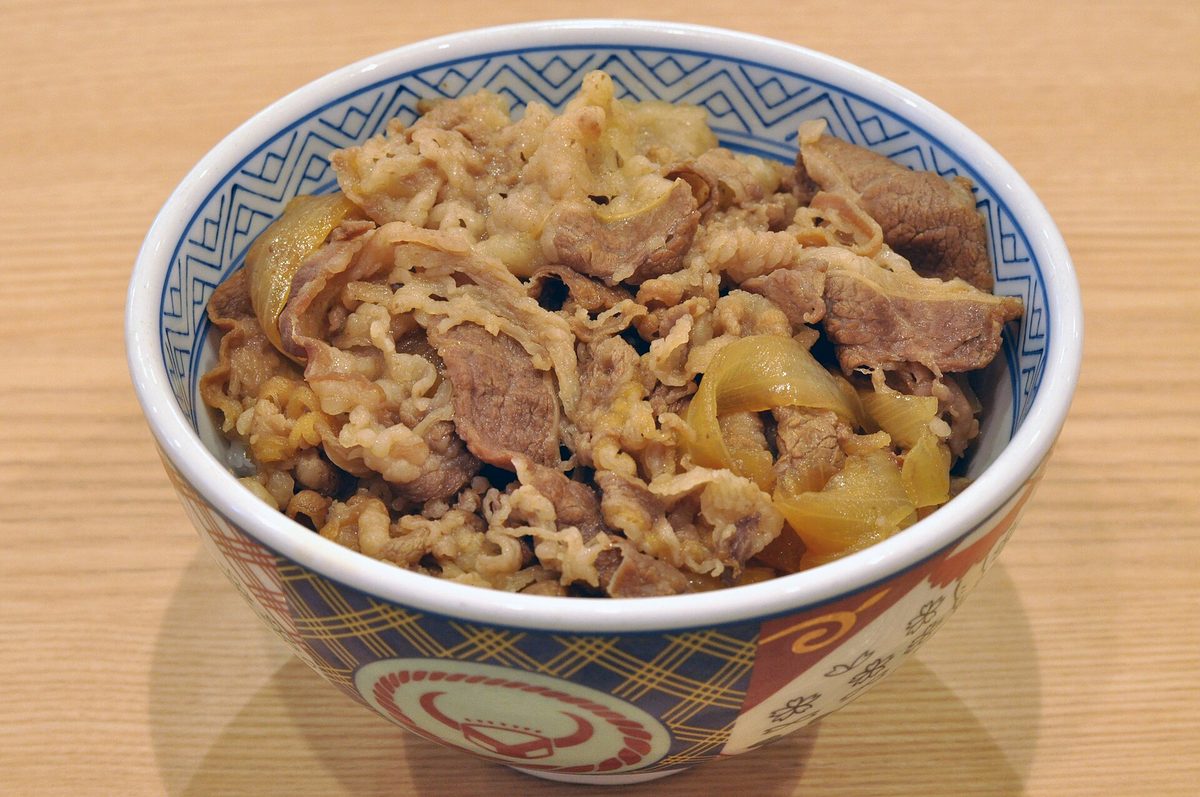
Gyudon (牛丼), a bowl of rice topped with thinly sliced beef and onion simmered in a sweet soy-based sauce, is one of the quickest and cheapest hot meals in Japan. Three big chains, Yoshinoya, Sukiya and Matsuya, have restaurants near many stations, and many are open late or around the clock. This guide explains what gyudon is, how the chains grew from fish-market counters into restaurants with tablets, ticket machines and phone ordering, and how to order, eat and pay with confidence.
This page may contain affiliate links. If you buy through them, we may earn a commission at no extra cost to you.
- What gyudon is, and the three big chains
- How the chains changed: from a market counter to tablets and phone orders
- Ordering: staff, tablets or ticket machines, and the size names
- Red ginger, shichimi, eggs, paying and handy phrases
What gyudon is
The beef is sliced very thin and simmered with onion, then spooned over rice with some of the sauce. A bowl comes with chopsticks, and many people add a side of miso soup, salad or pickles. Matsuya calls the same dish gyumeshi (牛めし), "beef rice", on its menu. Gyudon is a fast, everyday meal: office workers at lunch, students, people on a late shift and travelers all eat it, often on their own at a counter.
The three big chains
The three chains serve the same kind of dish, but each has its own taste, menu and way of ordering. Many people in Japan simply go to whichever one is closest.
- Yoshinoya (吉野家): its English page says its roots go back to 1899, when a family-run shop opened in the fish market in Nihonbashi, Tokyo (Tokyo), and that its motto is "tasty, affordable, and fast". The company's history says the busy market workers wanted real flavor and speed. The shop moved to Tsukiji in 1926 after the 1923 earthquake. The Yoshinoya restaurants in Japan numbered 1,290 at the end of its business year in February 2026, according to its shareholder report.
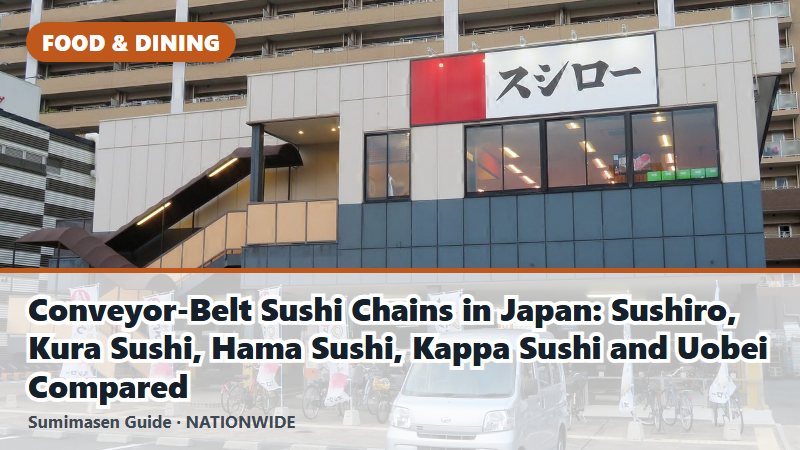
- Sukiya (すき家): its first shop opened in November 1982 near Namamugi Station in Yokohama (Kanagawa). The company's monthly figures show 2,016 restaurants at the end of September 2026.
- Matsuya (松屋): the founder opened a Chinese restaurant called Matsuya in Nerima, Tokyo (Tokyo), in 1966, and the first gyumeshi restaurant opened in Ekoda in 1968. Matsuya Foods, which also runs tonkatsu and other restaurants, had 1,573 restaurants in all at the end of March 2026.
How the chains changed
For decades a gyudon shop meant a U-shaped counter, a staff member taking your order out loud and a bowl in front of you within moments. Yoshinoya started opening 24 hours a day in 1952, which the company calls a first in Japan, opened its second shop in 1968 and its first overseas shop in Denver, in the US, in 1975, selling gyudon as "Beef Bowl". Sukiya says it was the first in the industry to sell gyudon with toppings, in 1997.
The biggest shock came in 2004. After a cow suspected of having BSE was found in the US in December 2003, American beef could no longer be imported, and Yoshinoya stopped selling gyudon on February 11, 2004, serving pork bowls (butadon) and other dishes instead. Gyudon came back for one day in February 2005, a one-day "revival" of a million bowls followed in September 2006 after imports resumed, and 24-hour gyudon returned in March 2008.
Since then, the chains have changed the way you order and pay. Matsuya, which has long used ticket machines, began testing machines in English, Chinese and Korean in February 2015 and planned to put them in about 1,040 restaurants, Nikkan Kogyo Shimbun reported. Sukiya added ordering tablets after a trial in some shops in 2017 and has a semi-self-service register for paying, ITmedia reported in 2023. The same report said Yoshinoya had long chosen staff over ticket machines but was adding tablets in more shops. In 2016 Yoshinoya opened its first "Cooking & Comfort" restaurant, in Ebisu, Tokyo (Tokyo), designed to be more relaxing to sit in. Code payments, including Alipay, arrived at Yoshinoya in September 2019, and phone ordering at Sukiya in 2019, Yoshinoya in February 2020 and Matsuya in August 2020.
The menus grew too. All three now have breakfast menus, set meals with miso soup or salad, and takeout. Sukiya even has "Gyudon Light", which uses tofu and vegetables instead of rice.
Ordering: staff, tablets or ticket machines
The way you order depends on the chain and on the shop, so look around when you walk in.
- Ticket machine at the door: Matsuya is known for these. Choose your dish and size on the screen and pay, then follow the screen or the staff to get your food. Many machines have a language button. In Matsuya's phone app you can also order and pay in advance without using the machine, for eating in or takeout.
- Tablet at your seat: sit down, order on the tablet, and pay at the register when you leave. This is the usual way at Sukiya, and more Yoshinoya shops have tablets too.
- Telling the staff: at shops without a machine or tablet, a staff member comes to take your order. Saying the dish and the size is enough.
Sizes have their own names. Nami-mori (並盛) is the regular size, and you'll see smaller and larger ones around it. Yoshinoya's atama no omori (アタマの大盛) is a regular amount of rice with a large serving of beef on top.
Sizes, toppings and prices
At the time of writing (October 5, 2026), a regular bowl (nami-mori) of plain gyudon costs, tax included, to eat in:
| Chain | Regular bowl | Size range |
|---|---|---|
| Yoshinoya | 498 yen (489 yen takeout) | 465 to 1,059 yen |
| Sukiya | 480 yen | 420 to 1,060 yen |
| Matsuya | 460 yen | 430 to 860 yen |
Prices differ at some shops and for delivery, and Sukiya adds 7% to orders placed between 10 p.m. and 5 a.m., its menu notes. Toppings cost extra. You'll find cheese, kimchi, grated daikon with ponzu, and green onion with egg (negi-tama) at all three in some form. At Yoshinoya, negidaku (ねぎだく, extra onion with the same amount of beef) is a way of eating from its first shop in Tsukiji that went on the regular menu in 2020, and tsuyudaku (つゆだく, extra sauce) is one of the requests its takeout ordering system has accepted since 2015. On a tablet, look for these on the options screen.
Our editor's pick: cheese gyudon, beef topped with melted cheese. You'll find it on Sukiya's menu, and the mild, creamy cheese goes well with the sweet-savory beef.
Want more than a bowl? Sets add miso soup, salad, pickles or an egg, and Matsuya gives you miso soup free with your gyumeshi when you eat in. In the morning, all three have breakfast menus.
How to eat it
Gyudon is simple, but a few free extras and local habits make it even better.
- Red ginger and shichimi: many shops put pickled red ginger (beni-shoga, 紅生姜) and shichimi (seven-spice chili pepper) on the counter or at a self-service corner, free to use. Matsuya lists both among its counter items. Take what you'll eat with clean tongs or the spoon provided. Red ginger is salty, like other pickles: see Japanese pickles.
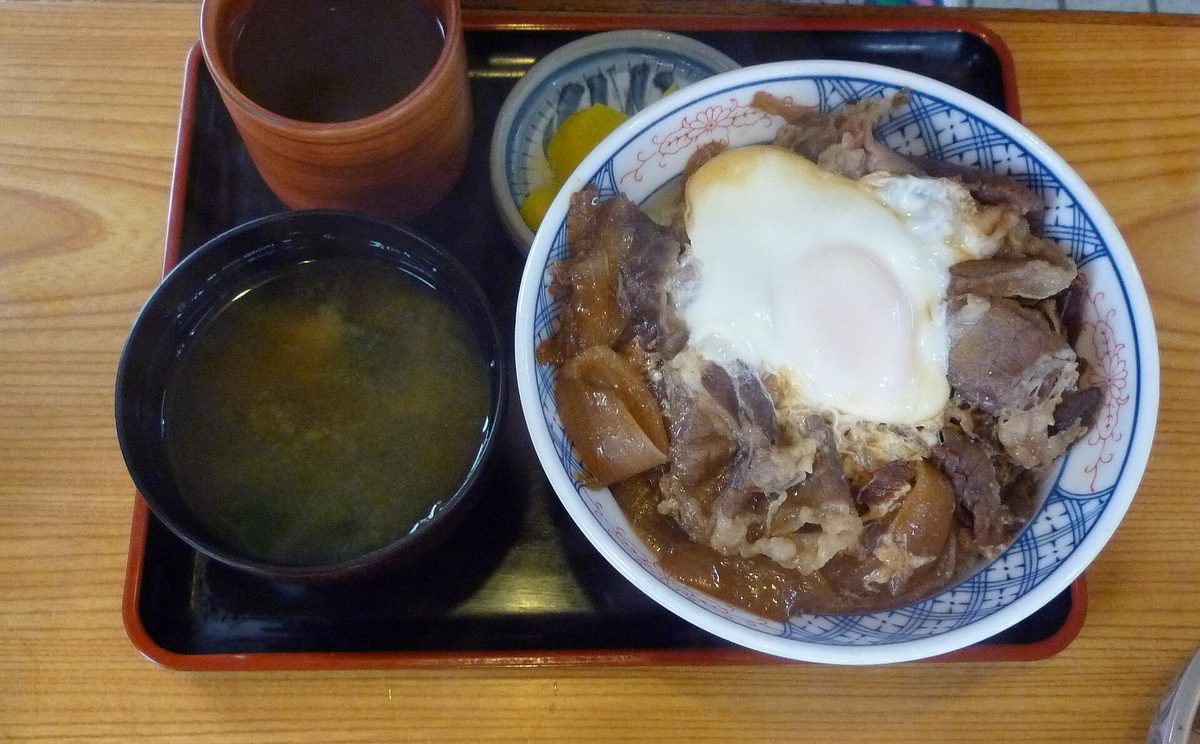
- Egg: many people pour a beaten raw egg over the beef. Yoshinoya's side menu, for example, lists a raw egg (玉子) and a soft-boiled egg (半熟玉子). If you're unsure about raw egg, choose the soft-boiled one; see eating raw food safely in Japan.
- A regulars' trick: dressing. Some fans pour a little salad dressing over their gyudon for a fresh, tangy twist. It's a tip from our editor, not an official way to eat it, and a little goes a long way: don't pour too much.
- Lift the bowl: it's normal to hold the bowl in one hand and eat with chopsticks.
- Your own pace: many people eat quickly and leave, especially at lunch. You don't have to rush, but at busy times it's kind to give up your seat once you've finished.
- Allergies: the sauce contains soy and wheat. Chains publish allergen charts; see food allergies in Japan.
Paying, takeout and phrases
- Paying: many shops take cards and code payments, but check the stickers at the register or on the machine, and carry some cash just in case; see how to pay for things in Japan. There is no tipping: tipping in Japan.
- Takeout: say mochikaeri (持ち帰り) or choose takeout on the machine. Yoshinoya's takeout price is a little lower than its eat-in price.
- Can't read the screen? Use the language button, or point Google Lens at the menu. For more, see eating out with a translation app.
| English | Japanese | Reading |
|---|---|---|
| A regular gyudon, please. | 牛丼の並盛をください。 | Gyudon no namimori o kudasai. |
| To eat here. | 店内で。 | Tennai de. |
| To take away. | 持ち帰りで。 | Mochikaeri de. |
| Extra sauce, please. | つゆだくでお願いします。 | Tsuyudaku de onegaishimasu. |
| Can I pay by card? | カードで払えますか? | Kado de haraemasu ka? |
Last reviewed: October 5, 2026. Prices are tax-included dine-in prices from the chains' official menus at the time of writing and change from time to time.
References
- Yoshinoya: English page
- Yoshinoya: History, from 1899 (Japanese)
- Yoshinoya: History, from 1968 (Japanese)
- Yoshinoya: History, from 2003 (Japanese)
- Yoshinoya Holdings: Shareholder report, business year to February 2026 (Japanese)
- Yoshinoya: Gyudon menu (Japanese)
- Yoshinoya: Atama no omori on the menu (Japanese, PDF)
- Yoshinoya: Negidaku gyudon nationwide (Japanese)
- Yoshinoya: Takeout ordering by smartphone, 2015 (Japanese)
- Yoshinoya: Four cashless payments, 2019 (Japanese, PDF)
- Yoshinoya: Smartphone ordering, 2020 (Japanese, PDF)
- Sukiya: History (Japanese)
- Zensho Holdings: Sukiya monthly figures (Japanese)
- Sukiya: Gyudon menu (Japanese)
- Sukiya: Gyudon Light (Japanese)
- Matsuya Foods Holdings: History (Japanese)
- Matsuya Foods Holdings: Company data (Japanese)
- Matsuya: Gyumeshi menu (Japanese)
- Matsuya: Counter items (Japanese)
- Matsuya: Mobile ordering (Japanese)
- Matsuya: Mobile ordering starts, 2020 (Japanese)
- Nikkan Kogyo Shimbun (Newswitch): Matsuya's multilingual ticket machines (Japanese)
- ITmedia Business Online: How the gyudon chains take orders, May 20, 2023 (Japanese)