Convenience Store Oden in Japan: A Warm Late-Night Snack for Cold Nights, and How to Order It
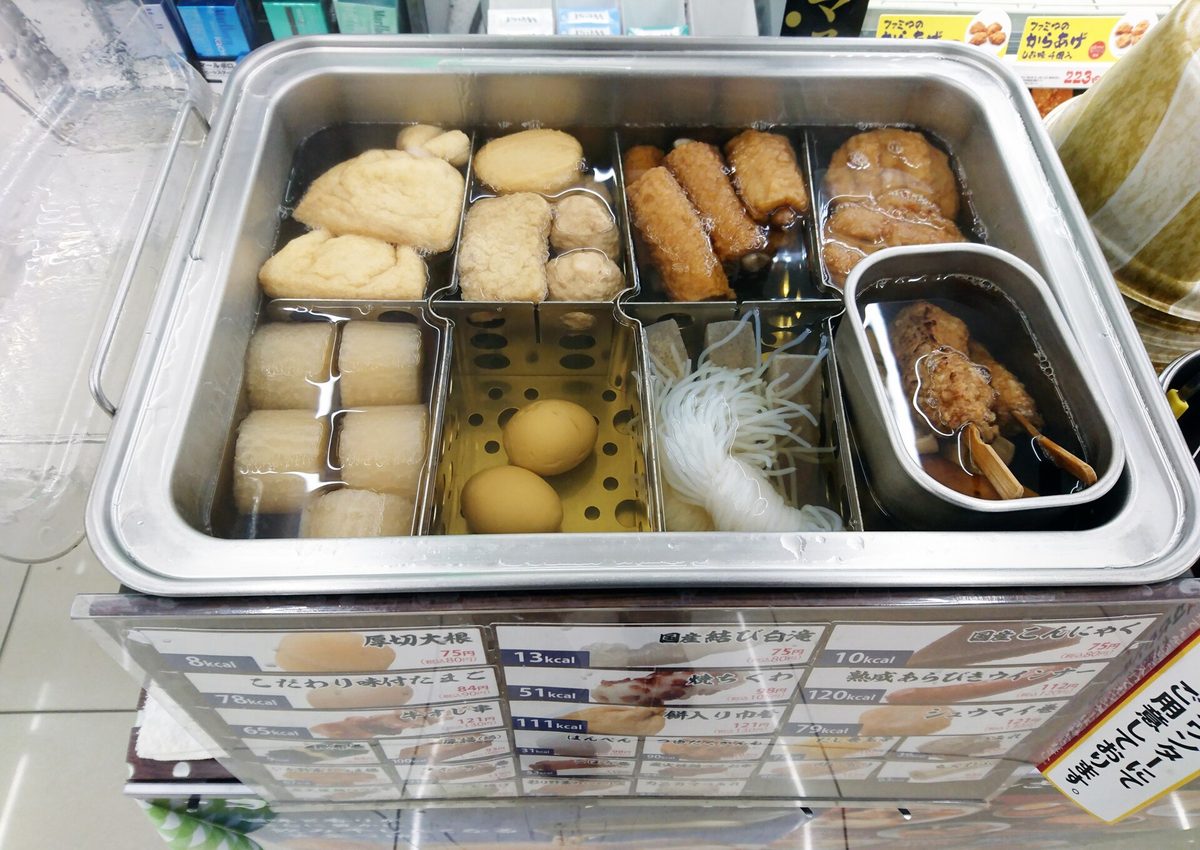
When the evenings turn cold, a cup of oden from a convenience store is one of the easiest warm snacks you can find in Japan. Oden is a simple dish of daikon, eggs, fish cakes and other items simmered for a long time in a light dashi broth. Some convenience stores keep a pot of it by the register, and you can buy just one or two pieces. This guide explains what oden is, the items to try first, what the big chains sell this season, how to order at the counter, and where to eat it, including back in your hotel room.
This page may contain affiliate links. If you buy through them, we may earn a commission at no extra cost to you.
- What oden is, and the items to try first
- Lawson, 7-Eleven and FamilyMart: counter pots, packs and why stores differ
- How to order at the register, with phrases
- Where to eat it: the eat-in space, outside the store, or your hotel room
What is oden?
Oden is a one-pot dish: each item is simmered on its own in a broth made with dashi (stock from fish and kelp), so it soaks up the flavor and stays hot. You pick the pieces you like and eat them one by one, usually with a dab of Japanese mustard (karashi). The broth is light, and you can sip it too.
Convenience store oden uses the same idea. The lineups on the official pages of Lawson and 7-Eleven include daikon, eggs, konnyaku, shirataki noodles, fried tofu (atsuage), grilled chikuwa, beef tendon and sausage rolls. The chart below shows the classic items. Not every store has every item.
Local styles: black broth and miso
Oden changes from region to region. Two well-known styles:
- Shizuoka oden: the Ministry of Agriculture (MAFF) describes it as a local dish of Shizuoka (Shizuoka) in which every item, such as beef tendon, black hanpen fish cake, daikon and konnyaku, is put on a skewer and simmered in a dark broth, then sprinkled with green laver (aonori) and powdered fish stock. It's sold on the city's oden streets, at small snack shops and at delis.
- Miso oden in Aichi: Aichi Prefecture's food-education site describes simmered daikon, taro, konnyaku and grilled tofu on bamboo skewers, dipped in a sauce of red miso, sugar, mirin and sesame. More about the dark miso of this area: miso soup across Japan. Visiting? See Nagoya (Aichi).
Convenience store oden changes by region too. Lawson sells some items only in Okinawa, such as Okinawa-style pig's feet (tebichi), pork ribs (soki) and Okinawa soba, and 7-Eleven said in its 2025 announcement that it seasons its broth in seven regional styles.
Which convenience stores sell oden this season?
Oden is a seasonal item, and the big chains bring it back from late summer to autumn. Here is what we could confirm on October 5, 2026:
- Lawson: the 2026 oden lineup went on sale on September 23, 2026, according to Impress Gourmet Watch. Lawson's oden page lists it as made in the store, and notes that Natural Lawson stores don't carry it and that some items are sold only in certain regions. At the time of writing, the page lists daikon and egg at 160 yen each and beef tendon at 198 yen, tax included. These are Lawson's suggested prices, and the price at each store can differ.
- 7-Eleven: 7-Eleven's oden page lists counter oden by region and says some stores don't carry the items, and that an item may not be on sale yet even in its sales area. Its 2025 announcement separated "counter oden" from "packed oden", and its own brand also sells a one-portion pack of oden.
- FamilyMart: its 2024 announcement said its oden, "Dashi Oden Shimishimi-tei", was sold at limited stores. We couldn't find an announcement for 2026 at the time of writing.
Not every store has a pot. In 2020, a food industry newspaper reported that some FamilyMart stores had switched to oden in bags that staff heat in a microwave, because a pot takes a lot of work to keep up. In 2024, a news site checked 13 stores around Shinjuku (Tokyo) and found a pot in only two; some stores had removed theirs and sold packed oden instead. So if the first store doesn't have it, try another, or look for packed oden in the chilled section.
We couldn't find an official end date for the season. Ask at the store if you're not sure.
How to order at the counter
You don't need much Japanese. Point at the pot and say the names, or show the phrases below. If you can't tell whether customers may serve themselves, ask the staff before touching the pot.
| English | Japanese | Reading |
|---|---|---|
| Daikon and an egg, please. | だいこんと、たまごをください。 | Daikon to, tamago o kudasai. |
| This and this, please. (pointing) | これと、これをください。 | Kore to, kore o kudasai. |
| Mustard, please. | からしをください。 | Karashi o kudasai. |
| A little more broth, please. | おつゆを多めにお願いします。 | Otsuyu o ōme ni onegai shimasu. |
| Could you close the lid tightly? | ふたをしっかり閉めてもらえますか? | Futa o shikkari shimete moraemasu ka? |
- Mustard and chopsticks: the staff may ask if you need them. Mustard usually comes in a small packet. If they don't ask, use the phrases above, or point at the chopsticks.
- Paying: oden is paid for at the same register as everything else. More on payment: cash, cards or IC card.
- Can't read the menu card? Point your camera at it with a translation app: eating out in Japan when you don't speak Japanese.
- Allergies: the broth is made with fish stock, and fish cakes can contain wheat and egg. 7-Eleven's oden page shows allergy information for each item. More: food allergies in Japan.
Where to eat it
- The eat-in space: some convenience stores have a few seats by the window. If yours does, it's the easiest place to sit down with a hot cup.
- Just outside the store: step to the side so you don't block the door or the parking lot. Hold the cup with both hands; the broth is very hot.
- Back in your hotel room: a cup of oden makes a cozy late-night snack after a cold day out. Ask for the lid to be closed tightly, carry the bag upright so the broth doesn't spill, and throw away the cup and leftover broth the way your hotel asks.
- Not while walking in a crowd: eating hot soup on a busy street is risky for you and for people around you. More: is eating while walking rude in Japan?
Trash: public bins are rare in Japan. Use the store's bins only for what you bought there, following their labels, or take the cup back with you. More: how to handle garbage in Japan.
Want to try something even more unusual? Some vending machines sell oden in a can: Japan's surprising vending machines.
Last reviewed: October 5, 2026. Items, prices and the season differ by chain, region and store.
References
- Lawson: Oden (Japanese)
- Impress Gourmet Watch: Lawson's 2026 oden goes on sale on the 23rd (Japanese)
- 7-Eleven Japan: Oden (Japanese)
- 7-Eleven Japan: Renewed oden, 2025 announcement (Japanese)
- Seven Premium: Oden (East Japan), one portion (Japanese)
- FamilyMart: Dashi Oden Shimishimi-tei, 2024 announcement (Japanese)
- Nihon Shokuryo Shimbun: Convenience store oden moves to packs (Japanese)
- Rocketnews24: Checking 13 convenience stores for oden pots (Japanese)
- MAFF Our Regional Cuisines: Shizuoka oden, Shizuoka Prefecture (Japanese)
- Aichi Prefecture food education net: Miso oden (Japanese)