Japanese Convenience Store Sweets and Coffee: Using a Konbini Like a Café
This page contains affiliate links.
Quick answer
- Pick a chilled dessert, then order coffee at the register: at 7-Eleven and FamilyMart you make it yourself at a machine that grinds the beans for each cup.
- Not every store has seats. If you eat in, tell the staff before you pay: eating in is taxed at 10%, taking away at 8%.
- New sweets come out every week; check each chain's new-product page, and eat cream sweets soon or keep them in the fridge.
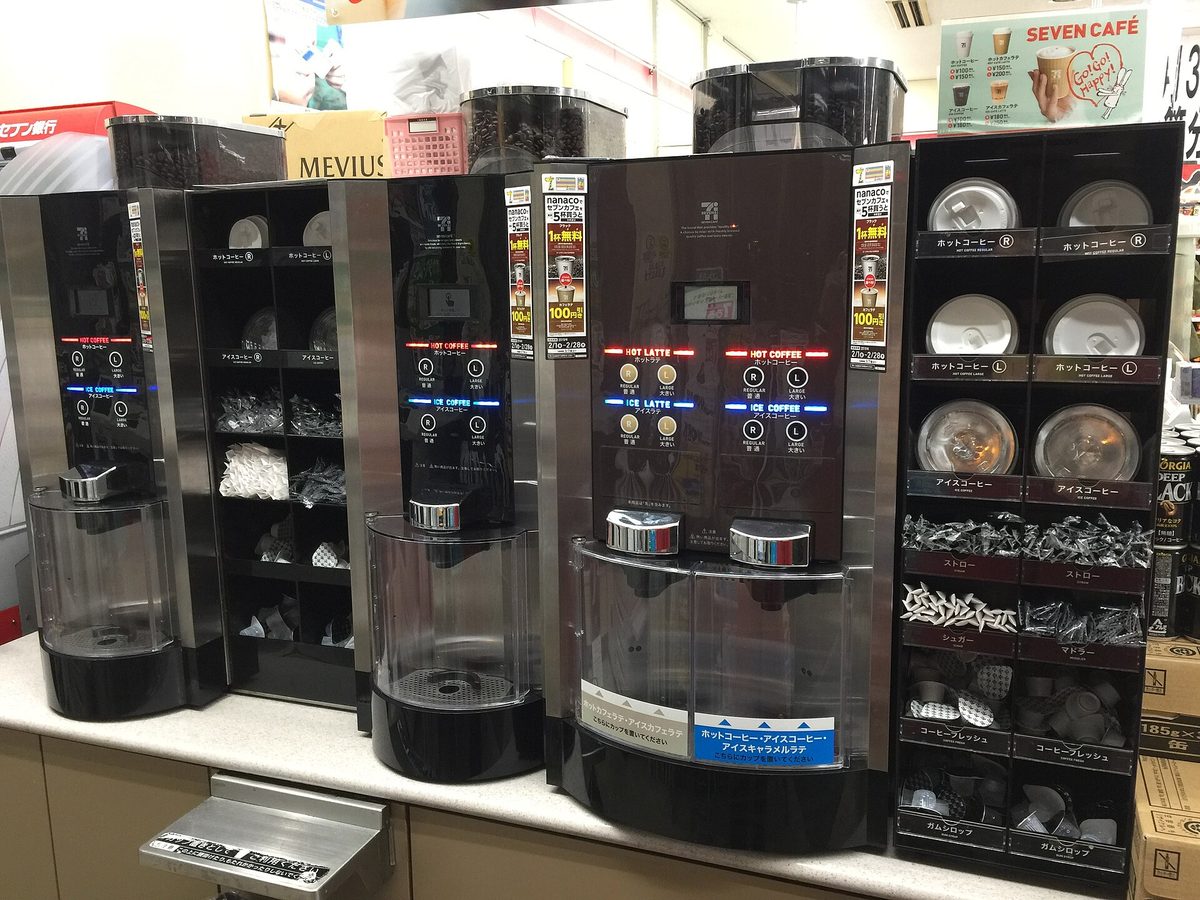
You don't need a reservation or a big budget to have cake and coffee in Japan. The big convenience store chains sell chilled sweets every day, and most have a coffee machine by the register that grinds the beans for each cup. Some stores even have a few seats. This guide covers the sweets each chain is known for, how to spot famous-name collaborations, how to check what's new and what's in season, how to buy a cup of coffee, the eat-in tax rule, and how to carry chilled sweets.
- The sweets 7-Eleven, Lawson and FamilyMart are known for
- Famous names on the label, new items and seasonal flavors
- Freshly ground coffee: how to buy a cup at each chain
- Eat-in spaces: the 8% and 10% tax rule and the manners
- Carrying chilled sweets: what the date labels mean
The basic flow: sweets, coffee and a seat
At most stores, a café break works like the chart below. The details differ by chain and by store, and they're explained further down.
The sweets each chain is known for
The lineups change often, but each of the big three has a few sweets it keeps coming back to. Names below are given in Japanese too, so you can match them to the label.
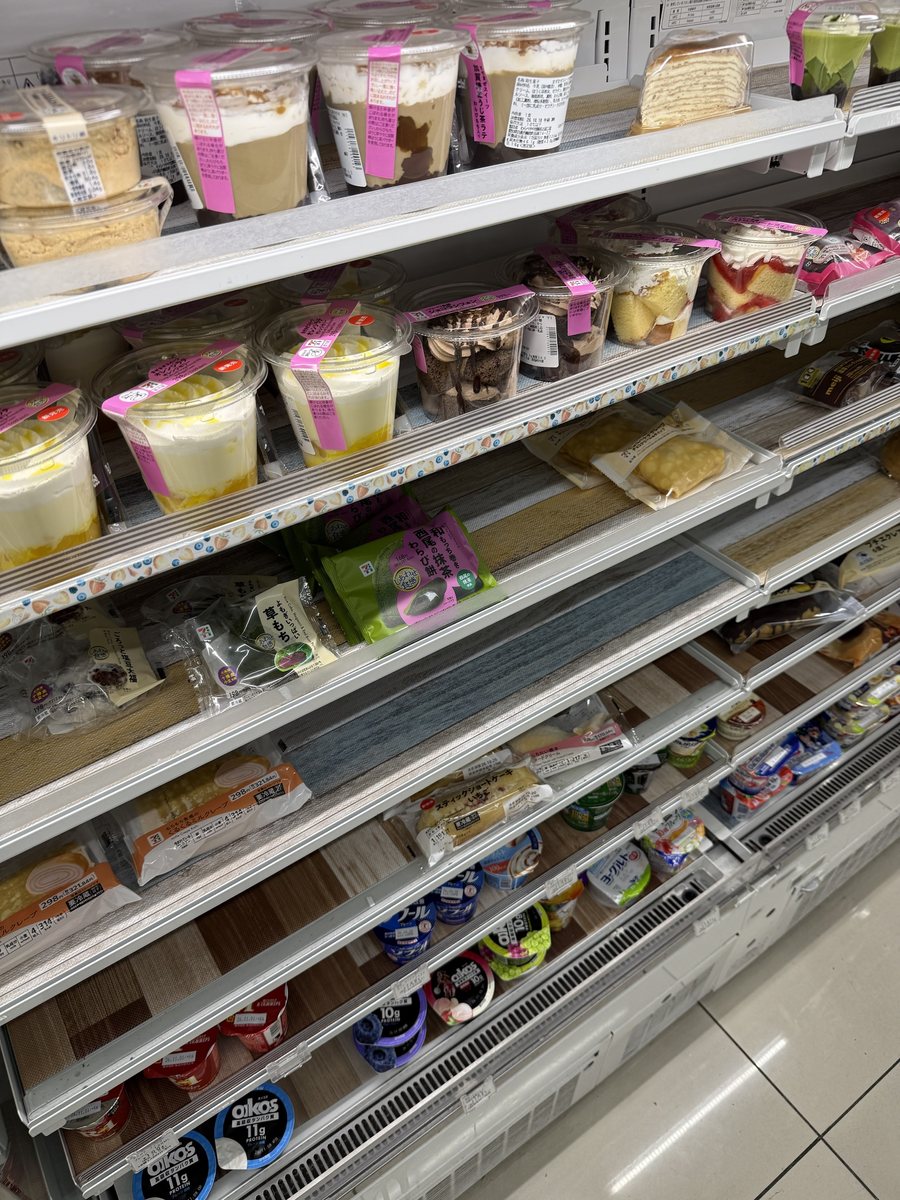
- Lawson: Premium Roll Cake (プレミアムロールケーキ). Lawson calls this soft roll cake filled with fresh cream its signature product. It belongs to Uchi Café, Lawson's own dessert line, and first went on sale on September 29, 2009. On Lawson's dessert page, it's listed under "Standard", along with flavors that change.
- FamilyMart: puddings. In a 2024 announcement, FamilyMart said its Kamadashi Torokeru Purin (窯出しとろけるプリン), a soft baked custard pudding, and its Souffle Pudding (スフレ・プリン), sold since November 2018, were among the top sellers in its yearly sweets ranking. Cream puffs, roll cakes and cheesecakes are also on FamilyMart's dessert page.
- 7-Eleven: Western-style and Japanese-style sweets. In a 2022 announcement, 7-Eleven named cream puffs, a chestnut Mont Blanc and mame daifuku (豆大福, a soft rice cake with sweet bean paste and beans) among its "standard sweets". 7-Eleven's sweets page sorts items into Western-style (洋菓子) and Japanese-style (和菓子) sweets; in October 2026 it listed crepes, an éclair, mitarashi dango (rice dumplings with a sweet soy glaze), warabi mochi and daifuku.
Every chain notes that items, prices and release dates differ by region and store, and that some stores don't carry an item. If you can't find one, try another store or pick something new from the case.
Official post from FamilyMart (@famima_now) on X
Famous names on the label: look for 監修 or ×
The chains often team up with well-known pastry chefs, brands and specialty shops. These collaborations come and go, so here's how to spot them rather than a list:
- 監修 (kanshu) means "supervised by". It follows the name of the chef or brand. In October 2026, for example, FamilyMart's dessert page listed a crepe and a cream puff supervised by Pierre Hermé's ANTHOLOGY (ピエール・エルメ アンソロジー監修), and its café page listed a frappe supervised by GODIVA.
- × means a collaboration. Lawson's Uchi Café sweets often carry a partner's name after ×. In October 2026, Lawson's dessert page listed several "Uchi Café × Milk" sweets made with Milk, a shop specializing in fresh cream, and Lawson's Uchi Café page announced them as a series released over three weeks.
Not sure what the label says? Point a translation app at it: eating out in Japan when you don't speak Japanese.
How to check what's new
New sweets come out every week, and the official new-product pages are the easiest way to see them. They're in Japanese, but a browser's translate button works well enough.
- 7-Eleven: this week's new products and next week's new products. Each item shows the regions where it's sold.
- Lawson: new products, sorted by release date. Lawson's Uchi Café pages give many sweets' release time as "around evening" on the release day, and note that delivery times differ by store.
- FamilyMart: this week's new products and next week's new products, each with the regions where it's sold (発売地域).
A new item may not reach every store on its release day, and some are sold only in certain regions.
Seasonal flavors through the year
Each season brings its own flavors. Some of what we could confirm on the official pages:
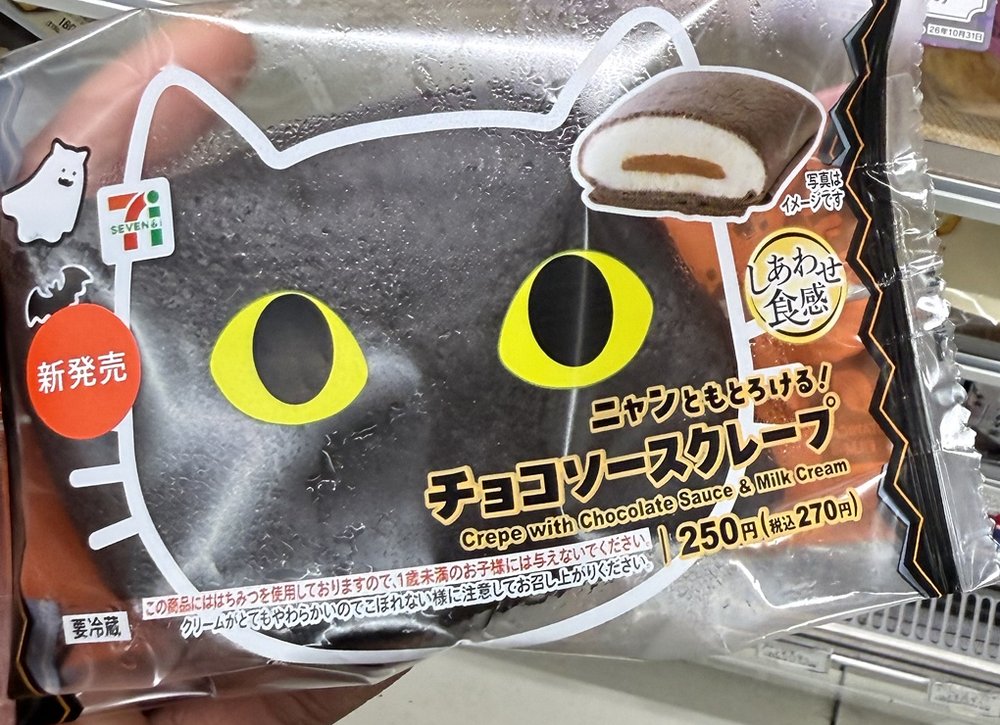
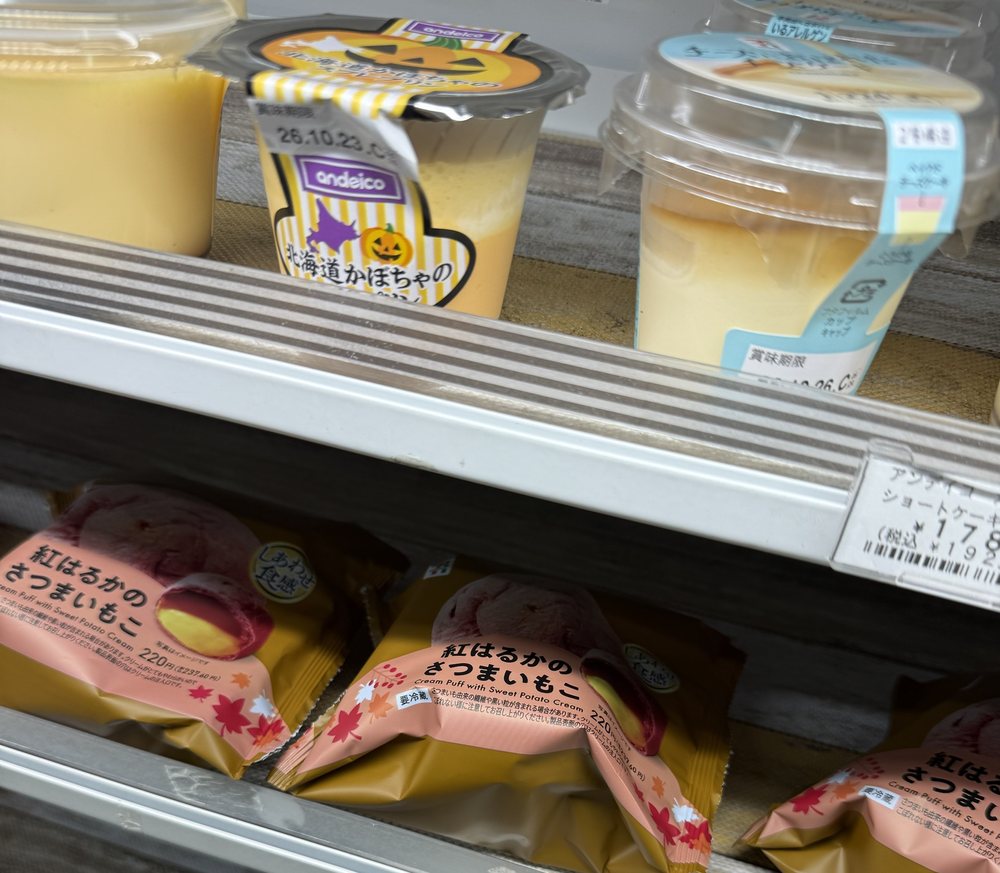
- Autumn: chestnut and sweet potato. In October 2026, the dessert pages of all three chains had chestnut Mont Blancs or sweet potato sweets made with Beni Haruka (紅はるか), a sweet potato variety. Lawson also had tsukimi (moon-viewing) sweets, and FamilyMart had pumpkin.
- Winter: strawberries. FamilyMart describes its strawberry sweets event as held every winter; in 2026 it started on January 6.
- Spring: kusa mochi (rice cake with mugwort) and sakura mochi (rice cake wrapped in a cherry leaf). 7-Eleven called both "standard" spring sweets in a 2020 announcement.
Exact items and dates change every year, so check the new-product pages above when you travel.
Freshly ground coffee: how to buy a cup
All three chains grind the beans in the store. How you get your cup is a little different at each one:
- 7-Eleven (SEVEN CAFÉ): 7-Eleven's FAQ says each cup is ground fresh and dripped, and that you operate the machine yourself. Its sustainability page also describes grinding the beans for each cup. On machines with a touch panel, you can choose light, regular or strong for hot and iced coffee (FAQ). 7-Eleven also has an official video, How to buy & make SEVEN CAFÉ.
- Lawson (MACHI café): Lawson says its espresso machines brew from freshly ground beans under high pressure. Depending on the store, the staff make your drink, or the store has self-service machines. At those stores, you order at the register, the staff hand you the cup, and you set it in the machine yourself (Lawson FAQ). Some stores also have MACHI café+, where drinks are made one cup at a time after you order at the counter.
- FamilyMart (FAMIMA CAFÉ): FamilyMart's how-to page says: for hot drinks, order at the register and get a cup, then put it in the machine and use the touch panel; for iced drinks, take one from the freezer case, pay at the register, then use the machine. FamilyMart says its newer machines, in all stores since June 2026, can grind beans in 9 different ways to suit each drink.
Milk, sugar, stirrers and lids are usually on a shelf next to the machine. If you're not sure which button to press, ask the staff. Paying: cash, cards or IC card.
Official post from 7-Eleven Japan (@711SEJ) on X
Official post from Lawson (@akiko_lawson) on X
Eat-in spaces and the tax rule
Not every store has seats. 7-Eleven's English FAQ says some of its stores have an eat-in area. If you'd like to sit down, look for tables by the window when you walk in.
Eating in costs a little more. Japan's National Tax Agency (NTA) applies the reduced 8% rate to food and non-alcoholic drinks you take away, and the standard 10% rate to eating in. So the same cake and coffee are taxed differently depending on where you have them.
Say it at the register. The NTA's Q&A on the reduced rate says a convenience store doesn't have to ask every customer, and can instead put up a sign such as "Please tell us if you'll use the eat-in corner". 7-Eleven's English FAQ also says items eaten in its eat-in area are taxed at 10%. So if you plan to sit down, tell the staff before you pay:
| English | Japanese | Reading |
|---|---|---|
| I'll eat here. | 店内で食べます。 | Tennai de tabemasu. |
| To take away. | 持ち帰りです。 | Mochikaeri desu. |
| Is there an eat-in space? | イートインはありますか? | Īto-in wa arimasu ka? |
| A hot coffee, please. | ホットコーヒーをください。 | Hotto kōhī o kudasai. |
A change to know about: the NTA has announced a plan to lower the tax on food and drinks to 1% for the 2 years from April 1, 2027 to March 31, 2029, if the bill passes the Diet (Japan's parliament). The NTA's Q&A on the plan says it would cover the same food and drinks as today's 8% rate, so eating in would stay outside it.
Eat-in manners. 7-Eleven's English FAQ asks customers to avoid long stays and loud conversations so the space stays comfortable for everyone, and to throw away trash by the store's rules. Public bins are rare in Japan, so use the store's bins for what you bought there, sorted by their labels: how to handle garbage in Japan. If there are no seats, step aside from the door, and see is eating while walking rude in Japan?
Carrying chilled sweets
Cream cakes and puddings are sold from the chilled case, so they're best eaten soon. If you take them back to your hotel, check the label:
| On the label | Reading | What it means |
|---|---|---|
| 消費期限 | shōhi kigen | Use-by date: the safe-to-eat limit. Don't eat it after this date. |
| 賞味期限 | shōmi kigen | Best-before date: the limit for the best taste. |
| 保存方法 | hozon hōhō | How to store it, for example in the fridge. |
The Ministry of Agriculture (MAFF) explains that both dates apply only while the package is unopened and kept as the storage method says, so eat anything you've opened soon, whatever the date. On a warm day, buy chilled sweets near the end of your outing or put them in your room's fridge. Allergies? Labels list allergens in Japanese: food allergies in Japan.
Looking for sweets to take home as gifts instead? Boxed sweets keep longer: souvenirs from Japan. And on a cold night, the same counter may sell something warm: convenience store oden.
My visit
I'm Japanese, and I often buy convenience store sweets. They're reasonably priced, so when I get a little hungry, I pick one up together with a coffee. The coffee is ground from the beans, so I can use the store like a café. Lately, I also feel that the eat-in spaces have gotten better.
Last reviewed: October 14, 2026. Items, prices, collaborations and machines differ by chain, region and store, and change often.
References
- Lawson: Desserts (Japanese)
- Lawson Uchi Café: Lawson's signature Premium Roll Cake renewed (Japanese)
- Lawson: Premium Roll Cake series sales milestone (Japanese)
- Lawson Uchi Café: Sweets made with the fresh cream shop Milk (Japanese)
- Lawson: New products (Japanese)
- Lawson: MACHI café (Japanese)
- Lawson FAQ: Products (Machikado Chubo, MACHI café) (Japanese)
- FamilyMart: Desserts (Japanese)
- FamilyMart: FAMIMA CAFÉ menu (Japanese)
- FamilyMart: Pudding sweets, 2024 announcement (Japanese)
- FamilyMart: This week's new products (Japanese)
- FamilyMart: Next week's new products (Japanese)
- FamilyMart: Winter strawberry sweets event, 2026 (Japanese)
- FamilyMart: How to buy and make FAMIMA CAFÉ drinks (Japanese)
- FamilyMart: FAMIMA CAFÉ (Japanese)
- 7-Eleven Japan: Sweets (Japanese)
- 7-Eleven Japan: Standard sweets renewed, 2022 announcement (Japanese)
- 7-Eleven Japan: Spring sweets, 2020 announcement (Japanese)
- 7-Eleven Japan: This week's new products (Japanese)
- 7-Eleven Japan: Next week's new products (Japanese)
- 7-Eleven Japan FAQ: What kind of coffee is SEVEN CAFÉ? (Japanese)
- 7-Eleven Japan FAQ: Choosing the taste of SEVEN CAFÉ (Japanese)
- 7-Eleven Japan: SEVEN CAFÉ and the environment (Japanese)
- 7-Eleven Japan: FAQ for visitors (English)
- 7-Eleven Japan: How-to videos (English)
- National Tax Agency: No. 6102, the reduced tax rate (Japanese)
- National Tax Agency: Reduced tax rate Q&A, the scope of eating out (Japanese, PDF)
- National Tax Agency: Q&A on the 2-year tax cut on food and drinks (Japanese, PDF)
- MAFF: What do the date labels mean? (Japanese)