Onsen Water Types in Japan Explained: The Ten Spring Types, Colors and Smells, and How to Read the Sign
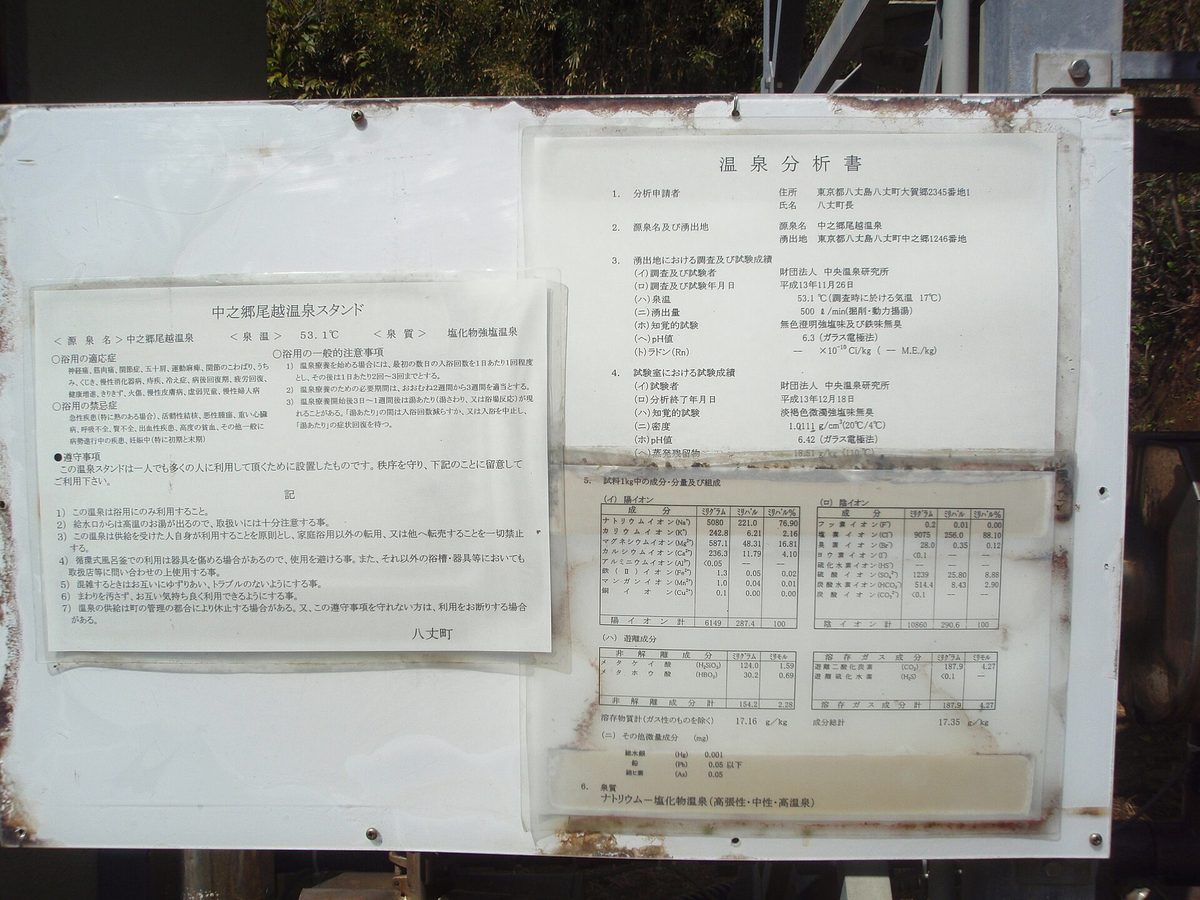
At almost every onsen in Japan, a framed sheet on the wall lists the water's "spring type" and a long table of minerals, usually only in Japanese. This guide explains the ten spring types used in Japan, what you may notice about each one (color, smell, how it feels), the safety notes that come with them, and how to find the few lines on the sign that matter to you. It is based on the Ministry of the Environment's official guidelines and the Japan Spa Association, checked in October 2026. It is general information, not medical advice.
- The short answer: what "spring type" means
- The ten spring types at a glance
- What the listed "indications" do and don't mean
- Who should be careful, and safe bathing tips
- How to read the onsen sign
The short answer
The spring type tells you what is dissolved in the water. Japan's Ministry of the Environment sorts hot springs that meet its standards for therapeutic use (ryoyo-sen) into ten types, based on the main substances in the water. The type is written on the sign at every public onsen, together with who should not bathe and how to bathe safely. Most of the time you can simply enjoy the bath; the type mainly helps you know what to expect, such as a sulfur smell or water that may sting a little.
Two practical points: acidic and sulfur springs can be harsh on sensitive skin, and the "indications" listed on signs are not promises that a bath will cure anything.
What counts as an onsen
Under Japan's Hot Spring Act, water (or steam or gas) from the ground counts as a hot spring if it is at least 25 degrees Celsius when it comes out, or if it contains at least one of several listed substances above a set amount. So a hot spring can be cool, and some hot springs have no spring type on their sign: the Ministry's guidelines give a spring type only to water that meets the stricter standard for therapeutic springs.
The Ministry's guidelines also classify the water by temperature, by pH (acidic, mildly acidic, neutral, mildly alkaline or alkaline) and by tonicity, that is, how concentrated it is compared with body fluids. You will often see these three words written after the spring type on the sign, as in the Ministry's own example "isotonic, neutral, high-temperature spring".
The ten spring types
- Simple springs (単純温泉) have fewer dissolved minerals and feel mild; the Ministry calls them gentle on the skin. If the pH is high, they are called alkaline simple springs, which the Japan Spa Association says make the skin feel smooth. Gero (Gifu) is one example.
- Chloride springs (塩化物泉) are one of the more common types in Japan. They taste salty, and the Ministry explains that the salt left on the skin helps keep you warm after the bath.
- Bicarbonate springs (炭酸水素塩泉) are described by the Ministry as making the skin feel smooth.
- Sulfate springs (硫酸塩泉) are described by the Ministry as leaving the skin moist.
- Carbon dioxide springs (二酸化炭素泉) contain dissolved carbon dioxide gas; the Japan Spa Association says small bubbles cling to your body, and that heating the water can make the gas escape. They are relatively rare in Japan.
- Iron springs (含鉄泉) turn reddish-brown when the iron meets the air. Arima (Hyogo) is an example.
- Acidic springs (酸性泉) taste sour and may tingle. The Japan Spa Association notes that they are found in many places in Japan but hardly anywhere in Europe.
- Iodine springs (含よう素泉) are brownish with a medicine-like smell, according to the Ministry.
- Sulfur springs (硫黄泉) have the famous "boiled egg" smell, which comes from hydrogen sulfide, and are often cloudy white, blue or green.
- Radioactive springs (放射能泉) contain radon gas above a set level. The Ministry notes that they have long been used for therapeutic bathing in Japan.
Colors can change: the Japan Spa Association explains that iron springs turn brown after they meet the air, even if they look clear when they come out, and iodine springs turn yellow over time. Not every bath of one type looks the same.
What the "indications" mean
Signs often list indications (適応症, tekio-sho): conditions for which bathing in that type of water is considered helpful, such as poor circulation or dry skin. In 2014, the Ministry of the Environment updated these lists and also explained how to read them:
- Onsen therapy aims to ease symptoms and support recovery and general health, rather than to cure a specific disease.
- Even a short stay can be refreshing, but the Ministry describes a stay of about two to three weeks as suitable for full benefits.
- The effects come from many things together, including warmth, the change of place and relaxation, so they can't be decided from the water's contents alone.
- Conditions can get worse depending on the person, so therapy should be done with advice from a doctor who knows onsen treatment.
In short: enjoy the bath, and treat the list as background information, not a medical promise. If you have a health condition, follow your own doctor's advice.
Who should be careful
The same 2014 guidelines list contraindications (禁忌症, kinki-sho), conditions in which even one bath may cause harm. For all onsen, these include:
- the active stage of an illness, especially with a fever;
- active tuberculosis, advanced cancer, severe anemia or other serious weakness;
- serious heart or lung disease that makes you short of breath with little activity, or serious kidney disease with swelling;
- bleeding from the digestive tract, or any visible bleeding;
- a sudden worsening of a long-term illness.
For acidic and sulfur springs, the guidelines add people with sensitive skin or mucous membranes, and dry skin in older people. If that applies to you, a short soak and a rinse with plain water afterwards may be easier on your skin.
Safe bathing tips from the guidelines
- Don't bathe right before or after a meal, or after drinking alcohol; bathing while drunk is especially dangerous.
- Pour hot water over your hands and feet first (kakeyu) and wash before you get in.
- Older people, and people with high blood pressure, heart disease or a past stroke, should avoid water of 42 degrees or hotter.
- Start with about 3 to 10 minutes per soak, and later up to about 15 to 20 minutes once you are used to it.
- Drink a glass of water before and after bathing, and get out slowly. If you feel dizzy, call for help and get out with your head low.
- After bathing, the guidelines suggest drying off without rinsing, but people with sensitive skin may prefer to rinse after acidic or sulfur water, or water treated with chlorine.
- Some people feel tired, sleep badly or get an upset stomach a few days into a long onsen stay (yuatari). If this happens, bathe less or rest until you feel better.
Some onsen also have a place to drink the water. Only drink where it is allowed, use a clean cup, and keep to small amounts: the guidelines suggest about 100 to 150 milliliters at a time and 200 to 500 milliliters a day in total. Children aged 15 or under should not drink it except under a doctor's guidance, and you should not take the water home to drink.
How to read the onsen sign
The Hot Spring Act requires every facility that offers hot spring water for public bathing or drinking to post certain information where guests can see it. The ordinance lists the items: the source name, spring type, temperature at the source and in the bath, the contents, the date of the analysis, the registered laboratory, contraindications, how to bathe or drink, and whether the water has been diluted, heated, recirculated or treated with additives or disinfectant, and why. You don't need to read it all; look for these words:
- The spring type line (泉質) is usually written like ナトリウム-塩化物泉: the last part (塩化物泉) is the type from the chart above, and the first part names the main mineral.
- Two temperatures may be shown: at the source and where you bathe.
- The date of analysis (分析年月日) tells you how recent the analysis is. Facilities must have the water analysed again regularly; the city of Kobe (Hyogo), for example, tells operators to do it every ten years.
- Added water, heating and recirculation (加水・加温・循環) are only listed if they are done. Our guide to gensen kakenagashi explains what they mean and why they are used.
What to do as a traveler
- Glance at the sign for the spring type and look for 禁忌症 if you have a health condition.
- If the water is acidic (酸性) or sulfur (硫黄), soak briefly and rinse afterwards if your skin is sensitive.
- Keep soaks short, drink water, and skip the bath after alcohol.
- Read our step-by-step onsen guide for manners, and our guide to onsen towns to choose where to go.
Last reviewed: October 25, 2026. This page is general information, not medical advice; follow the sign at each facility and your doctor's advice.
References
- Ministry of the Environment: Standards for posting contraindications and bathing or drinking precautions, 2014 (Japanese, PDF)
- Ministry of the Environment: Guidelines for mineral spring analysis, revised 2014 (Japanese, PDF)
- Ministry of the Environment: Multilingual manual for onsen towns, 2021 (Japanese, English, Chinese and Korean, PDF)
- Tokyo Metropolitan Government: Posting onsen contents, with the text of the law (Japanese, PDF)
- City of Kobe (Hyogo): Hot spring use and analysis every ten years (Japanese)
- Japan Spa Association: Spring types (Japanese)
- Japan Spa Association: How to read an analysis sheet (Japanese)
- Japan Spa Association: Indications and contraindications (Japanese)