Best Onsen Towns in Japan: 7 Hot Spring Towns Compared, from Kusatsu to Dogo
This page contains affiliate links.
Japan has hot springs almost everywhere, so the hard part is choosing one. This guide compares seven onsen towns that are popular with visitors: what makes each one special, roughly how to get there, and who it suits best. It is based on the official pages of each town's tourism association, the bath operators and the railway companies, checked in October 2026.
- The short answer: which onsen town fits your trip
- A rough map and a side-by-side comparison
- Each town: what to see, how to get there, who it suits
- What to check before you go
The short answer
Pick by where you are staying. From Tokyo, Hakone (Kanagawa) is the easiest trip, and Kusatsu (Gunma) is worth a night for its famous Yubatake. From Osaka or Kobe (Hyogo), Arima (Hyogo) is close enough for an afternoon, and Kinosaki (Hyogo) is a classic overnight stay where you walk between public baths. From Nagoya (Aichi), Gero (Gifu) fits on the way to Takayama (Gifu). In western Japan, Dogo (Ehime) has a historic public bathhouse, and Beppu (Oita) lets you see springs boiling out of the ground.
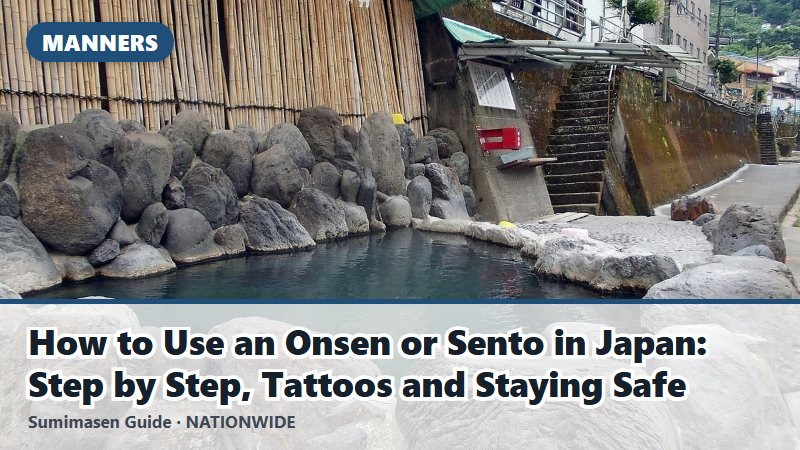
All seven have baths you can use as a day visitor, but staying one night at an inn (ryokan) is the most relaxed way to enjoy an onsen town. Bath manners are the same everywhere; see our step-by-step onsen guide before your first visit.
Where they are
Kusatsu (Gunma): the Yubatake and very acidic water
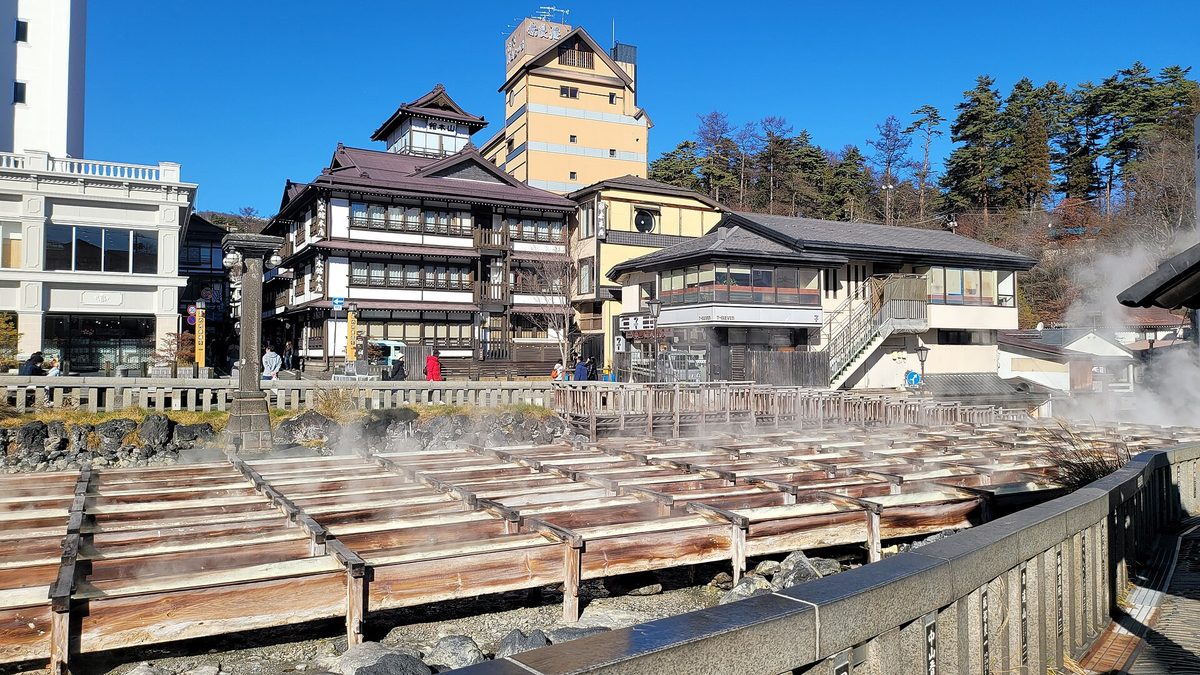
What to see. The Yubatake, a steaming field of hot spring water running through wooden channels, is the symbol of Kusatsu, right in the middle of town. Kusatsu's water contains a lot of sulfur and is strongly acidic: the Kusatsu Tourism Public Corporation gives its pH as 2.05. At the Netsunoyu hall next to the Yubatake, you can watch yumomi, a way of cooling the very hot water by stirring it with long wooden boards instead of adding water, handed down since the Edo period (1603 to 1868), in a show held six times a day; tickets go on sale 30 minutes before each show, with no reservations and no credit cards.
Getting there. According to the Kusatsu Onsen Tourism Association, the limited express Kusatsu-Shima from Ueno in Tokyo takes about 2 hours 33 minutes to Naganohara-Kusatsuguchi Station, and the JR bus from there takes 25 minutes. Another way is the Hokuriku Shinkansen to Karuizawa (Nagano), then a bus to Kusatsu. Direct highway buses also run from Tokyo Station and Shinjuku (Tokyo).
Good for: travelers who want a "real" hot spring smell and look, and don't mind a long trip. Because the water is strongly acidic, people with sensitive skin may want to rinse off with tap water after bathing; our guide to onsen water types explains why.
Beppu (Oita): the boiling "hells"
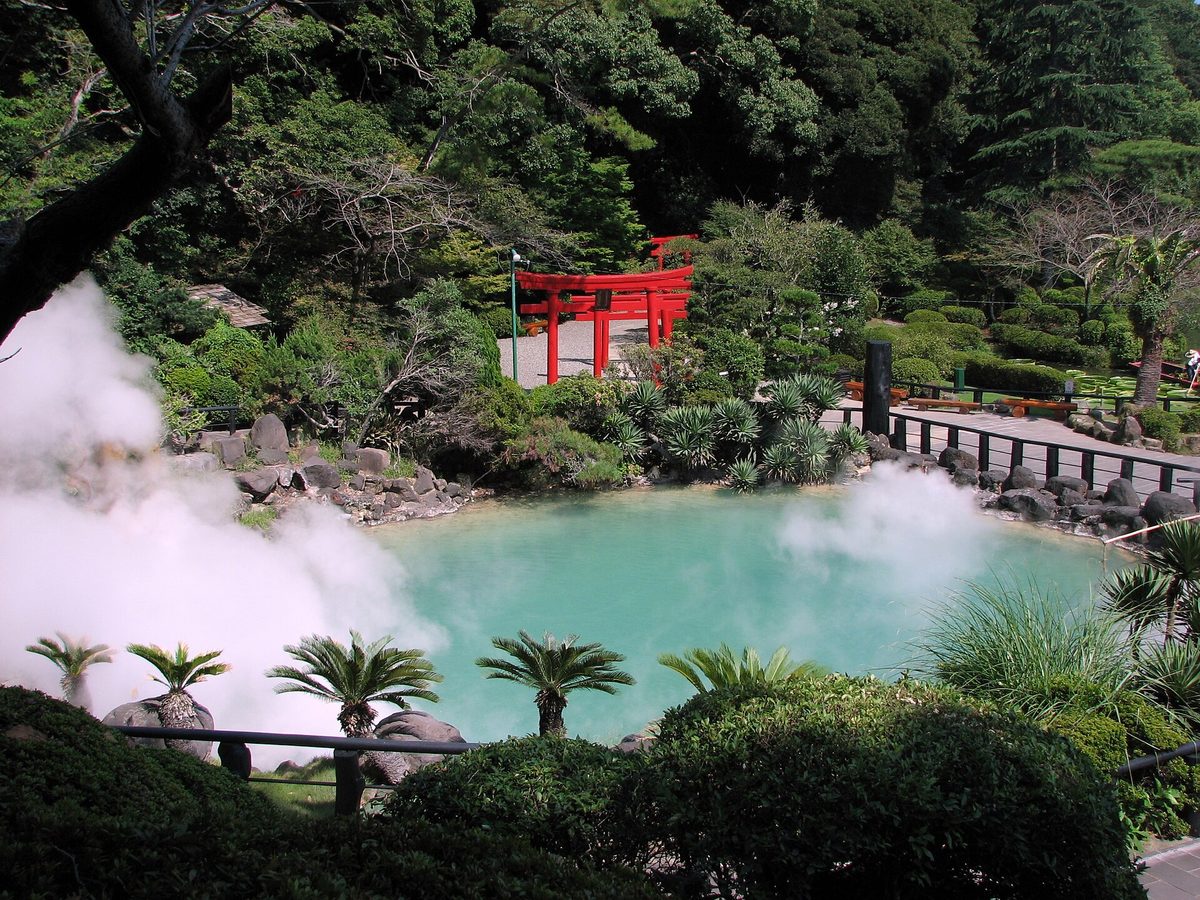
What to see. Beppu (Oita) is famous for the Jigoku Meguri ("hell tour"): seven hot spring sources of nearly 100 degrees that you look at, not bathe in. They include the cobalt-blue Umi Jigoku, the red Chinoike Jigoku and Tatsumaki Jigoku, a geyser that erupts at intervals. According to the association of hell owners in Beppu (Oita), four of them are designated by the national government as Places of Scenic Beauty, and four have footbaths. A common ticket for all seven costs 2,400 yen for adults and 1,200 yen for elementary and junior high school students, and is valid on the day you buy it and the next day. They are open from 8:00 to 17:00 every day.
Getting there. From the west exit of JR Beppu Station, Kamenoi Bus routes 2, 5, 24 and 41 take about 20 minutes to the Kannawa area, where five of the seven hells are within walking distance. The other two, Chinoike and Tatsumaki, are about 3 kilometers away, so take a bus or taxi between the two areas.
Good for: curious travelers and families who want something to see as well as a bath. The city of Beppu (Oita) also publishes its own map of tattoo-friendly baths (see our onsen guide).
Hakone (Kanagawa): the easy trip from Tokyo
What to see. Hakone (Kanagawa) is a mountain resort with many separate hot spring areas; the Hakone Tourism Association presents them as seventeen springs. Many ryokan and day spas are spread along the mountain railway, so you can combine baths with the ropeway over Owakudani, Lake Ashi and art museums.
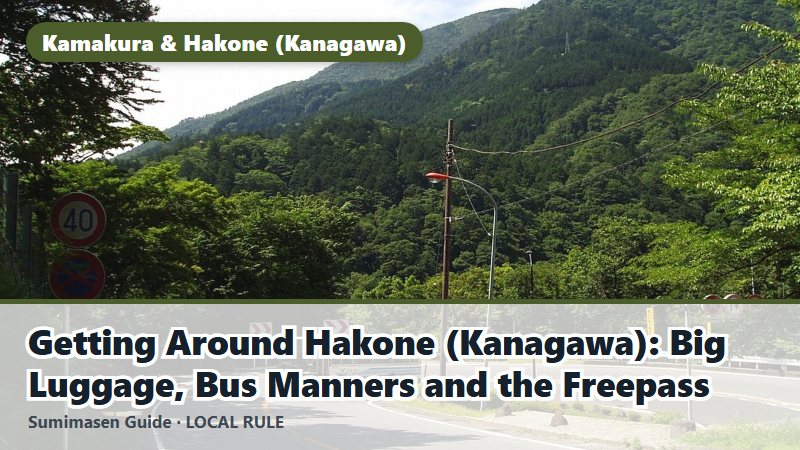
Getting there. Odakyu says the Romancecar limited express runs directly from Shinjuku (Tokyo) to Yumoto (Hakone-Yumoto) in about 80 minutes; all seats are reserved. Before you go, read our guides to volcanic gas at Owakudani and to luggage, buses and the Freepass.
Good for: first-time visitors with limited time, and anyone based in Tokyo. On weekends and in autumn the trains and buses are crowded, so a weekday and light luggage help.
Kinosaki (Hyogo): walking between seven public baths
What to see. Kinosaki is known for soto-yu meguri, walking between its seven public bathhouses in a light cotton kimono (yukata) and wooden sandals (geta). The Japan Tourism Agency's multilingual guide says guests at local inns get a yukata, geta and a pass for the public baths, and that day visitors can pay at each bath or buy a pass for all seven. The water is about 42 degrees, so the same guide suggests short soaks of up to 5 minutes at each bath.
Getting there. JR West runs limited express trains to Kinosaki Onsen Station: the Kinosaki from Kyoto and the Konotori from Shin-Osaka and Osaka. The JR West Kansai WIDE Area Pass covers the trip.
Good for: couples and friends who want the classic ryokan-and-yukata evening. A note for October 2026: the Kinosaki Onsen Tourism Association's website was temporarily closed for maintenance when we checked, so check bath hours on the day at your inn.
Dogo (Ehime): a historic bathhouse you can still use
What to see. Dogo Onsen in Matsuyama (Ehime) is said to be Japan's oldest hot spring, with a history of about 3,000 years. Its symbol, the Dogo Onsen Honkan main building, became the first public bathhouse to be designated a national Important Cultural Property, in December 1994, and you can still bathe there. The Kami-no-Yu bath on the 1st floor is open from 6:00 to 23:00 (last entry 22:30). Two other public baths nearby, the Asuka-no-Yu annex and Tsubaki-no-Yu, are listed on the same official site. When it is crowded, numbered tickets are handed out, and the official site shows the current waiting time.
Getting there. Iyotetsu city trams run to Dogo Onsen from JR Matsuyama Station in about 25 minutes. The airport limousine bus from Matsuyama Airport takes about 43 minutes.
Good for: history lovers, and anyone traveling around Shikoku who wants an easy evening bath in town.
Gero (Gifu): smooth alkaline water on the way to Takayama (Gifu)
What to see. The Gero Onsen Ryokan Cooperative describes its water as an alkaline simple spring that comes out of the ground at 84 degrees, colorless and clear, and smooth on the skin. The Japan Spa Association uses Gero as an example of a simple spring. The cooperative also sells a bath-hopping pass (yumeguri tegata) for its member inns, and there are free footbaths around town.
Getting there. Gero is on the JR line between Nagoya (Aichi) and Takayama (Gifu). JR Central's sample itinerary uses the Limited Express Hida from Nagoya (Aichi), and the train from Takayama (Gifu) to Gero takes about 45 to 60 minutes. The cooperative also runs a direct shuttle bus from Nagoya Station.
Good for: travelers heading to Takayama (Gifu) or Shirakawa-go who want one night at an onsen on the way, and people who prefer mild water.
Arima (Hyogo): brown and clear waters near Kobe (Hyogo)
What to see. Arima is one of Japan's three ancient hot springs, according to its official site, run by the tourism bureau of Kobe (Hyogo). It has two different kinds of water: the brown kinsen ("gold spring"), which contains iron and salt, and the clear ginsen ("silver spring"), which contains carbonic acid. The Japan Spa Association uses Arima as an example of an iron spring, the type that turns reddish-brown when it meets the air. Public day-use bathhouses let you try both.
Getting there. From Sannomiya in Kobe (Hyogo), the subway and the Shintetsu line (Kobe Electric Railway) take about 30 minutes to Arima Onsen Station; from JR Osaka Station, the trip takes about 1 hour.
Good for: travelers based in Osaka or Kobe (Hyogo) who want an easy half-day onsen trip.
The seven towns side by side
Before you go
- Tattoos. Rules differ by facility. Check each bath's own rules before you go; our onsen guide has a message you can copy and send.
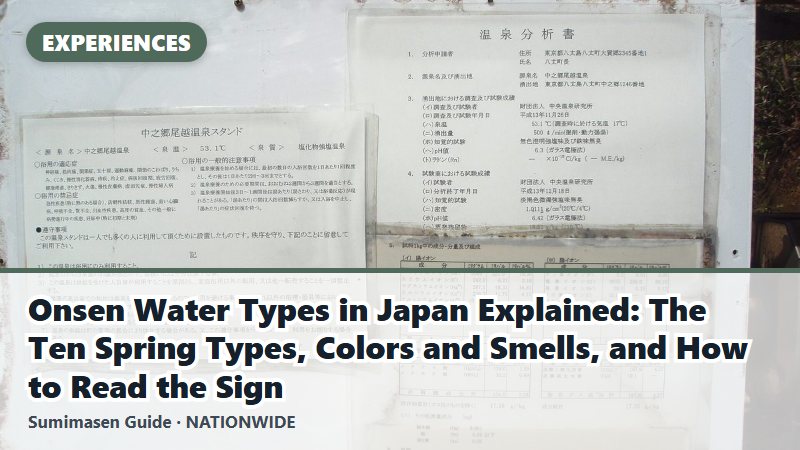
- Water type. The sign at each bath shows what kind of water it is. Our guide to onsen water types explains the ten types and how to read the sign.
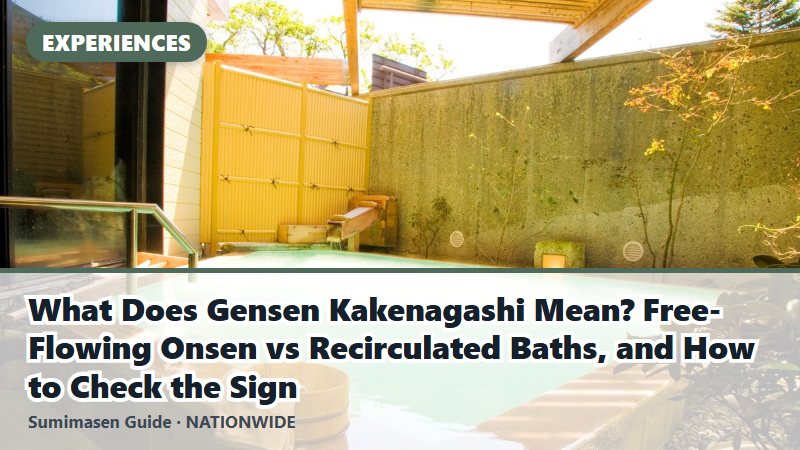
- "Free-flowing" baths. If you see the words gensen kakenagashi in an ad, our guide to kakenagashi explains what they mean and how to check.
- Cash. Small public bathhouses and shows may take cash only, as at Kusatsu's yumomi show.
What to do as a traveler
- Choose one town near your base: Hakone (Kanagawa) or Kusatsu (Gunma) from Tokyo, Arima (Hyogo) or Kinosaki (Hyogo) from Osaka, Gero (Gifu) from Nagoya (Aichi).
- Book a ryokan for one night if you can, so you can bathe in the evening and the morning.
- Check each bath's hours, tattoo rules and payment methods on its official page.
- Learn the basic manners first: wash before you get in, keep your towel out of the water, and drink water before and after.
Last reviewed: October 25, 2026. Prices, hours and timetables can change; check the official pages before you go.
References
- Kusatsu Tourism Public Corporation: How to bathe in Kusatsu's water (Japanese)
- Kusatsu Onsen Tourism Association: Access by train (Japanese)
- Kusatsu Onsen Tourism Association: Access by bus (Japanese)
- Netsunoyu: Yumomi and dance show (Japanese)
- Netsunoyu: The history of yumomi (Japanese)
- Hell association of Beppu (Oita): Jigoku Meguri (Japanese)
- Hell association of Beppu (Oita): Hours and common ticket (Japanese)
- Hell association of Beppu (Oita): Access (Japanese)
- Hakone Tourism Association (Japanese)
- Odakyu Electric Railway: Freepass and the Romancecar (English)
- Japan Tourism Agency multilingual database: Kinosaki Onsen, the soto-yu (English)
- JR West: Kansai WIDE Area Pass (English)
- Dogo Onsen official site (Japanese)
- Dogo Onsen: Access (Japanese)
- Gero Onsen Ryokan Cooperative (English)
- JR Central: Takayama (Gifu) and Gero itinerary (English)
- Arima Onsen official site: Spring types (Japanese)
- Arima Onsen official site: Access from Osaka (Japanese)
- Japan Spa Association: Spring types (Japanese)