Why Is Matcha So Green? What Its Colour Can—and Cannot—Tell You
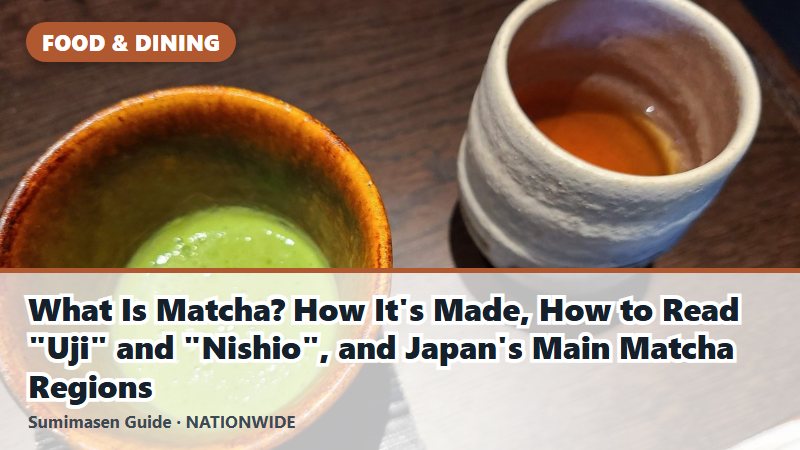
A bowl of matcha, a pale latte and a dark green cake can look surprisingly different. Matcha's green begins in the tea leaf and the way it is grown and processed. When choosing a drink or souvenir in Japan, colour is useful to notice alongside the ingredients, intended use and maker's description.
- Shading the tea plants helps develop the green colour of the leaves.
- Steaming, drying and grinding turn those leaves into matcha powder.
- A photograph cannot tell you how a tea will taste or what a dessert contains.
The colour starts in a shaded tea garden
Tea maker Marukyu Koyamaen explains that covering the tea plants increases chlorophyll, the green pigment in their leaves. AIYA also describes shading as part of growing the leaves used for matcha. If you see a covered tea field during your trip, that covering is part of cultivation, rather than something added to colour the finished drink.
The Kyoto Prefectural Tea Chamber explains another reason for shading: it helps retain the components associated with umami while limiting the increase in astringency. This gives you a connection between the tea garden and the cup, without making the shade of green a taste guarantee.
From leaf to powder
AIYA describes steaming the harvested leaves to stop enzyme activity associated with oxidation, then drying and refining them. The resulting tencha is ground into matcha. In a bowl, you drink the powdered leaf mixed with water, rather than an infusion from leaves that are then removed. Read our introduction to matcha for the wider production story.
| Stage | What happens |
|---|---|
| Shading | The leaf develops its green pigment. |
| Processing | The leaves are steamed, dried and refined. |
| Grinding | Tencha becomes fine matcha powder. |
Why a photo is not a quality test
Marukyu Koyamaen treats vivid green as a characteristic of its fresh, higher-quality matcha and explains that ageing and deterioration can change the colour. That is useful context, but a shop photograph does not let you compare powders under the same lighting. Milk, other ingredients, lighting and screen settings also change what you see. A pale latte does not, by itself, prove poor tea; a vivid cake does not establish how much matcha it contains.
| You are choosing | Look for |
|---|---|
| A tin of powder | Ingredients, intended use, storage directions and the maker's description. |
| A latte | Whether the drink is sweetened and which milk it uses. |
| A dessert | The product's ingredient information or the café's explanation. |
Bring home the flavour, too
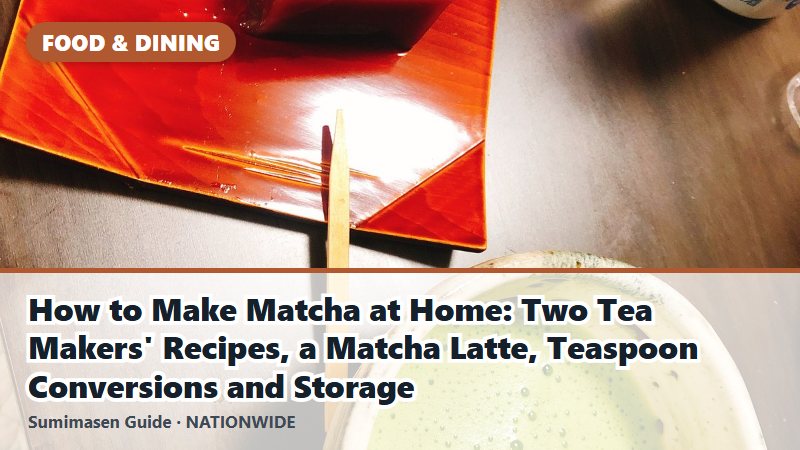
Choose a powder for how you plan to use it: drinking it plain, making lattes or baking. Follow its storage instructions and protect it from heat, humidity, light and other smells. With refrigerated matcha, Marukyu Koyamaen advises allowing the closed container to approach room temperature before opening, to avoid condensation.
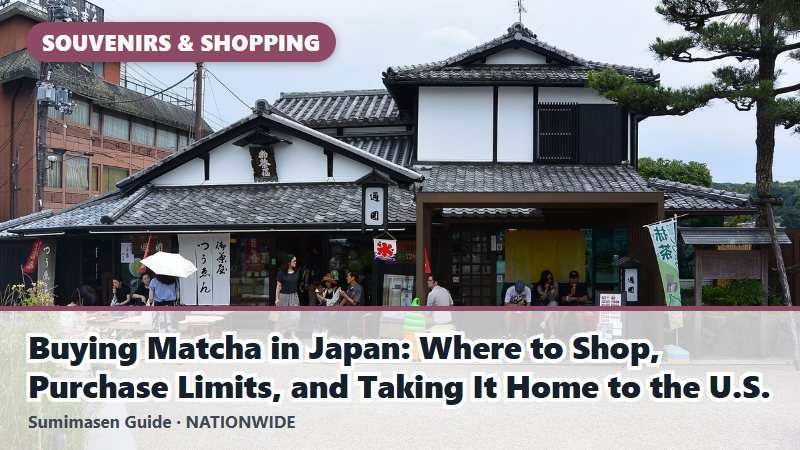
Continue with buying matcha in Japan, making and storing matcha at home or matcha recipes.
Sources checked: October 18, 2026.