Perfume and Japanese Restaurants: Why Sushi and Kappo Counters Ask You to Skip the Scent
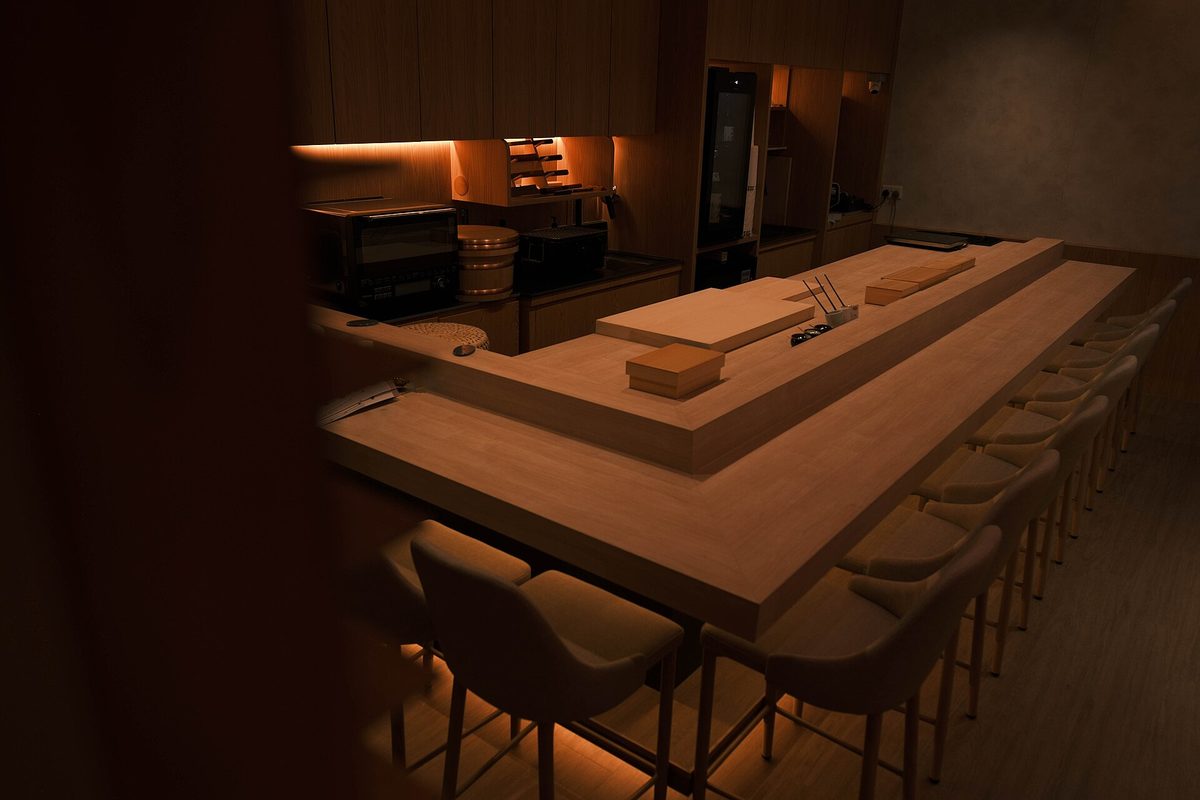
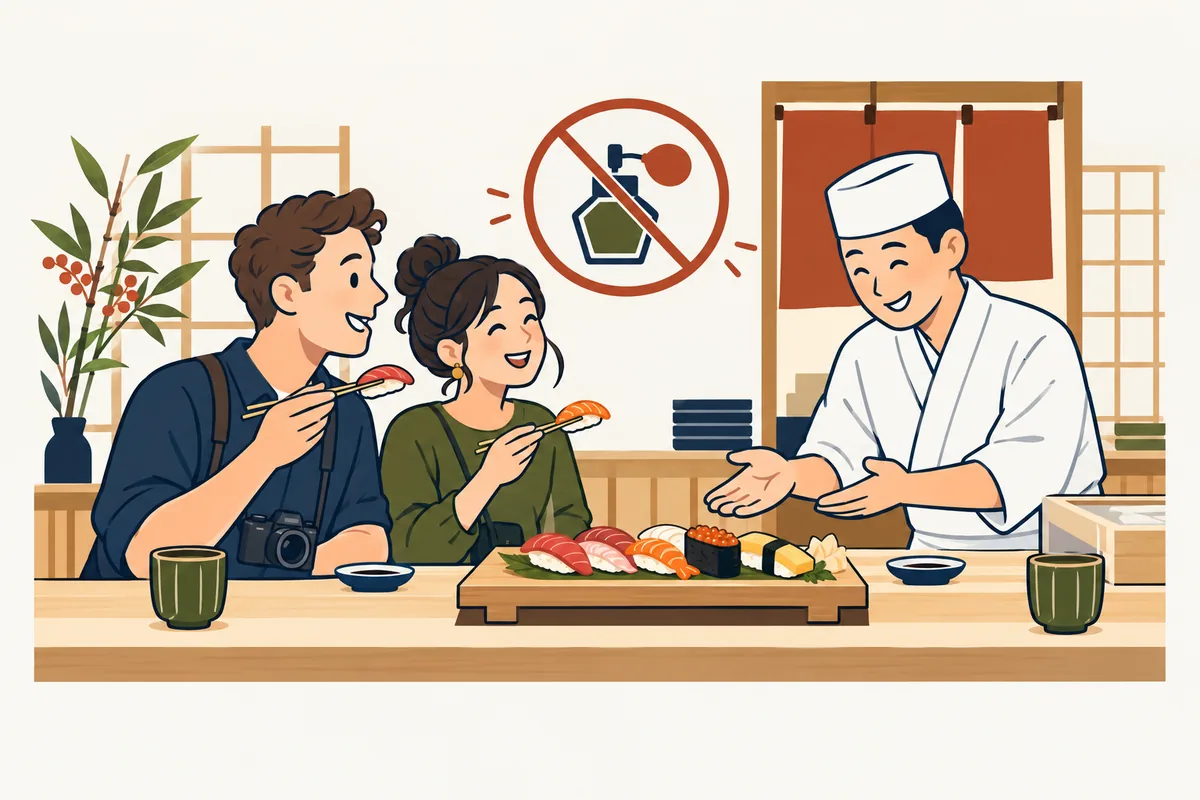
You've booked a sushi counter or a kappo restaurant for a special night, and you want to look and smell your best. Here is one small thing that makes a big difference: many Japanese restaurants of this kind ask guests not to wear strong perfume. It isn't about you. It's about the food, and about how close everyone sits. This short guide explains why, shows how restaurants word the request, and suggests easy ways to enjoy your evening without worrying.
This page may contain affiliate links. If you buy through them, we may earn a commission at no extra cost to you.
- Two reasons: the aroma of the food, and seats close together
- What restaurants actually write in their booking notes
- Simple things you can do instead
- Where to be careful, at a glance
Reason 1: in Japanese cuisine, aroma is part of the dish
Japanese cooking is enjoyed with the nose as well as the tongue. Japan's Ministry of Agriculture, Forestry and Fisheries describes how Japanese food culture adds condiments such as wasabi, mustard, ginger and sansho pepper to enjoy their distinctive flavor and a sense of the season, and notes that sansho has a citrus-like aroma and its young leaves are used as a garnish. The base of many dishes, dashi, is valued for its aroma too. In a clear soup, a small piece of yuzu peel or a sprig of kinome (sansho leaf) is often added just for its scent, and you notice it the moment you lift the lid. A strong perfume nearby can cover all of this, for you and for the people next to you.
Reason 2: you sit close together
Sushi bars and kappo restaurants are often small, with a counter where guests sit side by side in front of the chef. A scent that feels light to you can reach the whole counter. Japan's Consumer Affairs Agency, together with other ministries, runs a poster campaign titled "That scent: some people are troubled by it," noting that consumer centers receive reports of headaches and nausea from scented products such as fabric softener, that people feel scents differently, and asking everyone to consider others when using scented products.
What restaurants write
Here is how real restaurants word it (we don't name them; the wording was checked on October 4, 2026):
- A high-end Japanese restaurant explains that if even one guest arrives wearing perfume or cologne, the scent spreads through the whole dining room, and that spoiling the aroma of the food is a very serious problem in a Japanese restaurant, so it does not accept guests wearing perfume.
- A six-seat sushi counter's booking page asks guests to avoid strong scents, including perfume, hair products and fabric softener, and to tell everyone in their party. Its other booking page explains that strong smells affect the taste and aroma of the ingredients, and asks guests not to use perfume or body cream on the day.
- A counter-style Japanese restaurant's booking page asks guests to avoid strong perfume and says it may ask guests to leave.
Read the notes when you book. Booking sites and restaurant pages often put this in a "request to guests" or dress code section.
What you can do instead
- On the day of a sushi or kappo dinner, skip perfume and cologne. You can wear it again after dinner.
- If you want a little scent, keep it very light and lower on the body. One perfume brand's official guide suggests the ankles, waist or backs of the knees for a subtle scent, and the wrists for a stronger one.
- Remember other scents too: hair products, body cream and strongly scented fabric softener.
- Read the booking notes, and share them with everyone in your party.
The same courtesy is often appreciated at a tea ceremony, a ryokan dinner, or a temple stay, where scent and quiet are part of the experience; we found no official rule for these, so treat it as good manners.
My visit
Coming soon: notes from our editor's own meals in Japan.
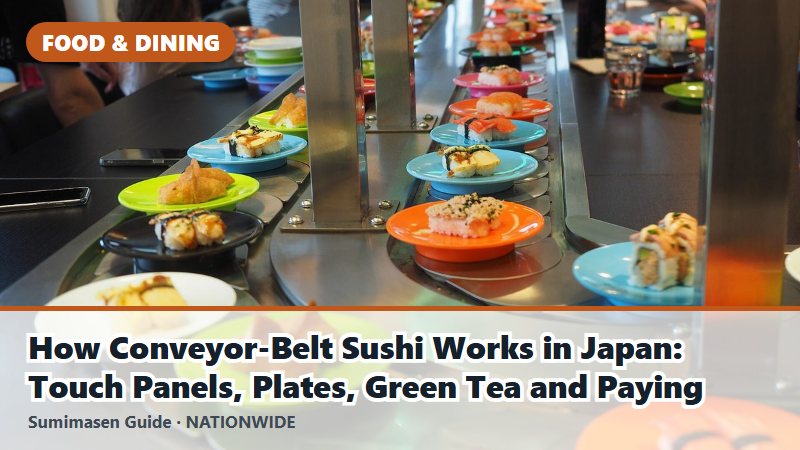
More on eating out: how conveyor-belt sushi works and food allergies in Japan.
Last reviewed: October 4, 2026. Each restaurant sets its own requests; please read its booking notes.
References
- Ministry of Agriculture, Forestry and Fisheries: Traditional foods, seasonings and condiments (Japanese)
- Ministry of Agriculture, Forestry and Fisheries: Washoku, UNESCO Intangible Cultural Heritage (Japanese)
- Consumer Affairs Agency: Scent campaign poster (Japanese)
- A perfume brand's official FAQ on where to apply fragrance (Japanese)