Japanese Tea GI Labels: What the GI Mark Means, Japan's Three Registered Tea Names, and How to Read a Tea Package
On some Japanese tea packages you'll see a small mark showing Mt. Fuji and a red sun, next to a name such as "Yame Dento Hon Gyokuro." That is the GI mark, Japan's official sign for a registered geographical indication. This guide explains what the mark does and doesn't promise, lists the tea names on the government's register, and shows how to read the label on any bag of Japanese tea, with or without the mark.
Everything here comes from the official register of the Ministry of Agriculture, Forestry and Fisheries (MAFF) and the tea producers' own associations.
- A GI is a protected product name tied to a place and how it's made there. It isn't a quality grade.
- Three tea names are registered: Yame Dento Hon Gyokuro, Fukamushi Kikugawa-cha and Nihon Cha (Japanese Tea).
- No GI mark doesn't mean poor tea. Uji tea, for example, isn't a registered GI.
- On any package, the label box tells you the type of tea and where the leaves came from.
What a GI is
Japan's Geographical Indication Act came into force in June 2015. It lets the government register the name of a food or farm product whose qualities, reputation or other characteristics come from the place where it's made, and then protect that name as intellectual property. Only products that meet the registered conditions (the production area, the characteristics and the production method) may use the registered name with the GI mark. If a product that doesn't meet them uses the name, the authorities can act against it.
MAFF's official GI information site points out that a GI is different from a simple label of origin, which only says where something was produced. A GI also says the product has something that comes from that place: its climate, a traditional method, or a long reputation. MAFF's FAQ adds that a product usually needs a track record of about 25 years before it can be registered, so newly invented products can't be registered.
What the GI mark looks like
MAFF describes the mark as Mt. Fuji with a large sun behind it above a water surface, in red (the color of the sun on Japan's flag) and gold. Its rules are simple:
- It always comes with the registered name. MAFF says the mark must be used together with the GI name, so you'll see it next to a name such as 八女伝統本玉露 (Yame Dento Hon Gyokuro) or 日本茶 (Nihon Cha).
- It can appear on packages, menus, flyers and online shops. A restaurant menu may show it next to a dish made with a GI product.
- Food made from a GI product can carry it too, worded differently. For example, a bottled green tea made only from Nihon Cha leaves may show 日本茶100%使用 ("made with 100% Nihon Cha") with the mark. The wording tells you the drink itself isn't the registered product.
Japan's registered tea GIs
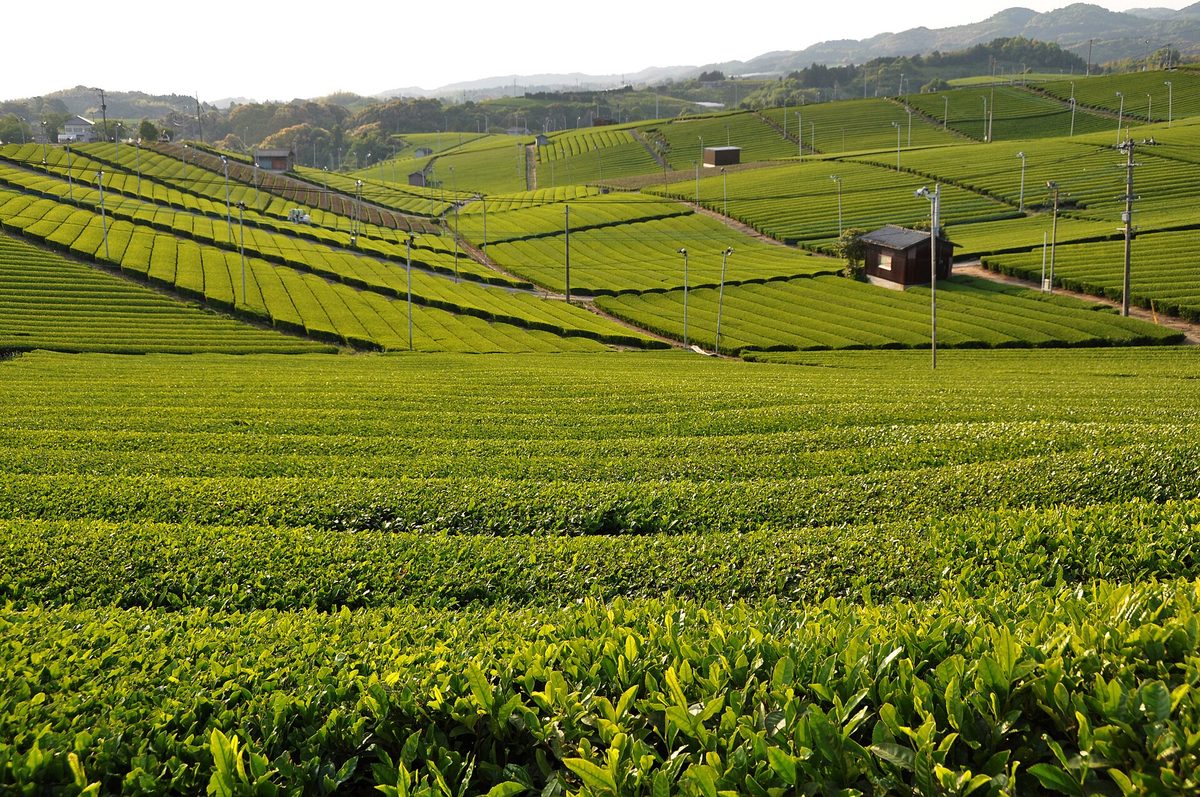
MAFF's register listed three tea names when we checked in October 2026. With its July 2026 registrations, MAFF said Japan had 170 registered GI products in all, so tea is a small part of the list.
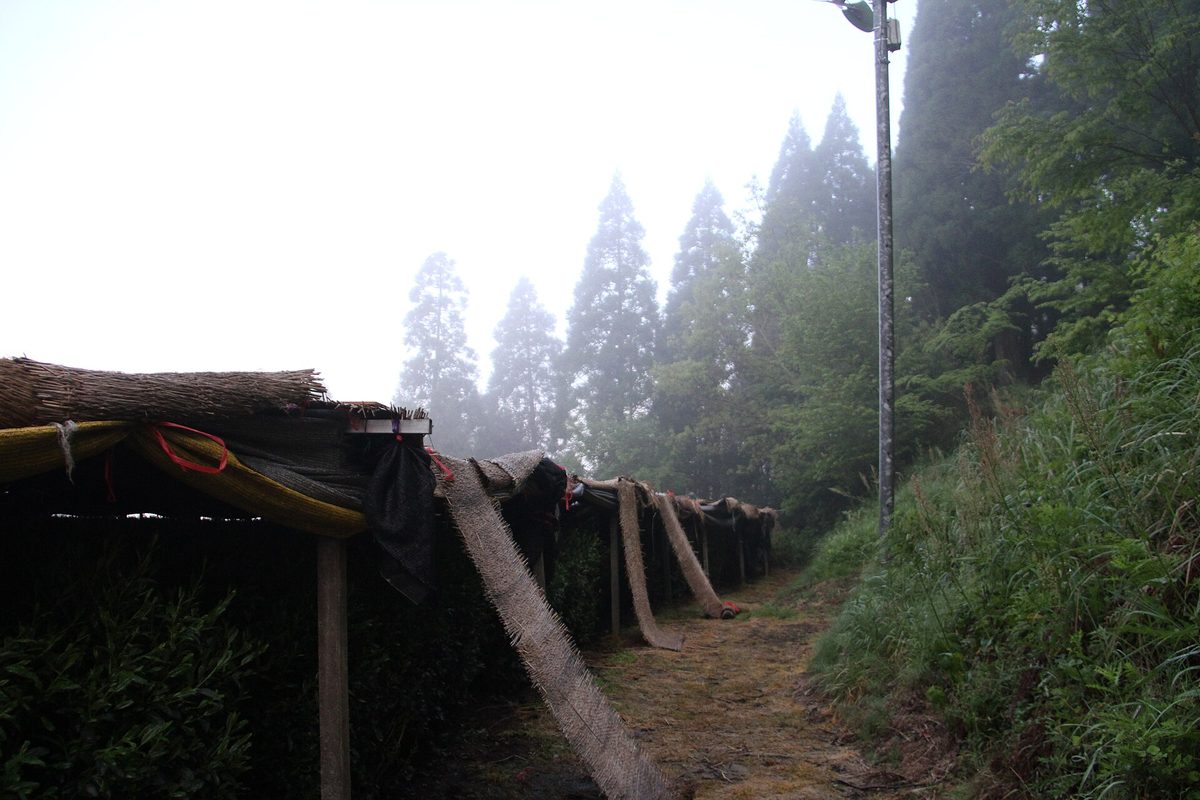
Yame Dento Hon Gyokuro (Traditional Authentic Yame Gyokuro), No. 5, registered on December 22, 2015, production area Fukuoka Prefecture. Gyokuro is a green tea made from leaves shaded for about 20 days before picking. For this GI, the bushes are shaded with natural materials such as rice straw laid on shelves above them, rather than directly on the plants, the bushes are left to grow naturally, and the leaves are picked by hand. MAFF's English GI site says the leaves come from Yame (Fukuoka) and nearby hill areas, and MAFF's register says the method has been kept for more than 110 years. The register describes the taste as rich, mellow and full of umami (a savory taste).
Fukamushi Kikugawa-cha (Kikugawa deep-steamed green tea), No. 130, registered on March 31, 2023, production area Shizuoka Prefecture. Sencha is Japan's everyday green tea, made by steaming, rolling and drying the leaves. "Fukamushi" means deep-steamed: the Kikugawa City Tea Association says the leaves are steamed at least twice as long as for ordinary sencha, which holds back the astringency and gives a mellow taste and a deep green color. The leaves come from Kikugawa (Shizuoka) and named parts of four neighboring cities. MAFF's English site says the area is known as the birthplace of deep-steamed tea, after research that began around 1952.
Nihon Cha (Japanese Tea), No. 179, registered on July 10, 2026, production area Japan. MAFF's Kyushu office says it is the first GI under the Act whose production area is the whole country. It covers tea made from leaves grown in Japan and processed in Japanese tea factories. The industry association that applied, Nihon Chagyo Chuokai, says the aim is to protect Japanese tea abroad, where foreign-made tea has been sold as "Uji matcha," and to let makers print 日本茶 alongside regional names such as Uji matcha. A seller has to file a notice with the association before using the mark, and it's new, so you may not see it on many packages yet.
Nishio no Matcha used to be GI No. 27, but MAFF removed it from the register on February 14, 2020, after the producers' cooperative ended the work of checking production. Our guide to matcha regions explains what "Nishio" on a label still means.
Tea words you'll see on packages
The type of tea is printed after 名称 (name) in the label box. These are the definitions in the industry's green tea labeling standard:
- 煎茶 sencha: leaves steamed, rolled and dried. 深蒸し煎茶 fukamushi sencha is steamed at least twice as long.
- 玉露 gyokuro: shaded for about 20 days before picking, then made like sencha.
- かぶせ茶 kabusecha: shaded for about 7 days before picking, then made like sencha.
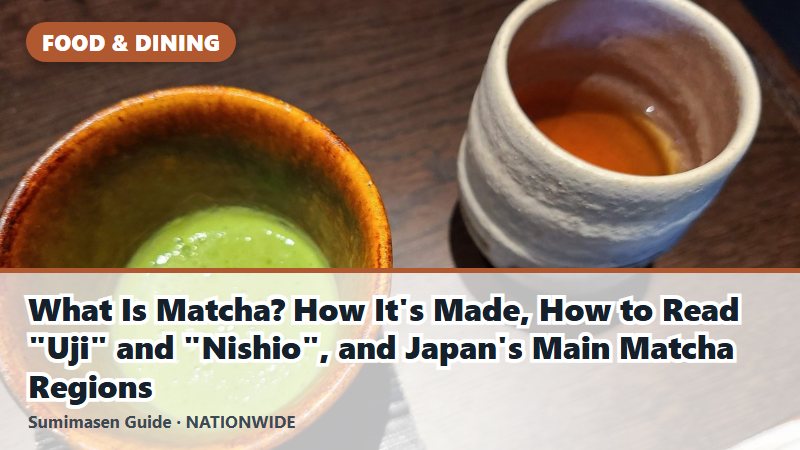
- 抹茶 matcha: 碾茶 tencha (shaded leaves dried without rolling) ground into a fine powder. More in What Is Matcha?
- ほうじ茶 hojicha: sencha or bancha (tea from larger, later leaves) roasted over strong heat. 玄米茶 genmaicha: green tea mixed with roasted rice.
Reading a tea package without a GI mark
Most tea in Japanese shops has no GI mark, and that's normal. The label box is still there, and Nihon Chagyo Chuokai's labeling standard shows how it's filled in:
- Leaves grown in Japan: 原料原産地名 (origin of the leaves) says 国産 (Japan) or a prefecture name, or the ingredients line reads 緑茶(国産).
- Leaves grown abroad and finished in Japan: the origin line names the foreign country.
- Tea finished and packed abroad: 原産国名 (country of origin) names that country.
Region names on the front follow a rule in the same standard. A tea sold as "○○茶" (a place name plus "cha") should use only leaves from that area. If 50% or more, but not all, of the leaves come from there, the package should say it's a blend, for example ○○茶ブレンド (blend). Uji tea has its own definition, set by the Kyoto Prefectural Tea Chamber and explained in our matcha guide.
No GI mark doesn't mean lower quality
The GI mark isn't a ranking or a prize. MAFF says the mark shows that a product has characteristics linked to its area, and its FAQ says that since a review in November 2022, a product can be registered for its distinctive method, reputation or story even without a "differentiated quality." A GI starts with the producers: a group has to apply and run checks on its members' production. Many well-known tea names, including Uji tea, aren't on the register as their own GIs, and that tells you nothing about their taste. Choose by the type of tea, where it was grown and what you like; the GI mark is one more piece of information when you see it.
Where travelers can find GI teas
- Fukamushi Kikugawa-cha: the Kikugawa City Tea Association's website has a page listing tea shops and direct-sale shops that sell it (in Japanese, with a translation menu).
- Yame Dento Hon Gyokuro: the official pages we checked don't list shops. In Yame (Fukuoka) tea shops, look for the full name 八女伝統本玉露 with the GI mark; gyokuro labeled only "Yame" is not this GI product.
- Nihon Cha: the mark can appear on tea sold anywhere in Japan by makers who have filed the notice. Look for 日本茶 next to the mark.
- MAFF's English GI site describes each registered product in English, including both regional teas, if you want to read more before you shop.
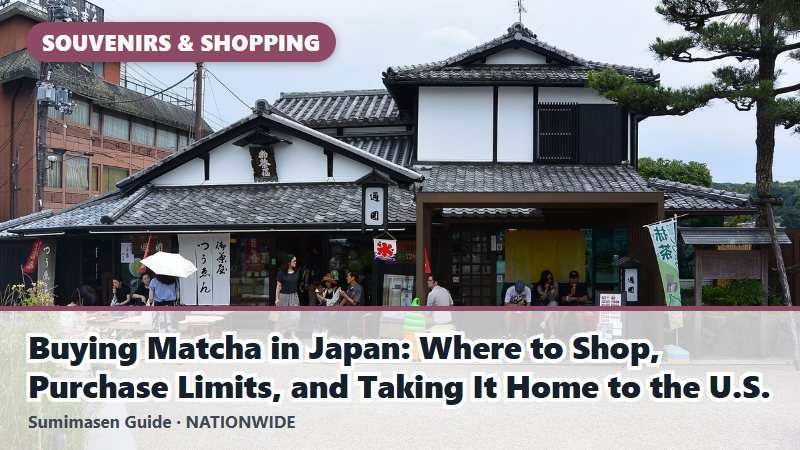
For tea shops in Kyoto and Uji (Kyoto), purchase limits on matcha, and taking tea home, see Buying Matcha in Japan. To brew what you bring back, see How to Make Matcha at Home.
Last reviewed: October 23, 2026. The register changes when names are added or removed; check MAFF's list below for the latest.
Official sources (checked October 2026)
- MAFF: Registered GI products (Japanese)
- MAFF: GI No. 5, Yame Dento Hon Gyokuro (Japanese)
- MAFF: GI No. 130, Fukamushi Kikugawa-cha (Japanese)
- MAFF: GI No. 179, Nihon Cha (Japanese)
- MAFF: Removal of GI No. 27, Nishio no Matcha (Japanese)
- MAFF: Three products including Nihon Cha registered as GIs, July 10, 2026 (Japanese)
- MAFF Kyushu Regional Agricultural Administration Office: Three products including Nihon Cha registered as GIs, July 10, 2026 (Japanese)
- MAFF: Geographical Indication (GI) protection system (English)
- MAFF: Using geographical indications and the GI mark (Japanese)
- MAFF: GI frequently asked questions (Japanese)
- MAFF GI information site: What is a geographical indication? (English)
- MAFF GI information site: Yame Dentou Hongyokuro (English)
- MAFF GI information site: Fukamushi Kikugawacha (English)
- Nihon Chagyo Chuokai: Nihon Cha GI and the GI mark notice (Japanese)
- Nihon Chagyo Chuokai: Guidelines for using the GI mark with Nihon Cha, July 2026 (Japanese, PDF)
- Nihon Chagyo Chuokai: Green tea labeling standard (Japanese, PDF)
- Kikugawa City Tea Association: About Fukamushi Kikugawa-cha (Japanese)
- Kikugawa City Tea Association: Where to buy Fukamushi Kikugawa-cha (Japanese)