Machi-Chuka: Japan's Neighborhood Chinese Diners and How They Differ from Chinese Cuisine
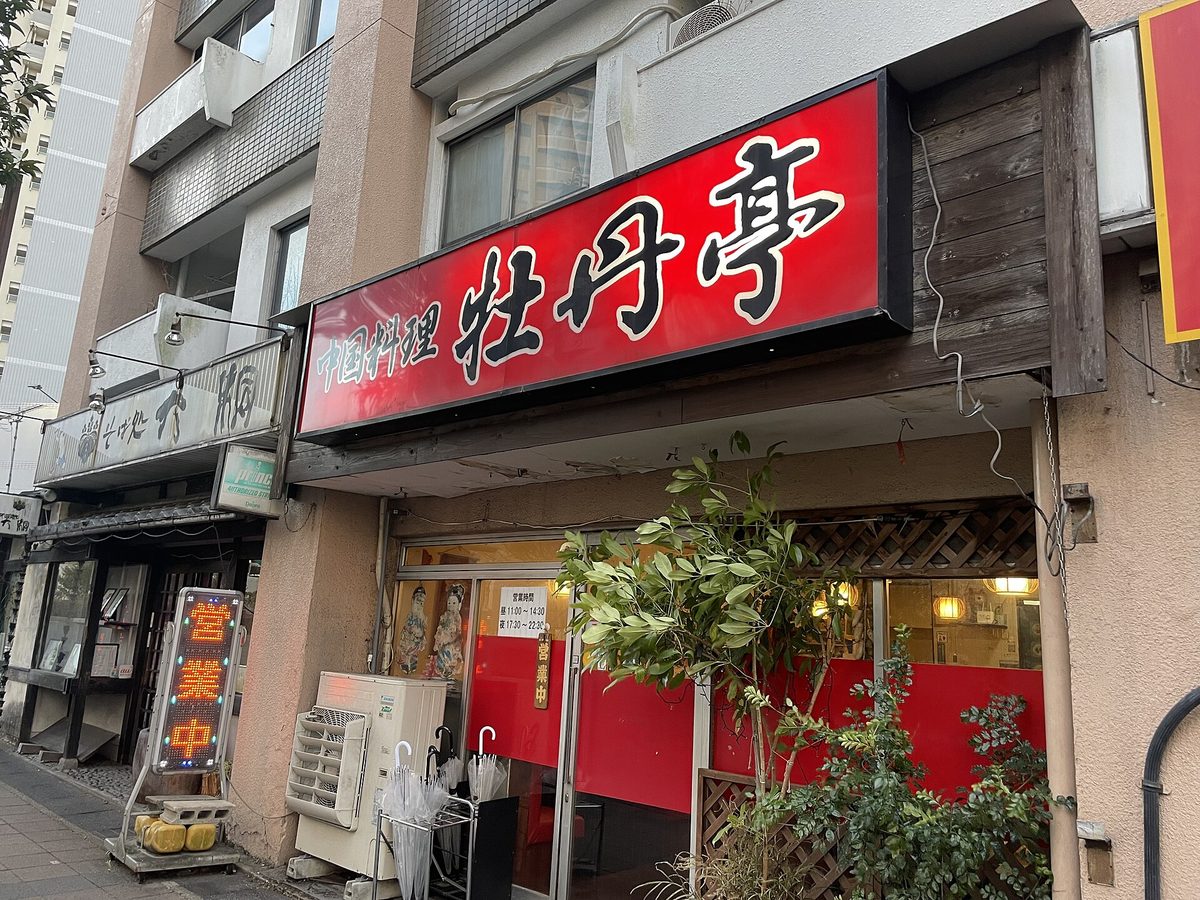
On many shopping streets in Japan you'll find a small restaurant with a red sign, ramen, fried rice and gyoza on the menu, and a counter where people eat on their own. This is machi-chuka (町中華), "neighborhood Chinese": Chinese food that cooks in Japan adapted to Japanese tastes over many decades, and in a few cases invented here. In recent years, restaurants serving food much closer to what people eat in China, such as malatang and hot pot, have become popular too. This guide explains what machi-chuka is, which dishes grew up in Japan, the two big chains, how it compares with other Chinese restaurants, and how to order.
This page may contain affiliate links. If you buy through them, we may earn a commission at no extra cost to you.
- What "machi-chuka" means, and why people in Japan feel nostalgic about it
- Tenshinhan, ebi-chili and other dishes shaped in Japan
- Gyoza: pan-fried, and often eaten with rice
- How it compares with Chinese restaurants, malatang and hot pot, and how to order
What machi-chuka means
There is no official definition. A group of writers who call themselves the Machi-Chuka Exploration Team (町中華探検隊) described it in their book Machi-chuka to wa nanda (2016) as an everyday Chinese restaurant that has been open since the Showa era (1926–1989) or earlier, that you can walk into casually, and where you can eat your fill for under 1,000 yen. The menu goes beyond Chinese food: noodles, rice dishes and set meals, and often curry, katsu (breaded cutlets) or omurice. Most are individually run shops rather than chains.
A Japan Food Journal column (2022) links their recent popularity to a Showa-nostalgia boom among young people, to counter seats that make eating alone easy, and to each shop's own character. It also notes that some shops close when the owners have no one to take over. Many are simple places: a counter facing the kitchen, a few tables and the menu on the wall.
Dishes that grew up in Japan
Much of the menu is "Japanese-style Chinese": dishes that came from China and changed in Japan, plus a few that were created here. Chinese cuisine itself is very diverse and differs from region to region, so think of these as a Japanese branch of it, not a copy of any one Chinese style.
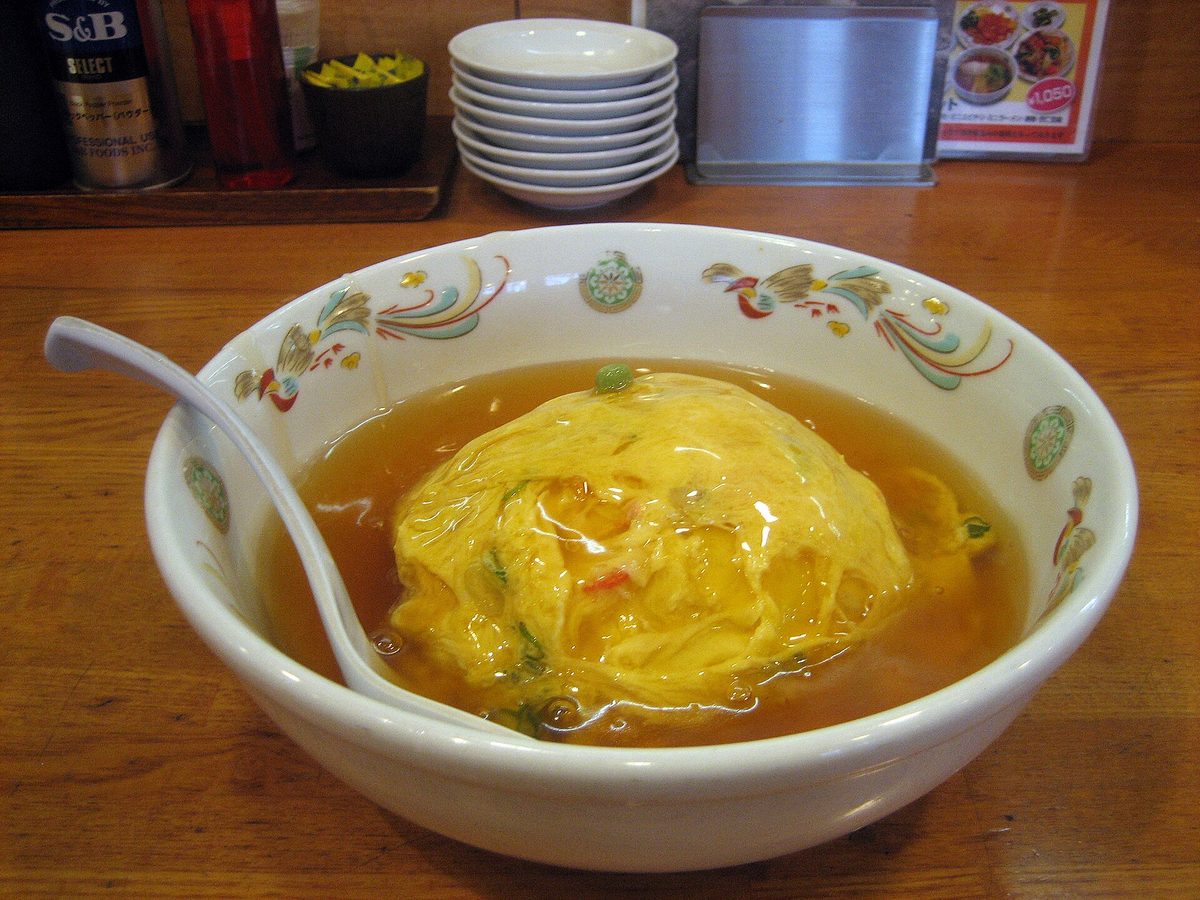
- Tenshinhan (天津飯): a crab omelet (kani-tama) on rice, covered in a thick, glossy sauce. It is named after Tianjin (Tenshin in Japanese), but an academic paper on J-STAGE says the dish doesn't exist in China and was born in Japan. Its exact origin is unclear: the two common stories, about a restaurant in Tokyo (Tokyo) and one in Osaka (Osaka) after World War II, are based on hearsay, the paper notes.
- Chuka-don (中華丼): stir-fried vegetables, pork and seafood in a thick sauce over rice. The same paper lists it among Japanese-style Chinese dishes not found in China.
- Ebi-chili (エビチリ, shrimp in chili sauce): Shisen Hanten, the restaurant founded by the Sichuan-born chef Chen Kenmin, explains that the heat of doubanjiang (chili bean paste) was hard for many diners in Japan to accept at the time, so he based the dish on a Sichuan shrimp dish and added ketchup.
- Mapo tofu (麻婆豆腐, mabo dofu in Japanese): Chen Kenmin, who came to Japan in 1952, also adjusted mapo tofu to Japanese tastes. Today, how spicy it is depends on the shop, so ask if you're not sure.
- Hiyashi chuka (冷やし中華): chilled ramen noodles with toppings and a cold dressing. One origin story traces it to the restaurant Ryutei in Sendai (Miyagi) in 1937, created so that customers would keep coming in the hot summer.
Gyoza: pan-fried, and often eaten with rice
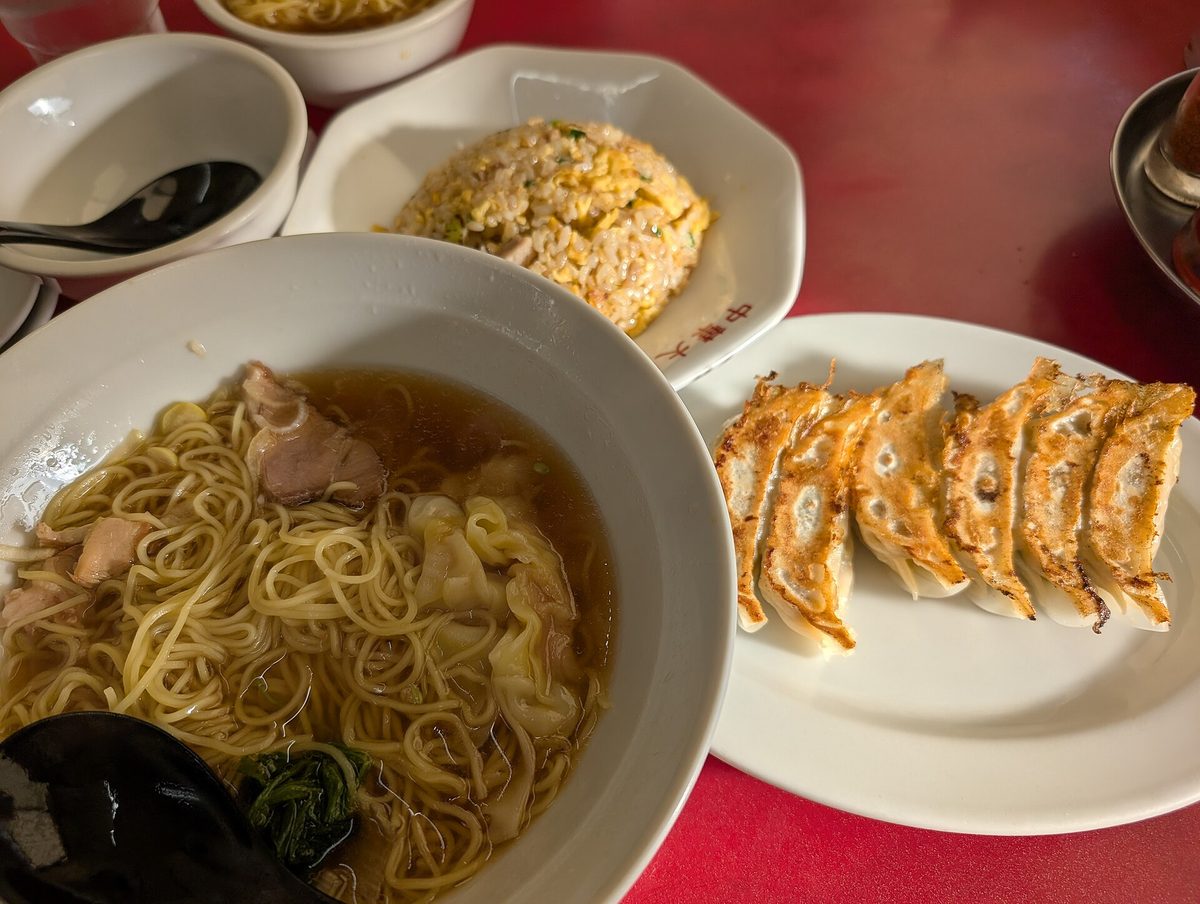
The Japan Gyoza Association explains that in China, "jiaozi" basically means boiled dumplings, while pan-fried gyoza spread across Japan after World War II, when Japanese people returning from northeast China recreated the pan-fried dumplings they had eaten there. In Japan, gyoza is usually a side dish: you'll see it in sets with ramen or with rice.
- Utsunomiya (Tochigi): the city says the army division based there learned about gyoza in China and spread it after returning home. The Utsunomiya Gyoza Association began in 1993 with 38 shops and now has 145, serving pan-fried, deep-fried and boiled gyoza. The city topped Japan's household spending on gyoza for 15 years in a row until 2010.
- Hamamatsu (Shizuoka): the official Hamamatsu tourism site describes gyoza fried in a circle in a round pan and served with boiled bean sprouts in the middle. In the government's household survey for 2025, Hamamatsu ranked first for spending on gyoza for the third year in a row, ahead of Utsunomiya (Tochigi) and Miyazaki (Miyazaki), Nikkei reports. The survey counts gyoza bought at shops such as supermarkets, not meals at restaurants.
The big chains: Gyoza no Ohsho and Hidakaya
By the book's definition, chains aren't machi-chuka, but they serve the same kind of Japanese-style Chinese food and are easy for first-timers.
- Gyoza no Ohsho (餃子の王将): founded on December 24, 1967 at Shijo-Omiya in Kyoto (Kyoto). The company says its founder, who was in China when the war ended, started it to serve the gyoza he had eaten there. It had 728 restaurants on March 31, 2026, including two in Taiwan. A plate of gyoza is 6 pieces, and prices differ by area: eaten in, gyoza is 341 yen and tenshinhan 693 yen in western Japan, including Kansai, and 363 yen and 737 yen in eastern Japan, including Kanto (tax included). Smaller "just size" plates, such as 3 gyoza, make it easy to try several dishes. Store pages, such as this one, can be switched to English or Traditional Chinese and list the payment methods each restaurant accepts.
- Hidakaya (日高屋): the company started as a small ramen shop in 1973 and had 472 company-run restaurants at the end of February 2026, mainly in the Kanto area around Tokyo (Tokyo). On its official menu, chuka soba (soy sauce ramen) is 420 yen and tenshinhan 690 yen, and the "Ra-Gyo-Cha" set of half ramen, half fried rice and 3 gyoza is 700 yen (tax included). Each store page lists the payment methods it accepts.
Machi-chuka, Chinese restaurants, malatang and hot pot
Japan also has many Chinese restaurants (chugoku ryori, 中国料理) that serve regional cooking such as Sichuan or Cantonese, often with large dishes for sharing. More recently, shops serving food close to what people eat in China, sometimes called gachi-chuka ("the real-deal Chinese"), have grown. Journalist Nakajima Kei wrote on December 28, 2024 that malatang shops such as Yang Guo Fu are especially popular with young women: you pick from 70 to 80 ingredients, pay by weight (400 yen per 100 g at that shop), and choose the soup, noodles and spice level. Hot pot chains such as Haidilao let you choose broths; its Shinjuku (Tokyo) restaurant offers pots split into two or four broths and suggests a milder setting for first-timers who order the spiciest one.
None of these is better than the others. They are different ways to enjoy Chinese food, and many people in Japan go to all of them.
How to order and what it costs
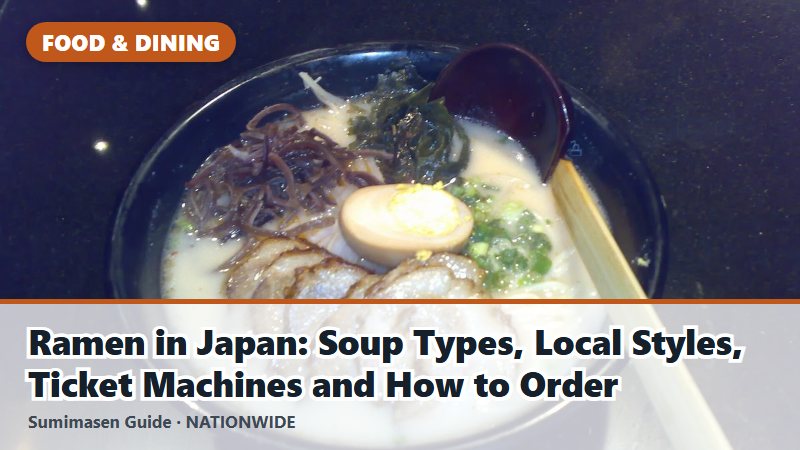
- Sitting down: at a small shop, take a free seat at the counter or a table unless staff show you where to sit. Some shops sell meal tickets from a machine at the door; see ramen in Japan for how ticket machines work.
- Paying: small family-run shops may take cash only, so carry some yen; see cash-only restaurants. At the chains, check the store page for cards and phone payments. There is no tipping: tipping in Japan.
- Sharing: a plate of gyoza for the table is an easy start. Some shops, such as Hidakaya, offer half sizes (han, 半), so you can try two things.
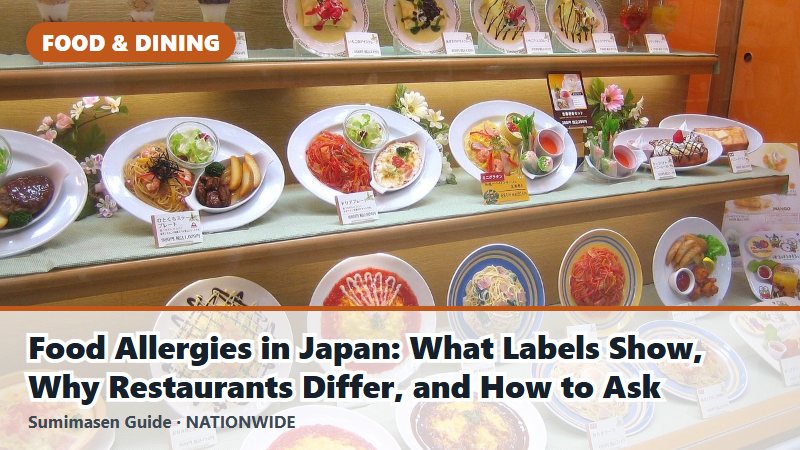
- Allergies and diets: dishes often use soy sauce, wheat noodles, egg, pork and seafood. Before you order, see food allergies in Japan.
- Budget: at the chains above, a bowl of ramen or a rice dish is about 420 to 750 yen, so ramen with gyoza comes to around 1,000 yen. Check the official menus for current prices. Prefer a big menu and a drink bar? Family restaurants are another easy choice.
| English | Japanese | Reading |
|---|---|---|
| Is this spicy? | これは辛いですか? | Kore wa karai desu ka? |
| One plate of gyoza, please. | 餃子を一皿ください。 | Gyoza o hito-sara kudasai. |
| Could we have small plates to share? | 取り皿をください。 | Torizara o kudasai. |
| Can I pay by card? | カードで払えますか? | Kado de haraemasu ka? |
Last reviewed: October 4, 2026. Prices are tax-included dine-in prices from the chains' official pages and change from time to time.
References
- Rittor Music: Machi-chuka to wa nanda, by Kitao Toro and others (Japanese)
- Japan Food Journal: Why machi-chuka is popular (Japanese, column)
- J-STAGE: A study of the origin of tenshinhan (Japanese, PDF)
- Shisen Hanten: The origin of ebi-chili (Japanese)
- Wikipedia: Chen Kenmin (Japanese)
- Rurubu & more: Ryutei and the origin of hiyashi chuka (Japanese)
- Japan Gyoza Association: Where pan-fried gyoza came from (Japanese)
- Utsunomiya City: The city of gyoza (Japanese)
- Hamamatsu Daisuki Net (official tourism site): Hamamatsu gyoza (Japanese)
- Nikkei: Hamamatsu tops household gyoza spending in 2025 (Japanese)
- Ohsho Food Service: FAQ (Japanese)
- Ohsho Food Service: Founding story (Japanese)
- Ohsho Food Service: Company outline (Japanese)
- Gyoza no Ohsho: Gyoza (Japanese)
- Gyoza no Ohsho: Menu for Hokuriku, Tokai, Kansai, Shikoku and part of Chugoku (Japanese)
- Gyoza no Ohsho: Menu for Hokkaido, Tohoku, Kanto and Koshinetsu (Japanese)
- Gyoza no Ohsho: Lunch and "just size" gyoza (Japanese)
- Gyoza no Ohsho: Store page example (Japanese, English, Traditional Chinese)
- Hiday Hidaka: Message from the president (Japanese)
- Hiday Hidaka: Company at a glance (Japanese)
- Hidakaya: Menu (Japanese)
- Hidakaya: Ra-Gyo-Cha set (Japanese)
- Hidakaya: Store page example (Japanese)
- Nakajima Kei, Yahoo! News Expert: Why malatang is so popular (Japanese, December 28, 2024)
- Haidilao Hot Pot Shinjuku (Tokyo): Menu (Japanese)