Octopus in Japan: It Looks Strange, but Try It. Sashimi, Takoyaki and Where the Taste Comes From
Eight arms, rows of suckers, purple-red skin: for many visitors, octopus is the most alarming thing on a Japanese menu. In Japan, though, tako is an everyday food, sold boiled and ready to eat and served as sashimi, in vinegared side dishes, in takoyaki and over rice. This column explains how octopus is eaten in Japan, why a famous octopus town sits on the coast of Hyogo, what researchers say gives octopus its mild sweetness and its chewy bite, and how to try a first piece, or politely skip it.
This page may contain affiliate links. If you buy through them, we may earn a commission at no extra cost to you.
- Tako sashimi and tako-butsu are usually boiled octopus
- Takoyaki, Akashi-yaki and tako-meshi: hot octopus dishes
- Akashi (Hyogo), a town known for its octopus
- Betaine, taurine and boiling: where the taste and texture come from
- Easy phrases, and what to know if you don't eat octopus
It looks strange, and that's okay
If you grew up somewhere octopus is rarely eaten, a plate of purple-edged slices with little round suckers can be a surprise. That reaction is completely normal, and nobody in Japan expects you to love it at first sight. But octopus is ordinary food here. Japan's Fisheries Research and Education Agency (FRA) describes boiled octopus (ni-dako, also called steamed octopus, mushi-dako) as a well-loved processed food with a chewy texture of its own, and notes that much of it is made from octopus imported from West Africa, such as Morocco and Mauritania. Japan's official food composition tables list boiled common octopus (madako) as a standard food, with 91 kcal, 21.7 g of protein and 0.7 g of fat in 100 g.
So if you see octopus at a supermarket, an izakaya or a festival stall, it isn't a dare. It's a normal dish that many people in Japan grew up eating.
Raw and boiled: sashimi, tako-butsu and sunomono
Most of the octopus you'll meet cold has been boiled first. FRA explains that boiling stops the octopus's own enzymes, kills microbes on the surface, and firms up and dries out the protein, which gives boiled octopus its springy bite. It is then eaten as it is, as sashimi, and also goes into rice dishes, stews such as oden, fried dishes and takoyaki.
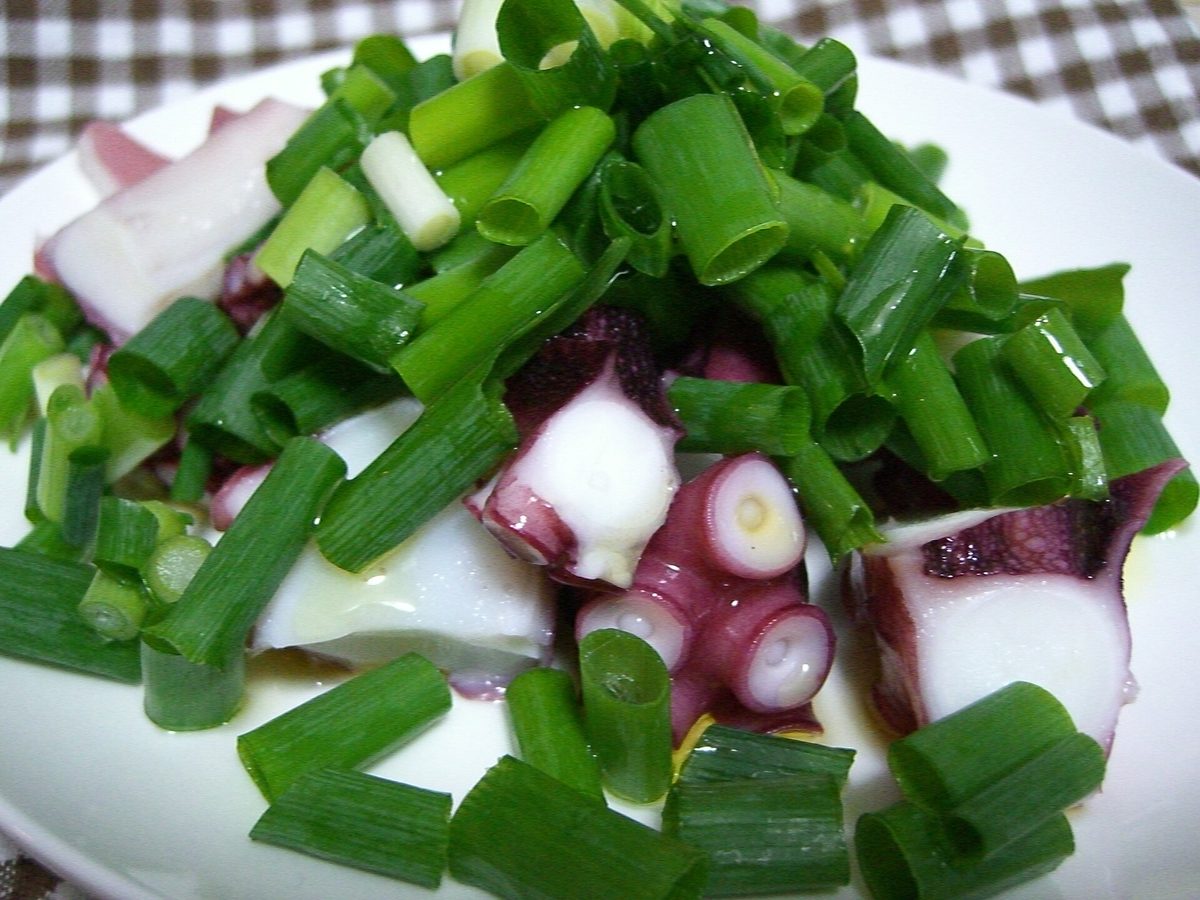
- Tako sashimi: boiled octopus sliced thin, usually with soy sauce and wasabi. The skin is purple-red and the inside is white. If a menu says 生だこ (nama-dako), the octopus is raw; ゆでだこ (yude-dako) means boiled.
- Tako-butsu: butsu is short for butsu-giri, chunks cut without worrying about the shape, and the dictionary gives "tako no butsu" as its example. Expect bite-size pieces of boiled octopus with soy sauce and wasabi, like the plate at the top of this page. A classic izakaya snack. More about wasabi: sashimi and wasabi.
- Sunomono (vinegared dishes): boiled octopus with vinegar is a common side dish; FRA lists vinegared octopus (su-dako) among octopus products, and Japanese home recipes such as octopus and cucumber sunomono from NHK's cooking program are everyday dishes. The sour dressing makes a good first try if you're not sure about the texture.
Hot dishes: takoyaki, Akashi-yaki and tako-meshi
If cold octopus feels like too big a step, start with a hot dish. The octopus is cut small and wrapped in batter or rice, so it is easier to try.
- Takoyaki: balls of batter with a piece of octopus inside, usually topped with sauce. The Osaka Convention & Tourism Bureau calls it a classic fast food of Osaka (Osaka), with shops appearing around town in the 1950s. More food in the city: Osaka (Osaka).
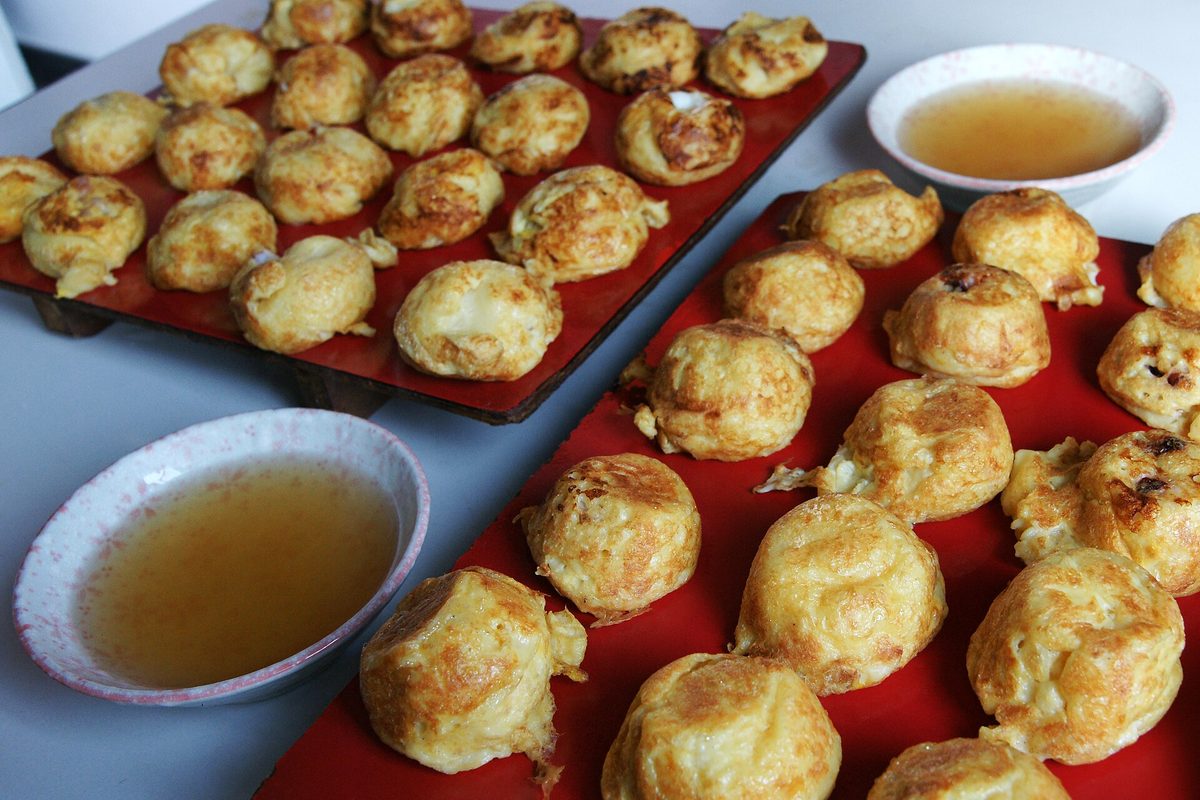
- Akashi-yaki: MAFF's Our Regional Cuisines describes it as a local dish of Akashi (Hyogo) that looks like takoyaki: a batter of wheat flour, wheat starch, egg and dashi with octopus inside, cooked soft and fluffy and dipped in a bonito and kelp dashi rather than covered in sauce. Locals have long called it tamagoyaki; the name Akashi-yaki was given around 1988 by a city employee to promote the town. One story says it began when egg yolks, left over from making Akashi-dama (artificial coral ornaments made with egg whites), were mixed with octopus from the sea nearby. MAFF says about 70 shops in the city serve it, as lunch or a snack, all year round.
- Tako-meshi (octopus rice): rice cooked with octopus and seasonings. MAFF's page for Hyogo Prefecture explains that it was made by fishing families as a rice dish that needed little preparation after a day's fishing, using octopus from the Harima Sea, from Awaji Island and Kobe (Hyogo) to Ako (Hyogo). It can be made with dried, raw or boiled octopus; it tastes best in summer, as June to August is the peak season for octopus. MAFF also lists tako-meshi from other prefectures: Aichi, Mie, Okayama, Ehime and Hiroshima Prefecture.
Akashi (Hyogo), the octopus town
Akashi City says that octopus raised in the fast currents of the Akashi Strait have thick, short arms and are strong enough to stand up and walk on land. The city gives a catch of about 1,000 tonnes a year (its 2010 figure), which it called the largest in Japan, caught by trawl nets, clay octopus pots and single lines. The peak season runs from late June to mid-August, and in summer octopus are also hung out to dry at the fishing ports.
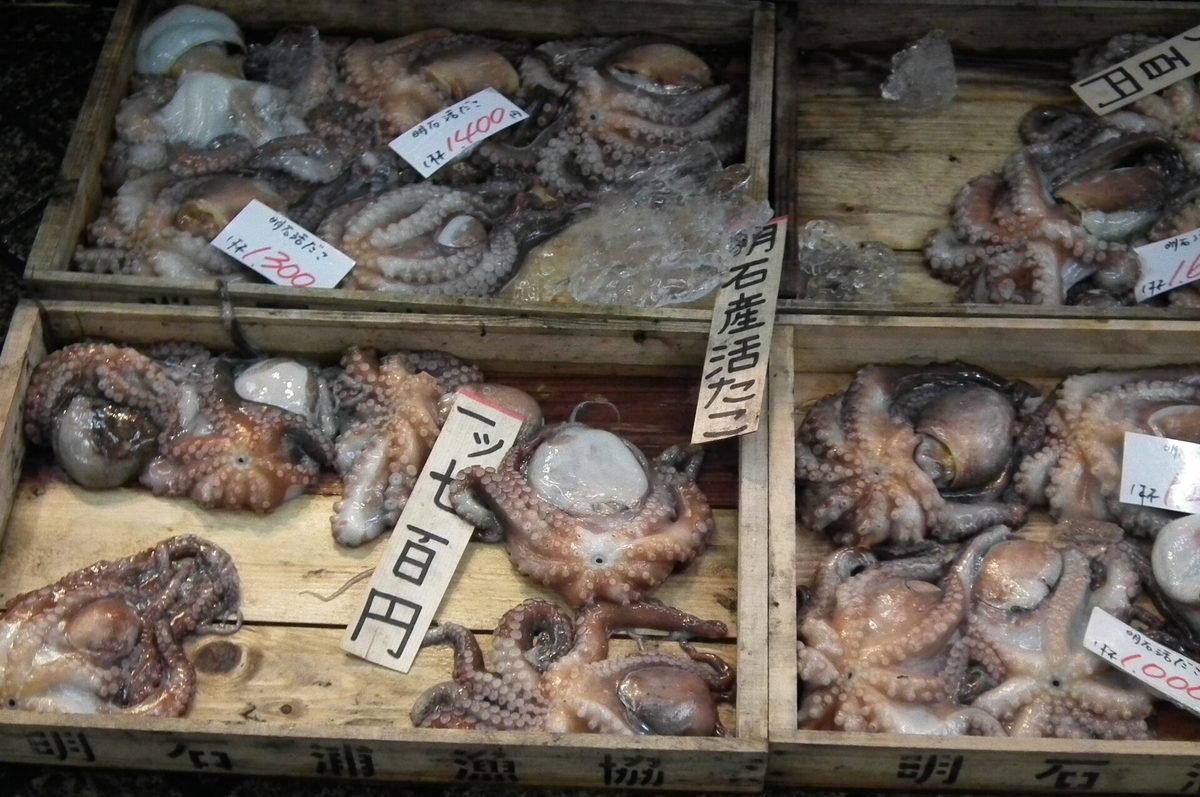
The easiest place to see it is Uonotana, a market street a 3-minute walk south of JR Akashi Station, where more than 100 shops sell local seafood, fish cakes and dried goods. You'll see live octopus in trays, and plenty of Akashi-yaki shops nearby. The Akashi Tourism Association keeps a list of places that serve Akashi-yaki.
Where the taste comes from
Octopus has a mild, slightly sweet taste, and the chewy bite is half the fun. Here is what Japanese research says about it. We only list what the sources say about octopus itself.
- Betaine, a sweet compound: a review of betaine by Ota and Toida in Japan's journal of cookery science explains that the muscle of invertebrates such as squid, octopus and shrimp contains a lot of betaine, often several times more than fish. In their taste tests, betaine tasted sweet with a little umami, and it added its own sweetness and umami to those of other ingredients.
- Taurine, plenty of it: a 1984 study by Akio Ozawa and colleagues in the journal of the Japanese Society of Nutrition and Food Science found fairly high levels of taurine throughout common octopus, with the most in the arms. The study measured amounts; it doesn't say how much taurine adds to the taste.
- Boiling, for the bite: as FRA explains, boiling firms up the protein and drives out water, which gives boiled octopus its springy, chewy texture.
Tips for your first bite
- Start small. It's fine to take one piece and see. Thin slices of sashimi or the small pieces in takoyaki are the easiest start.
- Chew slowly. Octopus is meant to be springy. If a piece feels tough, thinner slices are easier to chew.
- Try it boiled first. In supermarket fish sections, look for packs labeled ゆでだこ (boiled octopus) or 蒸しだこ (steamed octopus). They are already cooked and ready to slice.
- Ask if you're not sure. Octopus can hide in mixed seafood dishes, salads and fried snacks. The phrases below help.
| English | Japanese | Reading |
|---|---|---|
| Is this octopus? | これはたこですか? | Kore wa tako desu ka? |
| Is it raw or boiled? | 生ですか、ゆでてありますか? | Nama desu ka, yudete arimasu ka? |
| Without octopus, please. | たこ抜きでお願いします。 | Tako nuki de onegai shimasu. |
| I'd rather not eat octopus. | たこは苦手です。 | Tako wa nigate desu. |
If you don't eat octopus
Not eating octopus is completely fine, and saying so politely is never rude. Some common reasons:
- Religion: octopus isn't kosher. Jewish dietary law allows only water animals with both fins and scales, and octopus has neither, as Chabad.org explains. If you follow another religious diet, check with your own community's guidance.
- Vegetarian and vegan diets: octopus is an animal, so dishes with it aren't vegetarian. Also note that Akashi-yaki has dashi in its batter and is dipped in a bonito and kelp dashi, so it isn't vegetarian even without the octopus.
- Allergies: octopus isn't on Japan's lists of allergens that packaged food must or should show on the label (squid is a recommended item), according to the Consumer Affairs Agency. So don't rely on the label alone; ask, and see food allergies in Japan for a free communication sheet.
My visit
It looked strange, but it was delicious. Honestly, I find the way octopus looks a little grotesque too. But when I tried it as sashimi and as tako-butsu, it was surprisingly tasty. If the look puts you off, try just one piece first.
Last reviewed: October 4, 2026. Shops, menus and seasons vary; check locally.
References
- Fisheries Research and Education Agency: Boiled octopus, from "Processed fishery products" (Japanese)
- MEXT Food Composition Database: Common octopus, boiled (Japanese)
- Kotobank: Butsu (Japanese)
- Minna no Kyou no Ryouri (NHK): Octopus and cucumber sunomono (Japanese)
- OSAKA-INFO: Gourmet
- MAFF Our Regional Cuisines: Akashi-yaki / Tamagoyaki, Hyogo Prefecture (Japanese)
- MAFF Our Regional Cuisines: Tako-meshi, Hyogo Prefecture (Japanese)
- MAFF Our Regional Cuisines: Tako-meshi, Aichi Prefecture (Japanese)
- MAFF Our Regional Cuisines: Tako-meshi, Mie Prefecture (Japanese)
- MAFF Our Regional Cuisines: Tako-meshi, Okayama Prefecture (Japanese)
- MAFF Our Regional Cuisines: Tako-meshi, Hiroshima Prefecture (Japanese)
- MAFF Our Regional Cuisines: Tako-meshi, Ehime Prefecture (Japanese)
- Akashi City: Treasures of Akashi, Akashi octopus (Japanese)
- Uonotana Shopping Street (Japanese)
- Akashi Tourism Association: Akashi-yaki (Japanese)
- Ota S. and Toida S.: Betaine, Journal of Cookery Science of Japan (Japanese)
- Ozawa A. et al.: Taurine content in fish and shellfish, Journal of the Japanese Society of Nutrition and Food Science, 1984 (Japanese)
- Chabad.org: Is octopus kosher?
- Consumer Affairs Agency: Allergen labeling (Japanese, PDF)