Free Water and Wet Towels at Japanese Restaurants: 5 Tips to Use Them Like a Local
Quick answer
- At many restaurants in Japan, a glass of water and a wet hand towel (oshibori) are brought to your table free when you sit down.
- If no water comes, it may be self-service, and you can ask for more with "o-mizu kudasai" (water, please).
- Tap water has to meet national standards, so it is safe to drink; otoshi and drinks you order cost money, and there's no tip.
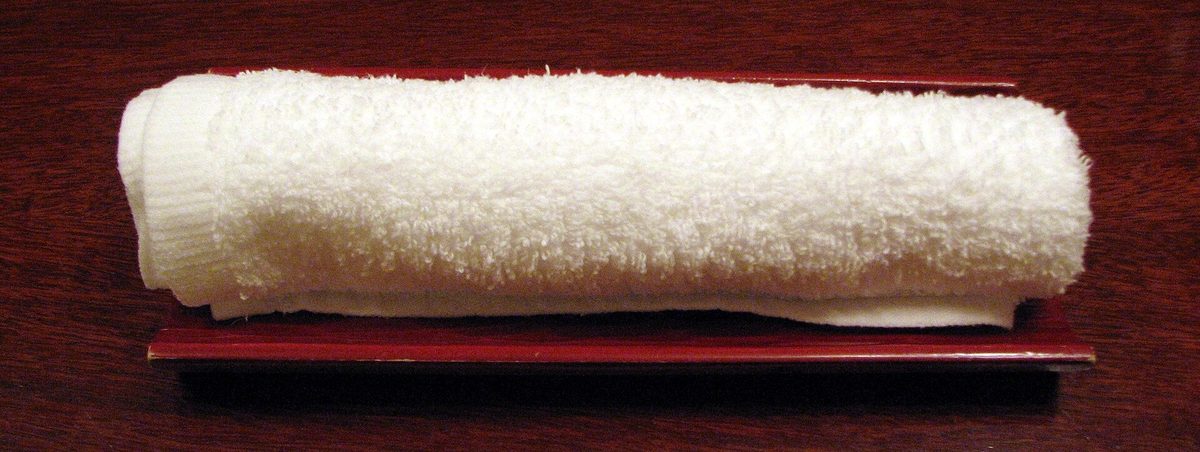
At many restaurants in Japan, a glass of water and a wet hand towel called oshibori are brought to your table as soon as you sit down, and you don't pay for either. If you want more water, just ask; what does cost money is separate, such as the small dish at an izakaya (a Japanese-style pub) and the drinks you order from the menu.
- Water and an oshibori usually come free, without ordering
- No water on the table? It may be self-service
- A short Japanese phrase gets you a refill
- Tap water in Japan has to meet national standards, so you can drink it
- Otoshi and drink bars cost money, and there's no tip to add
Tip 1: Water and a wet towel arrive free
The Tokyo Metropolitan Government's manners handbook for visitors says that at many restaurants you will be offered a glass of water and an oshibori, a wet hand towel, and that water is typically provided at no cost for drinking inside the restaurant. The official tourism site of Sapporo (Hokkaido) says the same for restaurants there: staff may bring a cup of cold water and a moistened hand towel after you're seated, and both are free of charge.
The oshibori is for wiping your hands before you eat. The cold water served at restaurants is often called o-hiya in Japanese, but the everyday word o-mizu (water) works just as well.
Tip 2: No water? Look for a self-service counter
Some restaurants don't bring water to the table, because you get it yourself. At the family restaurant chain Saizeriya, for example, the official guide says water is self-service: take a glass from the drink counter and press the water lever with it. Paper oshibori are kept at the same counter, free to take.
If nothing arrives after you sit down, look around the entrance or the drink counter for glasses and a water dispenser. Also check whether you should take your tray and glass back at the end: the Tokyo handbook notes that at some restaurants, customers are expected to return used dishes and clear the table. For call buttons and drink bars at chain restaurants, see family restaurants in Japan.
Tip 3: Ask for a refill with a short phrase
Japan's national tourism organization, JNTO, says most restaurants offer tap water for no extra charge; just ask the staff. To get more, raise your hand, say sumimasen (excuse me), and show your empty glass. Any of these phrases works:
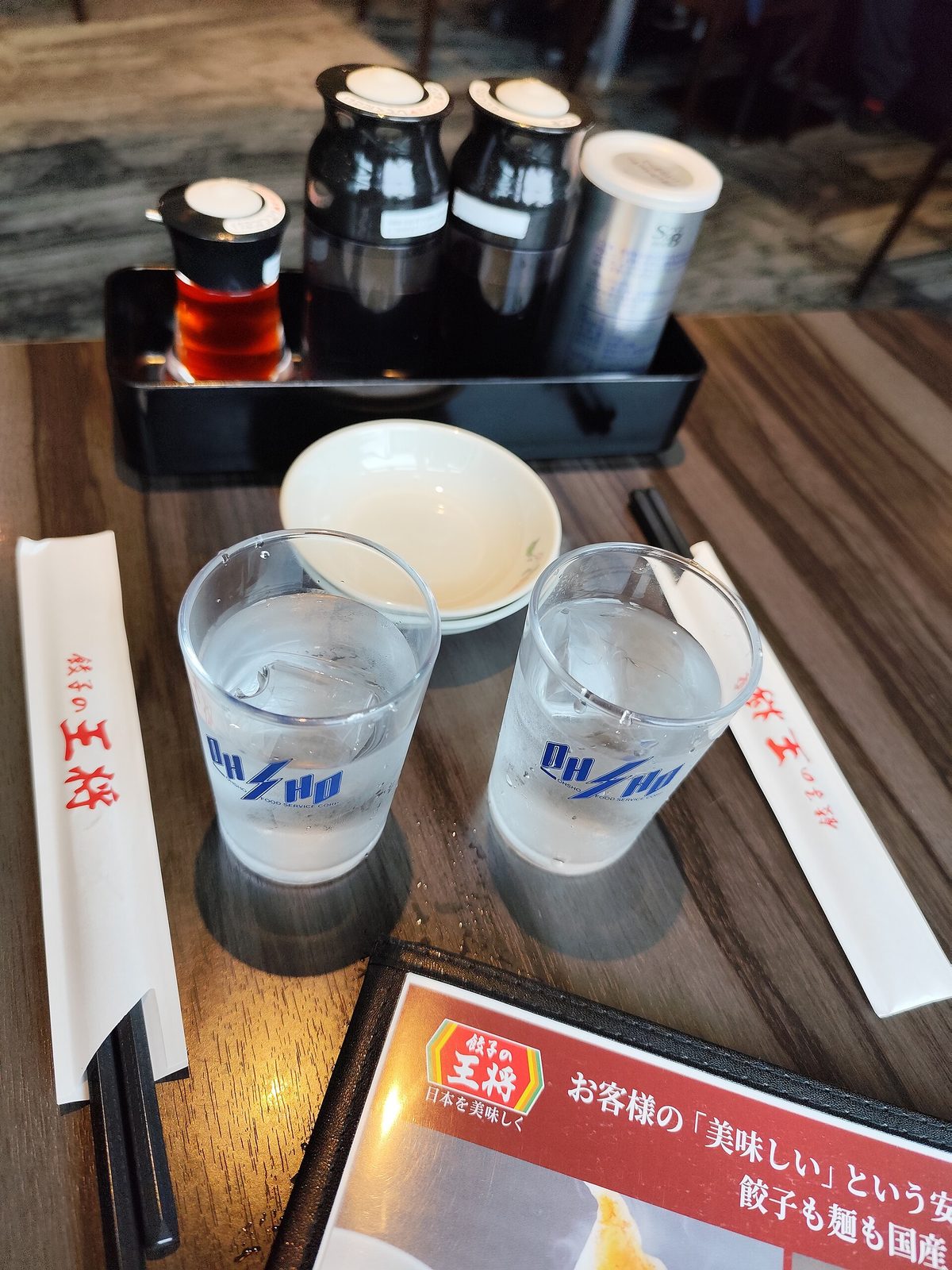
- お水ください (o-mizu kudasai): water, please.
- おかわりお願いします (okawari onegaishimasu): another one, please (while holding up your glass).
- お冷のおかわりお願いします (o-hiya no okawari onegaishimasu): more cold water, please.
If a water pitcher is already on your table, just help yourself. For more phrases you can show on your phone, see eating out in Japan with a translation app.
Tip 4: At conveyor-belt sushi, make your own green tea
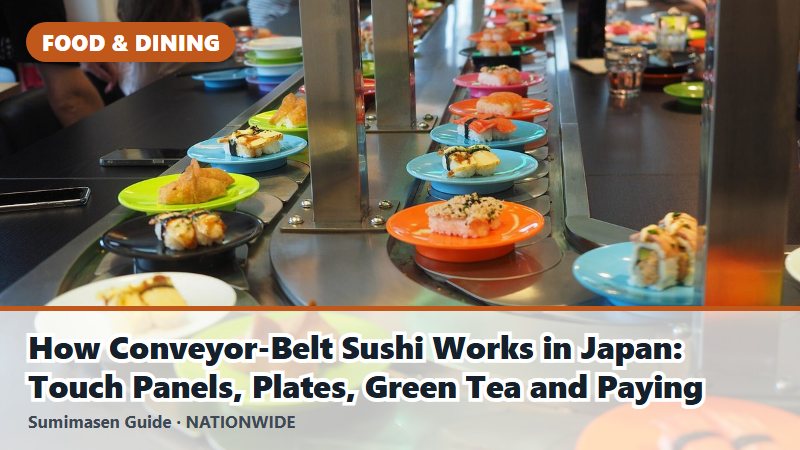
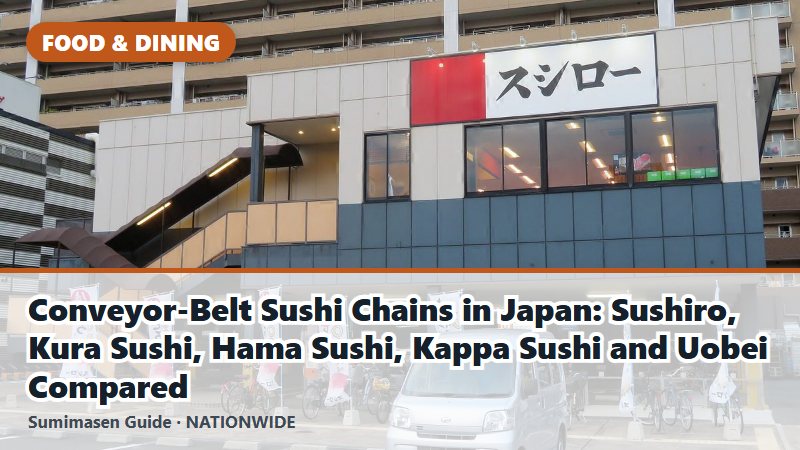
At conveyor-belt sushi restaurants, the tea is something you make yourself. Kura Sushi's guide for first-time customers says chopsticks, soy sauce and powdered green tea are kept at the table: put about a teaspoon of tea powder in a cup, then press the cup firmly against the hot water tap. The water is hot, so hold the cup with care. Read how conveyor-belt sushi works for the touch panel, plates and paying.
Tip 5: Tap water is safe to drink, so skip the bottled water
Under Japan's Waterworks Act, tap water has to meet the national drinking water quality standards, which currently cover 52 items, and in principle the testing is done at the tap. That's explained in the Tokyo Metropolitan Government Bureau of Waterworks' water quality testing plan for fiscal 2026, which adds that the bureau tests 301 items in all, including items the national government asks water suppliers to watch. So you can drink the water at your hotel tap, and refill your own bottle instead of buying plastic ones.
If you prefer bottled water, JNTO notes that all convenience stores stock it in various sizes. And if a tap has a sign saying 飲用不可 (inyō fuka, not for drinking), don't drink from that tap.
What isn't free
- Otoshi at an izakaya: the Tokyo handbook says the small appetizer served with your drink is often added to your bill automatically as a cover charge. See otoshi, the small dish and table charge.
- Drinks you order: soft drinks, beer and other drinks from the menu are charged.
- Drink bars: at family restaurants, the self-service drink bar is something you order and pay for; plain water is separate.
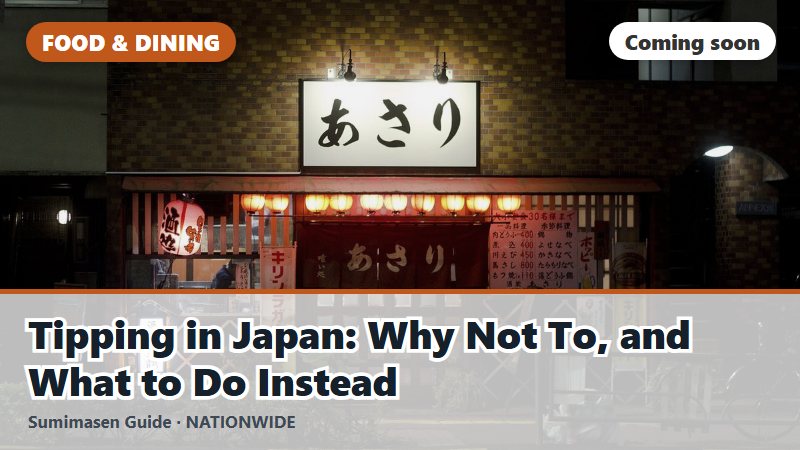
- Tips: none. The Tokyo handbook says tipping is not customary at restaurants in Japan and will almost certainly be refused. See tipping in Japan.
Quick checklist
- Sit down: water and an oshibori usually arrive free.
- Nothing comes? Look for a self-service water counter.
- More water: "O-mizu kudasai" or "Okawari onegaishimasu".
- Conveyor-belt sushi: make green tea at your table.
- Tap water is safe to drink; skip the bottled water.
- Pay for otoshi and the drinks you order, but leave no tip.
Last reviewed: November 2, 2026. Each restaurant does things a little differently; if you're unsure, ask the staff.
References
- Tokyo Metropolitan Government: How to Enjoy Tokyo, Manners & Customs Handbook (English, PDF, 2025 edition)
- Sapporo (Hokkaido) official tourism site: Cold water and paying the bill at restaurants
- JNTO: Safe Drinking Water
- Saizeriya: How to use Saizeriya (Japanese)
- Kura Sushi: For first-time customers (Japanese)
- Tokyo Metropolitan Government Bureau of Waterworks: Water quality testing plan for fiscal 2026, chapter 1 (Japanese, PDF)