How to Find Half-Price Bento in Japan: Reading Supermarket Discount Stickers
Quick answer
- Many Japanese supermarkets add discount stickers from the evening until closing, often 20–30% off first and half price (半額) later on what's left.
- 割 counts in tenths, so 2割引 means 20% off; 円引 means a set number of yen off.
- Discounted bento is near its use-by date (消費期限), so eat it the same night.
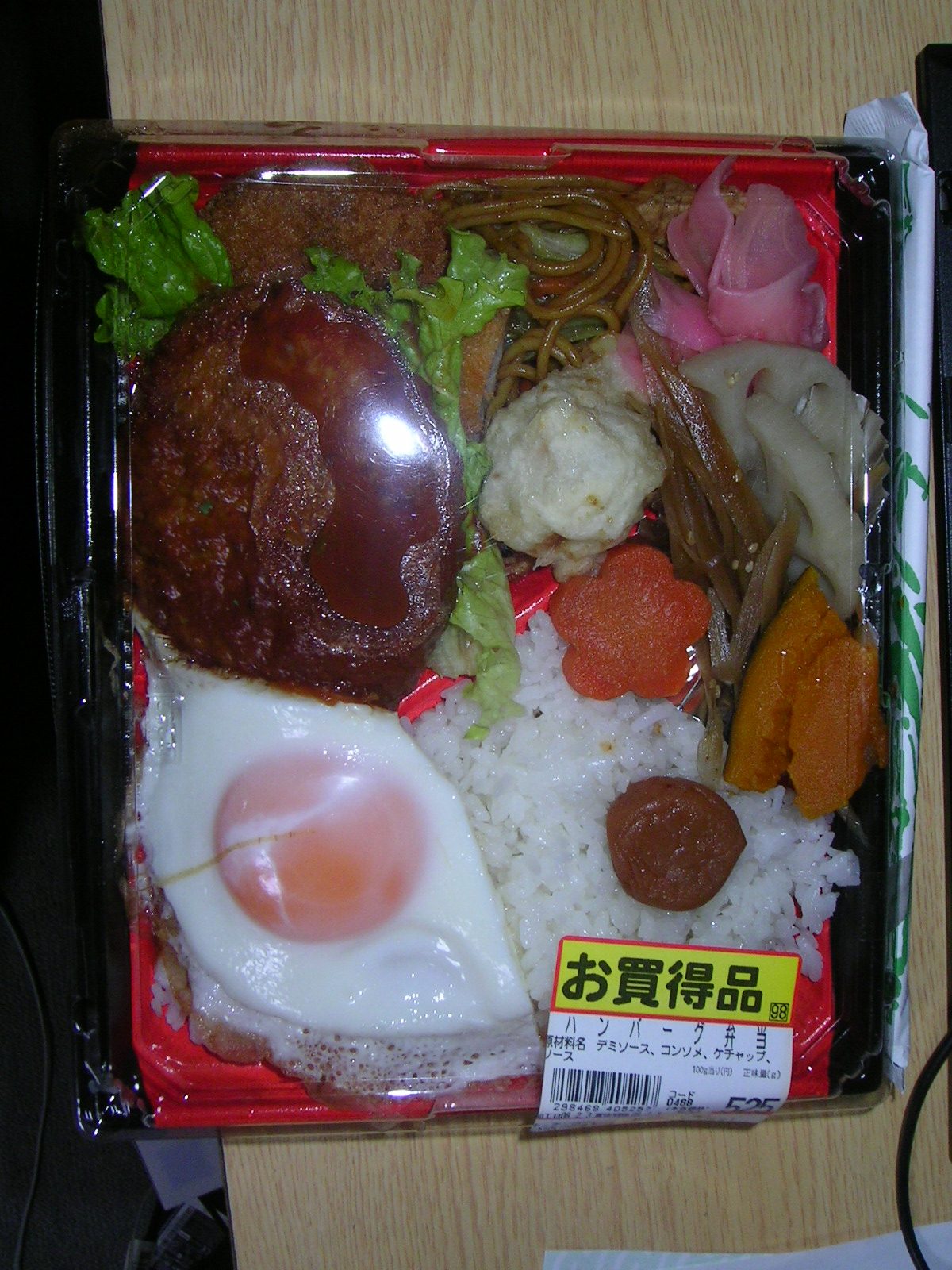
Many Japanese supermarkets put discount stickers on bento, sushi and prepared food from the evening until closing, often 20–30% off first and half price later on what's left. Learn the few words on the sticker, check the date label, and you can have a cheap dinner in your hotel room.
- When the stickers usually appear, and why it changes from store to store
- The words on the sticker: 半額, 割引, 円引
- The date label that matters for discounted food
- Convenience stores have discount stickers too
- Eating in your hotel: bag, chopsticks, heating and trash
Tip 1: Go in the evening, not at lunchtime
Discount stickers mostly show up from the evening until closing. J-CAST News (December 22, 2024) reports that many supermarkets add stickers such as 1割引 and 3割引 from the evening, deciding the rate from the weather, how busy the store is and the time left before closing. Fish, meat, cut fruit and prepared food are the usual items. Some leftovers, such as bread, milk and bento made the evening before, may go half price the next morning instead.
The steps usually get bigger as closing time gets closer. A report by Money Post (December 24, 2022) describes prepared food going 20–30% off first and half price later, and fresh food going 5–10%, then 20–30%, then half price. These are patterns, not rules: on a busy day there may be nothing left to discount, and a store open late or 24 hours keeps its own schedule. In the operator's experience, prepared food put out in the morning is often marked down from the evening, and food made in the evening about 1 hour before closing; see My visit below.
Rates aren't always set by hand, either. Aeon Retail uses an AI system called AI Kakaku that suggests discount rates from past sales, weather and customer numbers; in May 2024 it was used at about 380 stores and expanded to meat and fish, according to Impress Watch (May 7, 2024). So the same item can get a different rate on a different day.
My visit
How the day goes at the supermarkets I use: discounts usually come in two rounds. Prepared food that goes on the shelves in the morning is often marked down from the evening. Food made in the evening is then often marked down about 1 hour before closing, so that last hour is a good time to look.
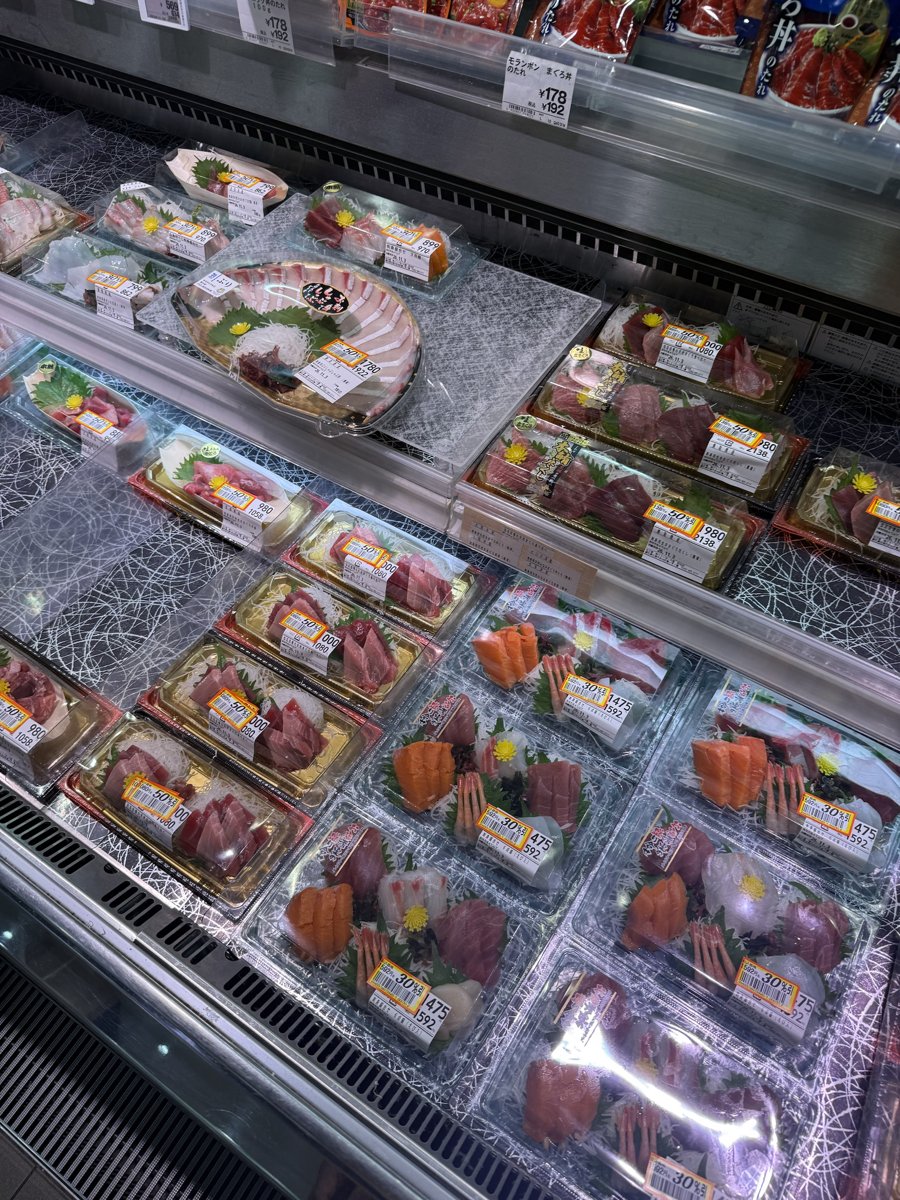
If you're shopping on a weekend, stop by the fresh fish counter: you may find sashimi platters there, sometimes slightly fancier ones. One thing to know: some 24-hour supermarkets don't discount much.
Tip 2: Read the sticker in a few seconds
You only need a handful of words. 半額 (hangaku) means half price. 割 (wari) counts in tenths, so 2割引 (ni-wari-biki) means 20% off and 3割引 means 30% off. 円引 (en-biki) means a set number of yen off, so 100円引 is 100 yen off the price on the label.
Tip 3: Check the date label and eat it today
Discounted food is usually close to its date. Japan uses two date labels, as a leaflet from Osaka City explains. Both assume the pack is unopened and stored as the label says.
| Label | What it means | Found on |
|---|---|---|
| 消費期限 (shohi kigen), use-by | For food that spoils quickly. Eat it by this date; after it, you shouldn't eat it. | Bento, sandwiches, fresh noodles |
| 賞味期限 (shomi kigen), best-before | The date it tastes best by. Past it, the food isn't suddenly unsafe. | Snacks, cup noodles, cans |
Discounted bento and rice balls carry the use-by label, 消費期限; FamilyMart's discount stickers (Tip 5) go on rice balls and bento close to that time.
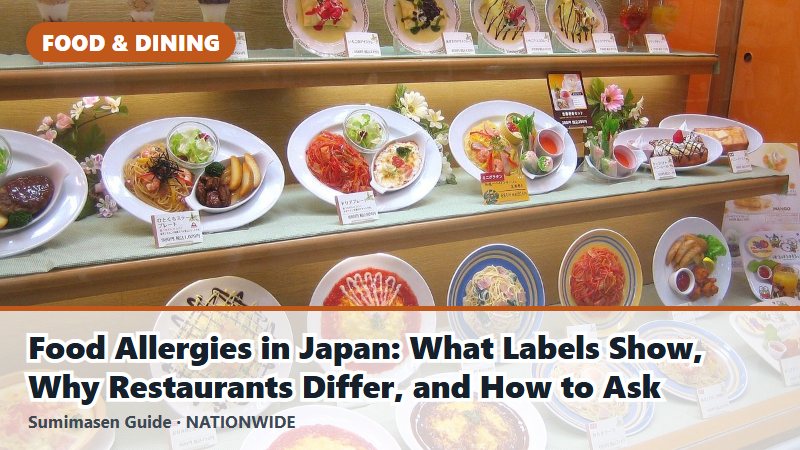
For a half-price bento, that means eating it the same night rather than saving it for the next day's train. Keep it in your room's fridge if you have one, and if you have a food allergy, read the label as you would at full price; see our food allergy guide.
Tip 4: Eating it soon? Take the one at the front
If you'll eat something right away, pick the pack at the front of the shelf. Japan's Consumer Affairs Agency started a campaign called temaedori ("taking from the front") on June 1, 2021, with the agriculture and environment ministries and the Japan Franchise Association: when you'll eat soon, choose the items near their date at the front to cut food waste.
Tip 5: Convenience stores have discount stickers too
Supermarkets aren't the only place. FamilyMart's discount system, Famima no Eco-wari, puts a barcode sticker with a yen discount on rice balls and bento close to their use-by time; it started in July 2021 and is used at more than 90% of its stores, according to FamilyMart's release of March 3, 2025. From March 11, 2025, starting in the Tokai region, the stickers began switching to a "teary-eyed" design with the words たすけてください ("please help me"), in amounts from 10 to 150 yen. For more about what's good at convenience stores, see convenience store sweets and coffee.
Department store food halls before closing
The basement food floors of department stores (depachika) sell bento, side dishes and sweets from many small counters. Whether a counter marks anything down before closing is up to that shop and that day, so treat a sticker there as a bonus rather than a plan. If you do see one, the same words from Tip 2 apply.
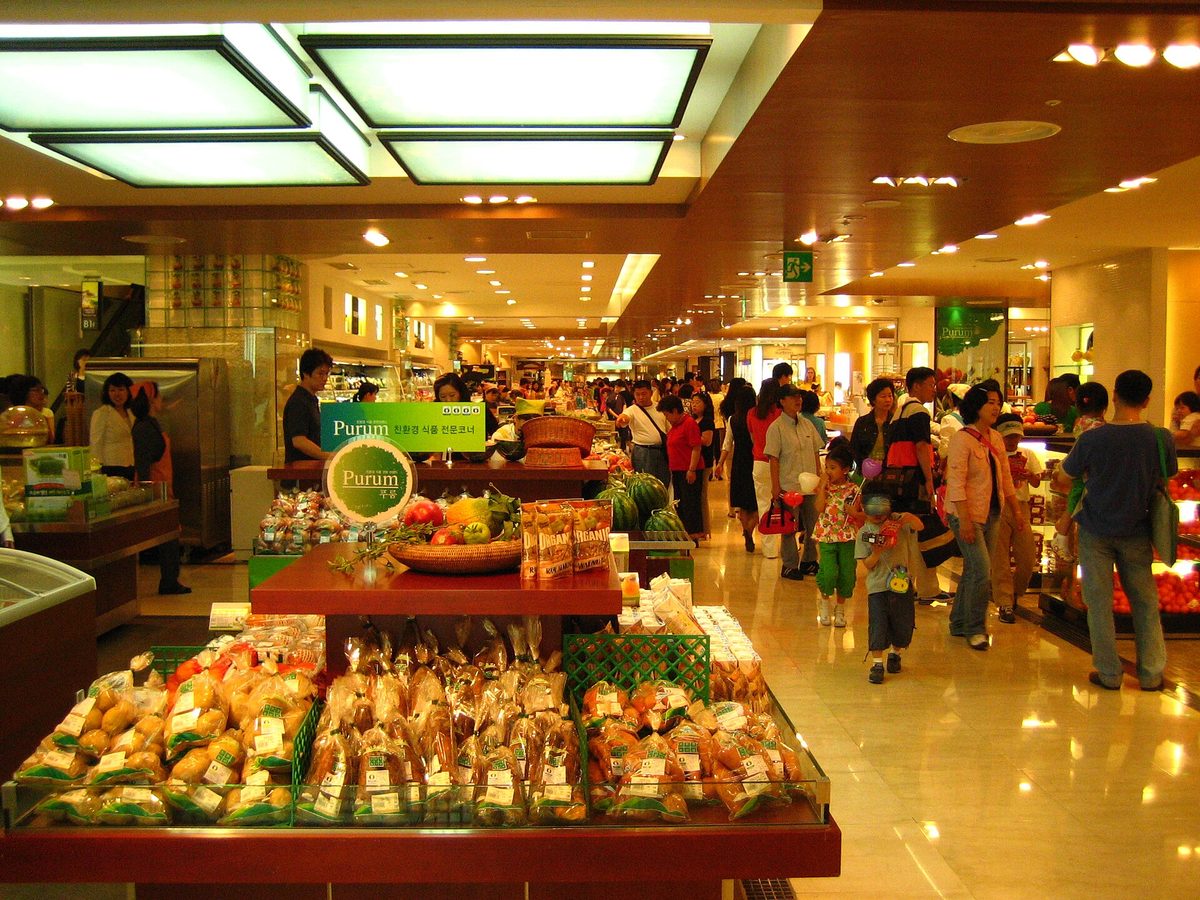
Eating in your hotel: bag, chopsticks, heating
- Bring a bag. Since July 1, 2020, shops in Japan charge for plastic shopping bags with handles, as Hiroshima City explains. If you're asked 袋はいりますか (fukuro wa irimasu ka, "Do you need a bag?"), answer はい (hai, yes) or 大丈夫です (daijobu desu, no thanks).
- Ask for chopsticks. Check your bag before you leave the register. If you need some, say お箸ください (ohashi kudasai, "chopsticks, please").
- Summer: carry it for less time. In winter it's less of a worry, but in summer take extra care when carrying food around. Japan's Ministry of Health, Labour and Welfare says the risk of food poisoning rises especially in hot weather, and Fukuoka City advises not carrying takeout food for a long time, eating it soon, and putting what you won't eat right away in the fridge.
- Sushi packs: check for wasabi, soy sauce and ginger. In the operator's experience, a pack of sushi sometimes comes without わさび (wasabi), 醤油 (shoyu, soy sauce) or がり (gari, pickled ginger) inside. Some stores put free small packets nearby, so look around the sushi shelf; 1 packet per person is usually just right. For how to use them, see how to eat sashimi and wasabi.
- Check for dressing. In the operator's experience, salads at the deli counter are sometimes sold without dressing, which is sold separately. Look for ドレッシング (doresshingu, dressing) on the pack or nearby.
- Plan for heating. Not every room has a microwave. Ask the front desk whether the hotel has one guests can use, or choose food that's good cold, such as sushi, rice balls and sandwiches. When you do use a hotel microwave, be careful: in the operator's experience, heating at a high wattage for a long time can sometimes melt the container. NITE, Japan's product safety agency, warns that plastic that isn't heat-resistant can warp and containers with aluminum or other metal can spark, so check the container's label and the microwave's instructions before heating.
Warming up grilled fish so it stays moist
Deli counters often sell grilled fish. These are the operator's tips for warming it in a microwave. Check first that the container can go in a microwave (see the label, as above), and keep the heating short.
- Take off the plastic wrap, so the fish doesn't turn soggy.
- Lay 2 disposable chopsticks side by side under the fish to lift it up. Extra water and fat drip down, so the bottom is less likely to go soggy.
- If it seems dry or smells fishy, sprinkle a little sake (Japanese rice wine), from a few drops to about 1 teaspoon, before heating. No sake in your hotel? Just skip this step.
- Don't overheat it, or it gets tough. Heat at 500W–600W for about 30 seconds to 1 minute, checking as you go.
- Don't hover. Wait for staff to finish putting on stickers before you reach in, and don't take items from their cart.
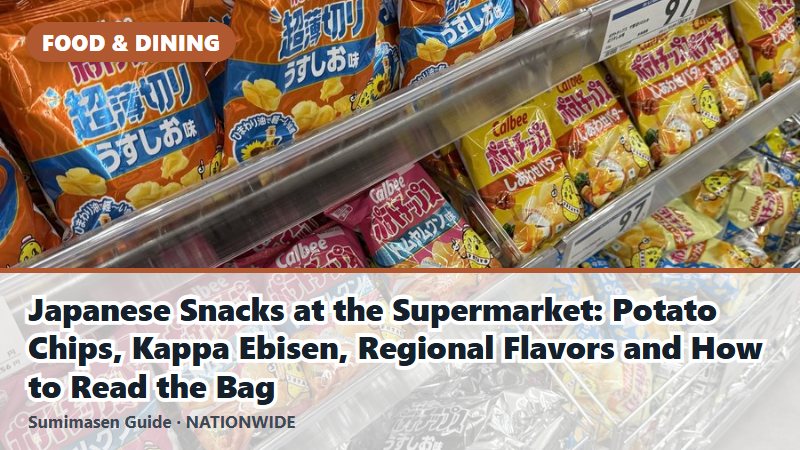
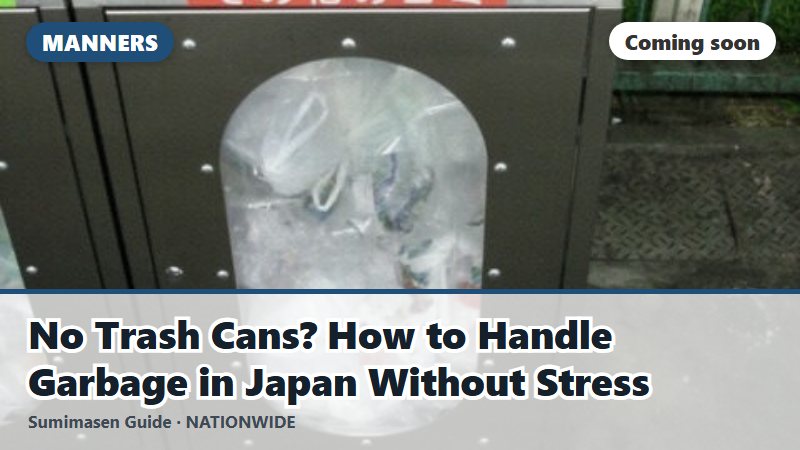
- Plan your trash. Food packs and bottles add up; see trash rules for visitors. For snacks to go with dinner, see our supermarket snack guide.
Last reviewed: November 2, 2026. Discount times, rates and sticker designs change by store and over time; what you see in the shop is what counts.
References
- J-CAST News: Half-price stickers at supermarkets before closing (Japanese, December 22, 2024)
- Money Post: Supermarket discount stickers (Japanese, December 24, 2022)
- Impress Watch: Aeon Retail expands AI Kakaku to meat and fish (Japanese, May 7, 2024)
- Osaka City: Date labels on food (Japanese, PDF)
- Consumer Affairs Agency: The temaedori campaign (Japanese)
- FamilyMart: Teary-eyed discount stickers (Japanese, March 3, 2025)
- Hiroshima City: Plastic shopping bags now charged (Japanese)
- Ministry of Health, Labour and Welfare: Food poisoning (Japanese)
- Fukuoka City: Preventing food poisoning with takeout food (Japanese)
- NITE (National Institute of Technology and Evaluation): Containers you can't use in a microwave (Japanese, PDF)