Konbini Checkout in Japan: 5 Questions the Cashier Asks, and How to Answer Without Japanese
Quick answer
- At a Japanese convenience store, the cashier often asks whether to heat your food ("Atatamemasu ka?"), whether you want a bag, whether you need chopsticks, whether you have a point card, and how you'll pay.
- Plastic bags have cost extra across Japan since July 1, 2020, and chopsticks and spoons are often given only if you ask, so say "Fukuro onegai shimasu" or "Ohashi onegai shimasu".
- To pay, tap Cash, Credit Card, IC Card or Code on the screen facing you; 7-Eleven, Lawson and FamilyMart all list credit cards, transit IC cards, Alipay and WeChat Pay.
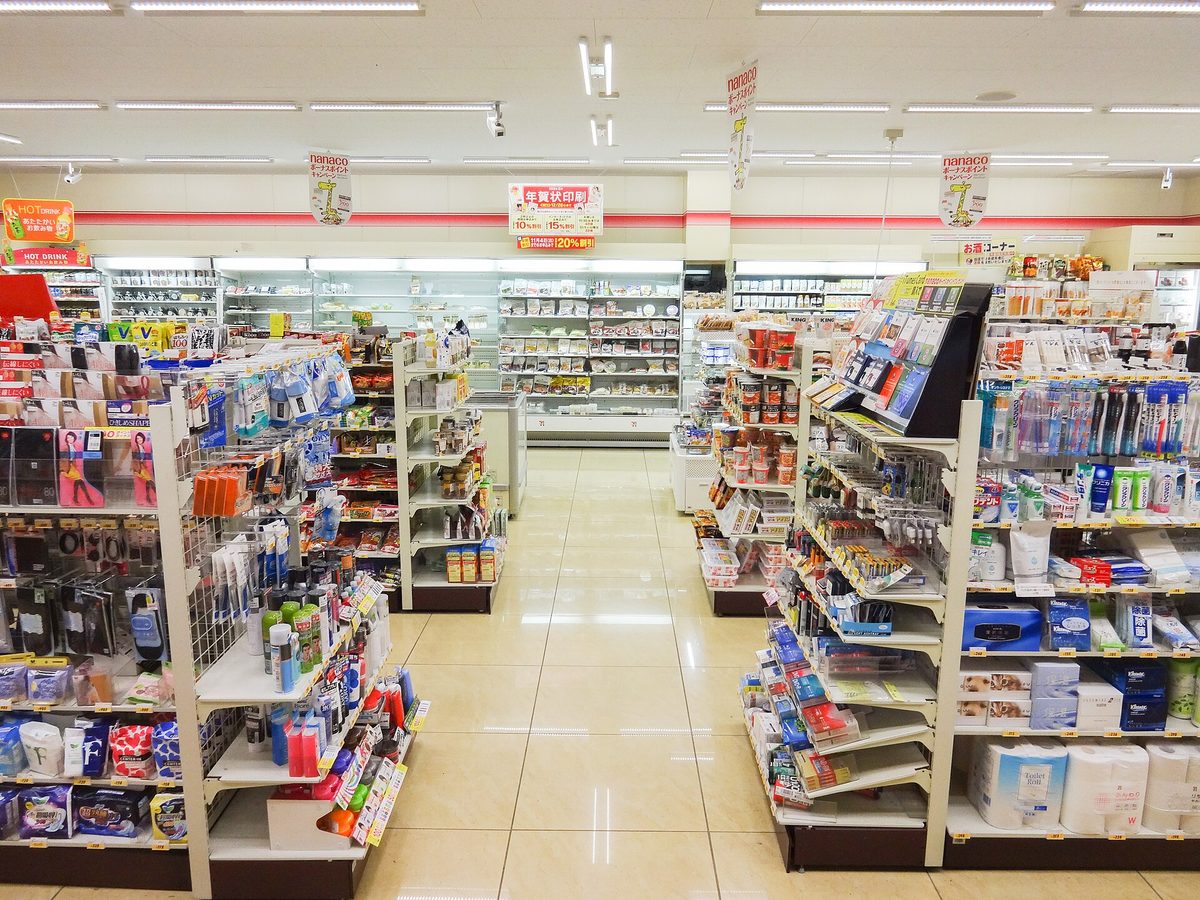
At a Japanese convenience store (konbini), the cashier often asks a few quick questions: whether to heat your food, whether you want a bag, whether you need chopsticks or a spoon, whether you have a point card, and how you'll pay. A nod, a shake of the head or pointing works for all of them, and the short Japanese answers below make it even smoother. This guide is based on the official visitor pages and FAQs of 7-Eleven, Lawson and FamilyMart, the three biggest chains.
- "Atatamemasu ka?" means "Shall I heat it?" Nod, or say "Hai, onegai shimasu"
- Plastic bags cost extra, so say "Fukuro onegai shimasu" if you want one
- Chopsticks and spoons are often given only if you ask or say yes
- Point card? "Nai desu" (I don't have one) is all you need
- To pay, say "Kādo de" or "Genkin de", then follow the screen facing you
Buying alcohol or cigarettes? You'll be asked to tap an age-verification button on the register screen. 7-Eleven explains this on its visitor FAQ, and notes that drinking alcohol under the age of 20 is prohibited in Japan by law.
The 5 questions at a glance
The cashier speaks fast, but the questions come in a fairly fixed order. Here they are with a simple answer for each. Not every store asks every question, and the exact wording changes a little from store to store.
Tip 1: "Atatamemasu ka?" means "Shall I heat it?"
If you buy a bento, a pasta or another ready meal, the cashier may offer to heat it in the store's microwave. 7-Eleven's visitor FAQ says most of its stores in Japan have microwaves, that the staff may ask at the register whether you want items like bento boxes heated, and that some items can't be heated in the store.
- Yes: nod, or say "Hai, onegai shimasu" (yes, please).
- No: shake your head, or say "Daijōbu desu" (no, thanks). Choose this if you'll eat it much later.
- Not asked, but you want it hot? Point at the item and say "Atatamete kudasai" (please heat it).
Heating takes a short while, so step a little to the side while you wait, and the staff will hand it to you.
Tip 2: Bags aren't free, so say if you want one
Since July 1, 2020, shops all over Japan have had to charge for plastic shopping bags, as Niigata Prefecture explains. 7-Eleven's FAQ says bags are available on request for a small fee that depends on the size, and that the staff may also ask whether it's OK to put hot and cold items in the same bag.
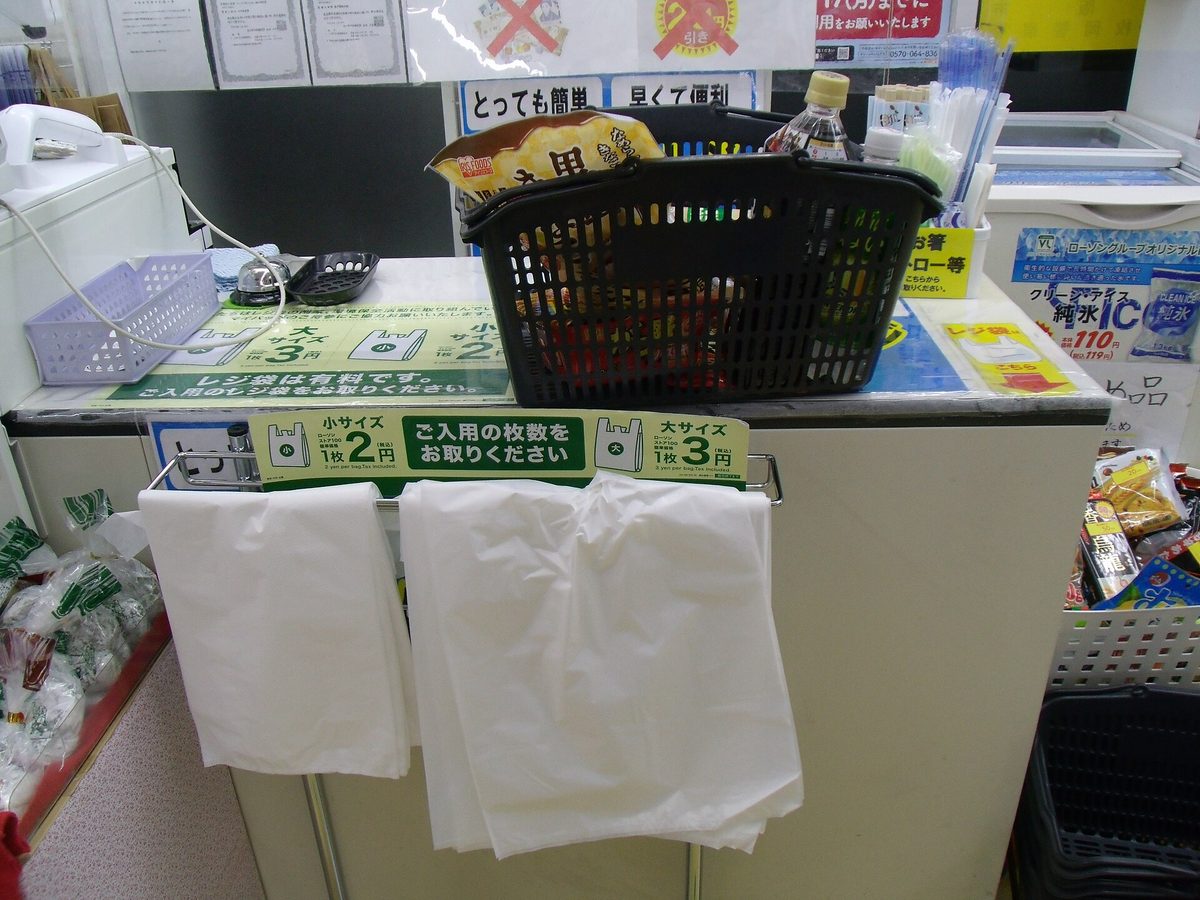
- Want a bag: "Fukuro onegai shimasu" (a bag, please). 7-Eleven's own phrase list gives "Kaimono bukuro o onegai shimasu".
- No bag: "Fukuro wa iranai desu" (I don't need a bag), or simply "Daijōbu desu".
- Hot and cold together? "Issho de ii desu" (together is fine) or "Betsu de onegai shimasu" (separately, please).
A small folding shopping bag in your day pack saves you the question every time.
Tip 3: Chopsticks and spoons: ask, or say yes when offered
Don't expect cutlery to land in your bag automatically. Japan's Act on Promotion of Resource Circulation for Plastics, in effect since April 1, 2022, asks shops that hand out plastic forks, spoons and straws to cut down, for example by asking customers whether they want them, or charging for them. 7-Eleven tells visitors to ask for chopsticks, spoons, forks or paper napkins when they pay, and says the staff may also ask.
FamilyMart stopped handing out plastic forks as standard on October 4, 2022, giving bamboo chopsticks instead; it still gives a fork on request and names visitors from abroad who aren't used to chopsticks as one example. From January 29, 2024, it also began charging for spoons, forks and straws at about 100 stores it runs itself, as a test. So the rules can differ from store to store.
- Chopsticks: "Ohashi onegai shimasu" (chopsticks, please).
- Spoon or fork: "Supūn (fōku) moraemasu ka?" (could I have a spoon (fork)?), the phrase 7-Eleven suggests.
- Don't need them: "Daijōbu desu", or a small wave of the hand.
Tip 4: Point card? A simple "no" is fine
"Do you have a point card?" is one of the most common questions at Japanese shops; a 2019 article in Shukan Gendai noted that cashiers at convenience stores, supermarkets and many other shops ask it all the time. Each chain has its own programs: Lawson gives Ponta points and d POINTs, and FamilyMart lists d POINT, Rakuten Point and V POINT. These are mostly for people living in Japan, so as a visitor you can just decline.
- No card: "Nai desu" (I don't have one), or a shake of the head.
- Have one? Show it before you pay. Lawson notes that points can't be added after the payment is finished.
Tip 5: Paying: say how, then follow the screen facing you
Many konbini registers have a small screen on the customer's side, and you tap your payment method there yourself. 7-Eleven's in-store payment page describes it step by step: tap Cash, Credit Card, Transportation IC Card or Code payment, then put your cash in the slot, hold your card or phone over the reader, or show your payment code to the cashier.
What each chain says about paying:
- 7-Eleven: takes Visa, Mastercard, JCB, American Express, Diners Club, Discover and UnionPay credit cards; Suica, ICOCA and other transit IC cards; and code payments such as WeChat Pay, Alipay and Alipay+ (which covers wallets like Kakao Pay, NAVER Pay and Toss Pay). Some wallets from Taiwan and Hong Kong, such as JKO PAY, PXPay Plus and Octopus, are listed under PayPay. Choose the Credit button for Apple Pay and Google Pay too. Cash isn't accepted at fully self-service checkouts with no cashier.
- Lawson: its visitor page says credit card payments under 10,000 yen need no signature or PIN, and you can't split one purchase across several credit cards. Its payment list includes Alipay and WeChat Pay, and notes that most code payments can't be combined with cash.
- FamilyMart: its payment list includes credit cards, UnionPay, transit IC cards, Apple Pay, Google Pay, Alipay+ and WeChat Pay, with a note that some stores don't handle every method.
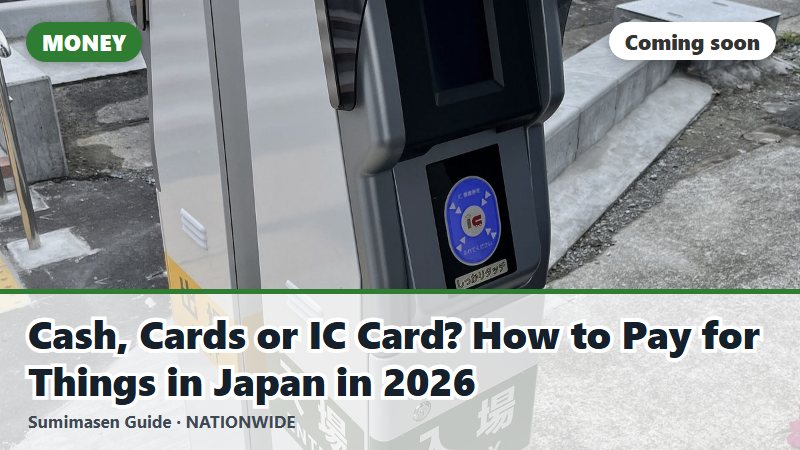
To say it out loud, 7-Eleven suggests "Kādo de haraimasu" (I'll pay by card) and "Genkin de haraimasu" (I'll pay in cash). With an IC card, "Suica de" (with Suica) or simply showing the card works. On an iPhone, you can also add Suica to Apple Wallet and tap your phone instead: see how to use Suica on iPhone. For the bigger picture, read cash, cards or IC card: how to pay in Japan.
2 more things you may hear
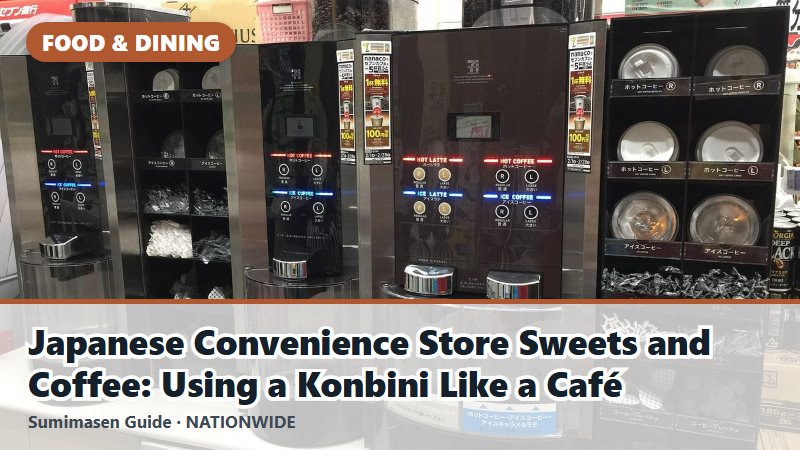
- "Tennai de omeshiagari desu ka?" (Will you eat here?) Some stores have an eat-in corner. 7-Eleven notes that food you eat there is taxed at 10%, so tell the staff before you pay. More in our konbini sweets and coffee guide.
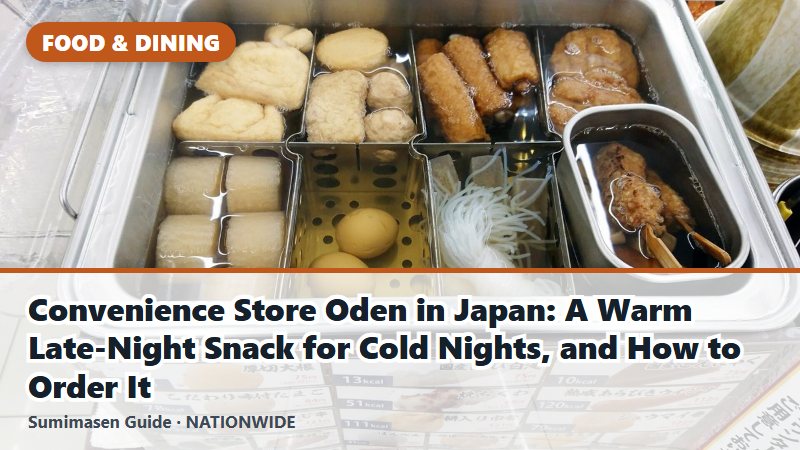
- Hot snacks by the register: fried chicken and other hot snacks are kept in a case next to the cashier, so you order them at the register. FamilyMart's visitor page says to order its Fami-Chiki fried chicken with the staff at the register. Point and say "Kore, kudasai" (this one, please). For oden, see how to order konbini oden.
Phrases to show the cashier
| English | Japanese | Reading |
|---|---|---|
| Yes, please. | はい、お願いします。 | Hai, onegai shimasu. |
| No, thanks. | 大丈夫です。 | Daijōbu desu. |
| Please heat it. | 温めてください。 | Atatamete kudasai. |
| A bag, please. | 袋お願いします。 | Fukuro onegai shimasu. |
| Chopsticks, please. | お箸お願いします。 | Ohashi onegai shimasu. |
| I don't have one. | ないです。 | Nai desu. |
| I'll pay by card. | カードで払います。 | Kādo de haraimasu. |
| This one, please. | これ、ください。 | Kore, kudasai. |
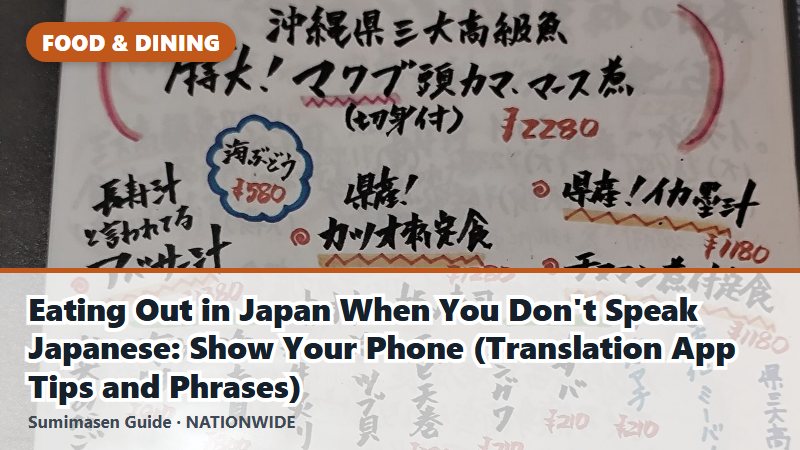
If a question takes you by surprise, a translation app helps; see eating out in Japan when you don't speak Japanese. And when you've finished your snack, our guide to trash rules explains where the empty packaging can go.
Last reviewed: November 2, 2026. Payment methods, bag fees and cutlery rules differ by chain and store, and can change; check at the register if you're not sure.
References
- 7-Eleven Japan: FAQs for visitors
- 7-Eleven Japan: In-store payment
- Lawson: Welcome to Japan
- Lawson: Accepted payment methods (Japanese)
- Lawson: Point cards (Japanese)
- FamilyMart: Welcome to Japan
- FamilyMart: Accepted payment services (Japanese)
- FamilyMart: Bamboo chopsticks instead of plastic forks (Japanese, September 21, 2022)
- FamilyMart: Charging for plastic spoons, forks and straws at company-run stores (Japanese, January 19, 2024)
- Government of Japan (Highlighting Japan): Concerning the Act on Promotion of Resource Circulation for Plastics
- Niigata Prefecture: Plastic shopping bags must be charged for from July 1, 2020 (Japanese)
- Gendai Media (Kodansha): Why shops keep asking "Do you have a point card?" (Japanese, May 8, 2019)