Edo Fast Food: How Sushi, Tempura, Soba and Eel Began as Street Food in Old Tokyo
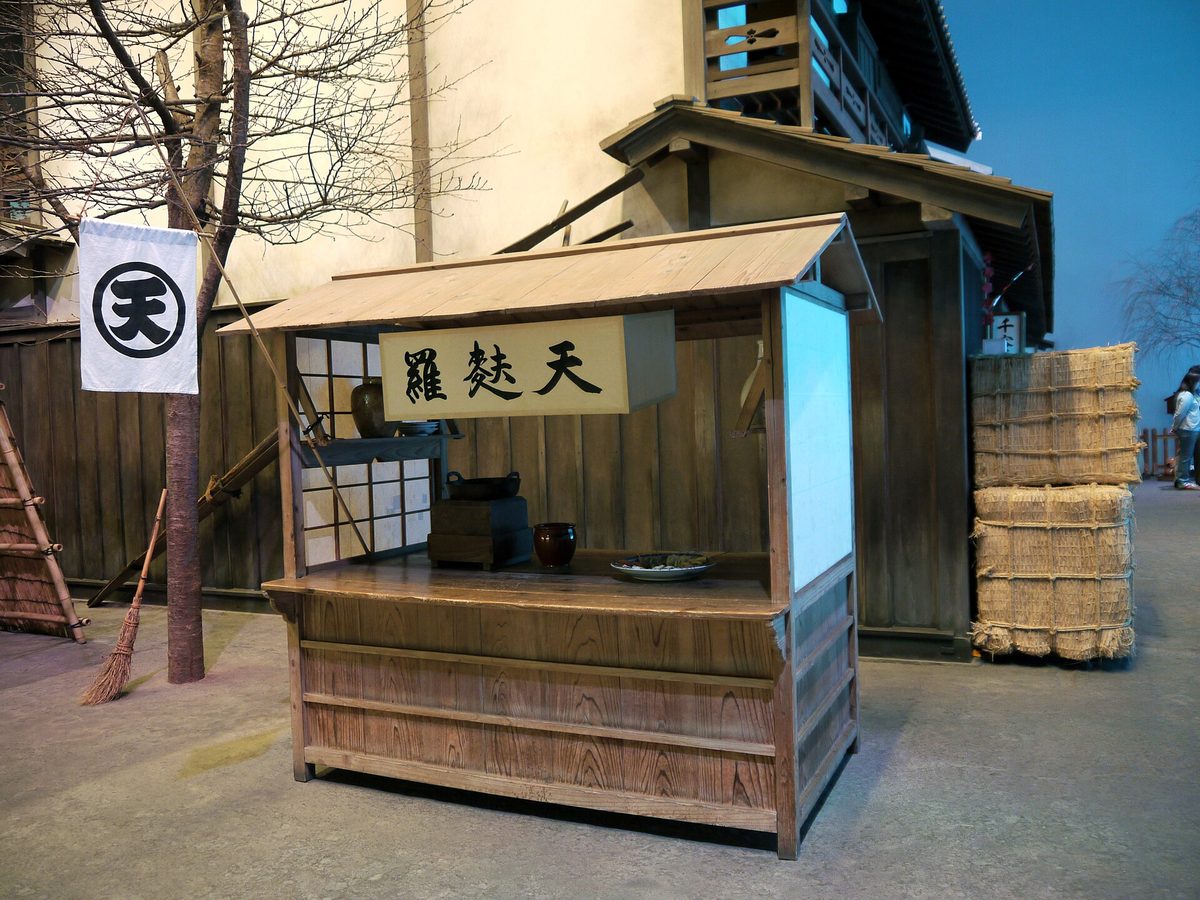
Nigiri sushi, tempura and soba, three of Japan's best-known dishes, started out as quick, cheap street food in Edo, the city that became Tokyo. This guide explains how each one began at the yatai (street food stalls) of the Edo period, how eel became a city favorite, what "Edomae" really means, and where you can taste and see this history today. It is based on the Ministry of Agriculture, Forestry and Fisheries' regional food pages and official museum information.
- The short answer: Edo's fast food became Japan's classic food
- What "Edomae" means
- Nigiri sushi: a snack from a stall
- Tempura: eaten standing up, on a skewer
- Soba: the noodles Edo loved
- Eel: the sauce that won the city
- Where to taste and see it today
The short answer
Yes, sushi, tempura and soba were Edo's fast food. In the Edo period (1603 to 1868), Edo's population was growing fast, and stalls selling food to eat on the spot became popular. The Ministry of Agriculture, Forestry and Fisheries (MAFF) describes how sushi, tempura and soba made with fish from the bay in front of Edo lined up at these stalls one after another. Eel grilled with a sweet soy sauce became a favorite of the city too. Today these are restaurant dishes, from conveyor-belt sushi to old shops, but the Edo roots still show in how they are made and eaten.
Want to taste your way through Tokyo's fish and street food? See dates for the Tsukiji Outer Market food walking tour with 5 tastings on GetYourGuide (affiliate link). It is a small-group walk with tastings such as wagyu skewers and tamagoyaki (Japanese rolled omelet), ending with a fish bowl or sushi depending on the day.
What "Edomae" means
You will see the word Edomae ("in front of Edo") on sushi and tempura menus. According to MAFF's page on eel kabayaki, the word was born from eel: eels caught near the mouth of the Okawa, today's Sumida River, were called Edomae eels. MAFF's page on Tokyo's food explains that the Edo way of cooking eel came to be called Edomae, and that the word later grew to mean the style and ways of Edo in general. Today, Edomae sushi usually means the Edo style of sushi, with toppings prepared by curing, simmering or marinating.
Nigiri sushi: a snack from a stall
Sushi is older than Edo. MAFF's page on nigiri sushi explains that in the Heian period people preserved salted fish in cooked rice and ate it once the rice had fermented and turned sour, a dish called narezushi. In the Edo period this changed shape again and again, into quick sushi, pressed sushi and finally nigiri. By the late Edo period, ordinary people in Edo could easily eat nigiri at street stalls.
It was a different snack from today's. MAFF says the rice in Edo nigiri was about three times what it is now; it was eaten to fill a hungry stomach, with the rice more important than the topping. Edo-style sushi uses rice seasoned with red vinegar, and toppings that are prepared first: cured gizzard shad (kohada) or mackerel, simmered conger eel, steamed shrimp and rolled omelet. Three Edo shops, Kenuki Sushi, Yohei Sushi and Matsu-ga-sushi, are remembered for helping nigiri spread.
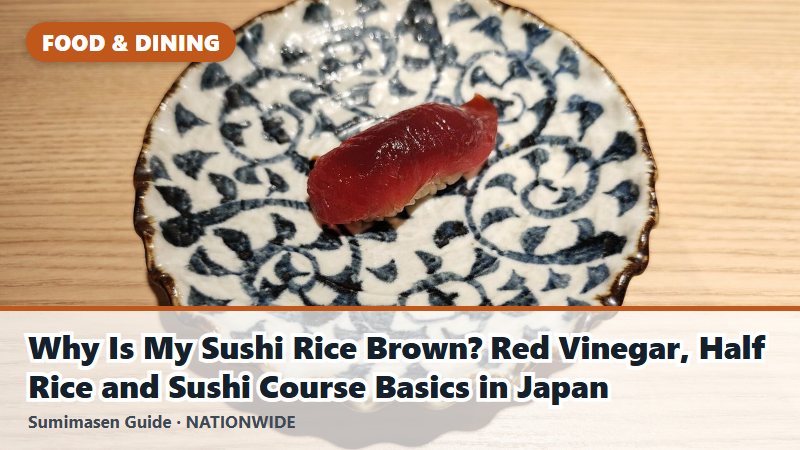
Two old Tokyo shops named by MAFF still keep the tradition: Sasamaki Kenuki Sushi, founded in 1702, still wraps its nigiri in bamboo leaves, and Yoshino Sushi Honten, founded in 1879, still serves traditional nigiri made with red vinegar and salt only. Why the rice in some shops looks brown, and why you can ask for less of it, is explained in our guide to red vinegar and half rice.
Tempura: eaten standing up, on a skewer
According to MAFF's page on tempura, tempura is said to go back to a fritter-like dish brought from Portugal in the middle of the 16th century. In the growing city of Edo, stalls where people ate standing up became a popular way to eat out, and tempura was one of them; the spread of the shichirin (a small charcoal stove) helped. The oil did not drain well, so pieces were apparently put on skewers and eaten with grated daikon radish.
In Edo, tempura meant seafood fried in batter, unlike the Kamigata area (Kyoto and Osaka), where the word meant fried fish paste. Fresh Edomae seafood fried in sesame oil and eaten piping hot, piece by piece, was its mark. MAFF notes that, to prevent fires, tempura could only be sold at stalls in Edo; in the late Edo period it was refined into a high-class dish, and after the Meiji era (from 1868) restaurants and tempura shops spread. After the Great Kanto Earthquake of 1923, cooks who had lost their jobs moved around Japan and took Edomae tempura with them. Today you will also see it on rice as tendon (tempura bowl).
Soba: the noodles Edo loved
MAFF's page on soba says that at the start of the Edo period, buckwheat noodles (soba-kiri) were served at temples, and then began to be sold in the town alongside udon. The people of Edo preferred soba to udon, and it spread from proper shops to street stalls. By the middle of the Edo period, night stalls were serving hot soba in broth, known as yotaka soba or furin soba ("wind-chime soba"). By the late Edo period, soba shop menus already included cold mori soba, tempura soba and duck soba (kamo nanban).
Three Edo soba names are still famous: Sunaba, known for thin white noodles; Sarashina, for pale, almost clear noodles; and Yabu, for greenish noodles and a salty dipping sauce. The saying "udon in the west, soba in the east" still describes Japan today.
Eel: the sauce that won the city
MAFF's page on eel kabayaki explains that one theory says the name comes from eel cut into pieces and grilled on bamboo skewers, which looked like the spike of a cattail (gama). In the Kanto style, the eel is split along the back, grilled plain, steamed, then grilled again over charcoal while being brushed with sauce. At first it was seasoned with salt, then soy sauce; once a sauce of soy sauce, sugar and mirin came into use, kabayaki became a huge hit with the people of Edo. Eating eel on Doyo no Ushi no Hi (a day in the hottest part of summer, believed good for beating the heat) was already a custom in the Edo period; one famous theory credits the inventor and writer Hiraga Gennai with the idea.
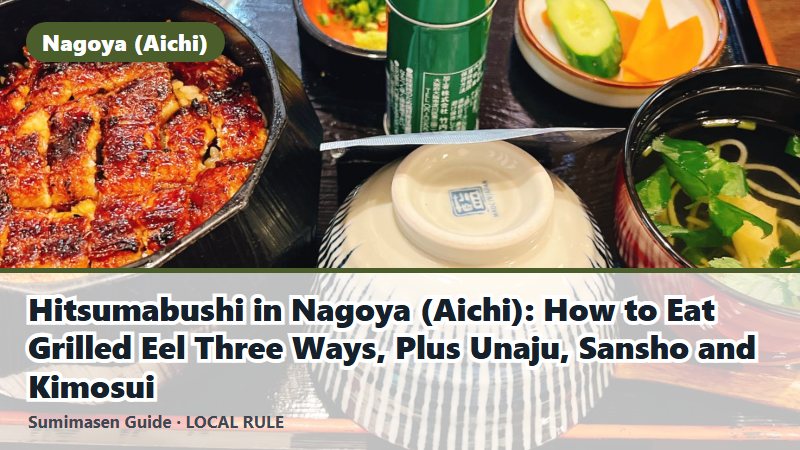
Eel styles differ by region. For a regional way to eat it, see our guide to hitsumabushi in Nagoya (Aichi).
Edo food history at a glance
Where to taste and see it today
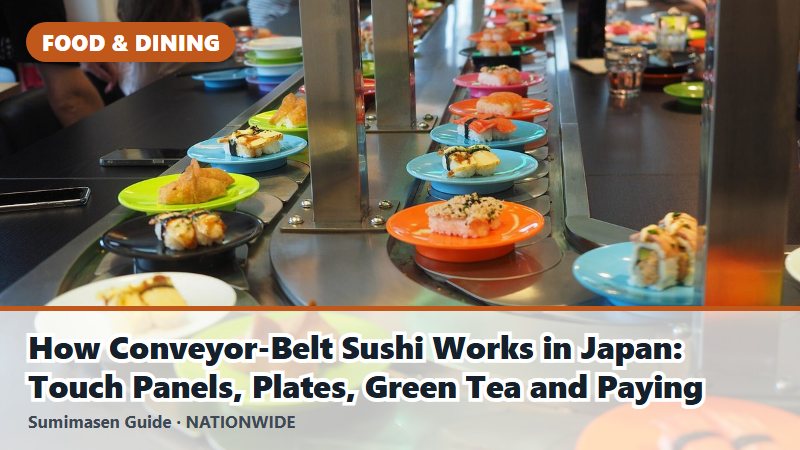
- Sushi: for an easy first try, our guide to conveyor-belt sushi explains touch panels, plates and paying. For a counter shop, read about red vinegar and course basics first.
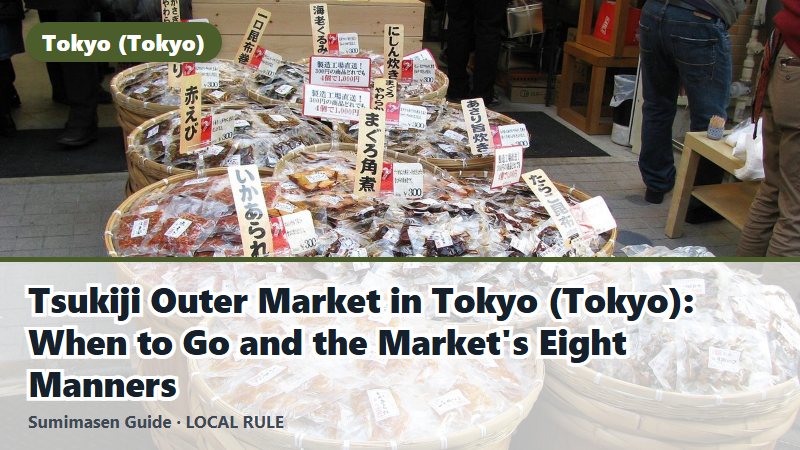
- Fish and street food in the old market area: our guide to the Tsukiji Outer Market covers the market's manners and where you can eat what you buy.
- Eel: see how to eat hitsumabushi, a regional style from Nagoya (Aichi).
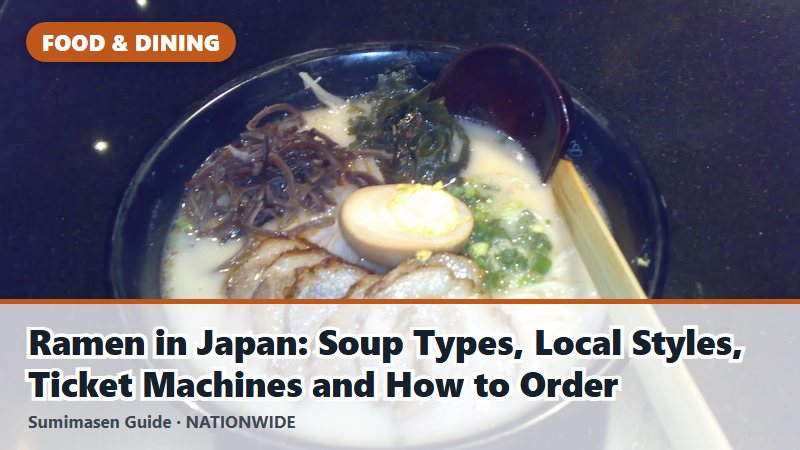
- Today's quick meal: ramen is not an Edo food, but ramen counters with ticket machines play the same role now; see our ramen guide.
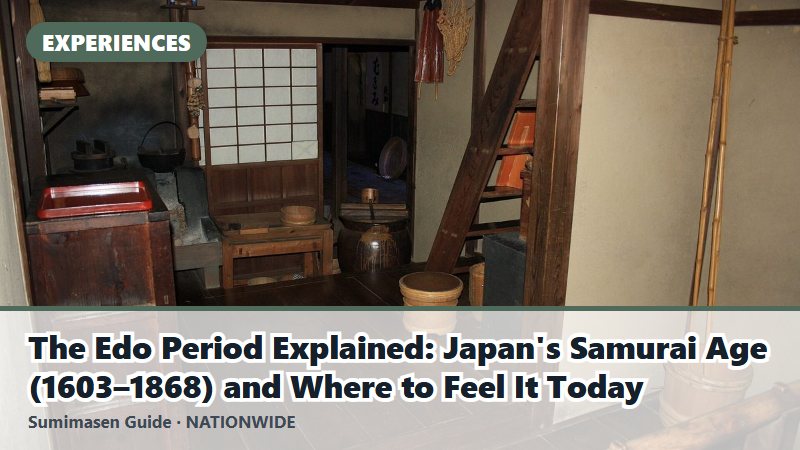
- Fukagawa Edo Museum, Tokyo: a full-size reconstruction of the Fukagawa Saga-cho district of the late Edo period. According to Koto City, the exhibition room is open from 9:30 to 17:00 (last entry 16:30), closed on the second and fourth Mondays (open if it is a national holiday), at the year-end and New Year, and on some other days for maintenance. It is a 3-minute walk from Exit A3 of Kiyosumi-shirakawa Station (Toei Oedo Line and Tokyo Metro Hanzomon Line).
- Edo-Tokyo Museum, Tokyo: the city's large museum of Edo and Tokyo history, in Yokoami, Sumida. When we checked, its official website was temporarily offline for security maintenance, but the notice on it lists hours of 9:30 to 17:30 (Saturdays until 19:30), last entry 30 minutes before closing, closed on Mondays (the next weekday when Monday is a national holiday).
What to do as a traveler
- Look for "Edomae" on menus: it points to the Edo style of preparing fish.
- Try at least two of the four in Tokyo: nigiri, tempura, soba and eel.
- Eat at the counter or table where you buy, the way stall food was eaten; our guide to eating while walking explains where walking and eating is fine.
- Prefer a guide? A small-group Tsukiji food walk with tastings (GetYourGuide) (affiliate link) is an easy way to start.
Last reviewed: October 25, 2026. Museum hours can change, so check the official pages below before you go.
References
- MAFF, Our Regional Cuisines: Tokyo (Japanese)
- MAFF, Our Regional Cuisines: Nigiri sushi, Tokyo (Japanese)
- MAFF, Our Regional Cuisines: Tempura, Tokyo (Japanese)
- MAFF, Our Regional Cuisines: Soba, Tokyo (Japanese)
- MAFF, Our Regional Cuisines: Eel kabayaki, Tokyo (Japanese)
- Cabinet Office: The Great Kanto Earthquake of 1923 (Japanese)
- Koto City: Fukagawa Edo Museum (Japanese)
- Edo-Tokyo Museum (English)