The Edo Period Explained: Japan's Samurai Age (1603–1868) and Where to Feel It Today
This page contains affiliate links.
Castles, samurai, kabuki, ukiyo-e prints and the post towns on old highways: much of what visitors picture as "traditional Japan" took shape in the Edo period. This guide explains the era in plain words, who ruled, how the famous "closed country" really worked, why the peace lasted and how Edo became Tokyo, using Japanese encyclopedias, the Ministry of Education, the National Archives of Japan and official city and museum pages (checked October 2026). It ends with places where you can still feel the period on your trip.
- The short answer: the age of the Tokugawa shoguns, ruled from Edo (now Tokyo)
- A timeline from 1603 to 1868
- The shogun, the daimyo and the lords' trips to Edo
- "Sakoku": how closed was Japan?
- Samurai, farmers and townspeople
- Why the peace lasted so long
- Edo, the city that became Tokyo
- Where to feel the Edo period today
The short answer
The Edo period is the age when the Tokugawa family of shoguns ruled Japan from Edo, the city now called Tokyo. Japanese encyclopedias usually date it from 1603, when Tokugawa Ieyasu was appointed shogun, to 1867, when the 15th shogun, Tokugawa Yoshinobu, handed power back to the imperial court; the new Meiji era began the following year, in 1868. After the last great battles ended in 1615, Japan went through the rest of the period almost without war. The shogunate controlled the regional lords (daimyo), made them live in Edo every other year, kept contact with the outside world to a few gateways and ran a society divided by status. Out of that long peace came much of the culture visitors enjoy today, from kabuki and ukiyo-e to castle towns and the post towns of the old roads.
A timeline from 1603 to 1868
The dates below come from Japanese encyclopedias on the Edo period, sankin kotai and sakoku, and from the National Archives of Japan for the end of the story. Some historians start the period in 1600, the year of the Battle of Sekigahara, instead of 1603.
The shogun, the daimyo and the lords' trips to Edo
At the top was the shogun, the head of the Tokugawa family, governing from Edo Castle. Below him, the country was divided into domains run by regional lords called daimyo. Encyclopedias describe the shogunate's control of the lords through a set of laws for warrior houses first issued in 1615, the Buke Shohatto, and a rule that limited each domain to one castle.
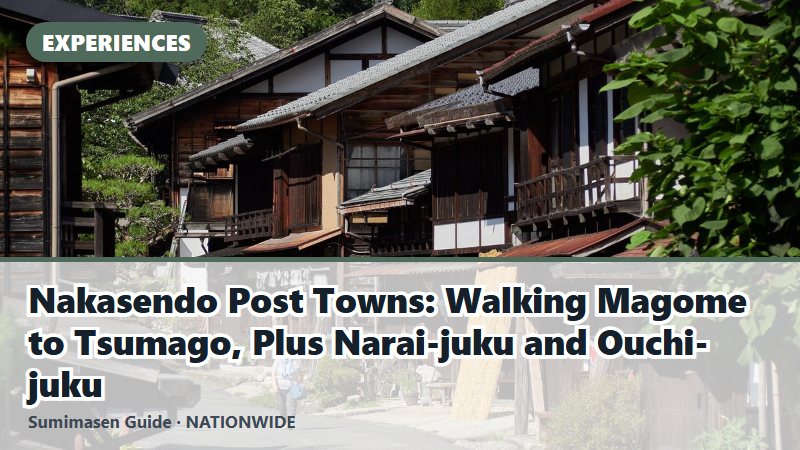
The best-known control was sankin kotai, "alternate attendance." Under the third shogun, Iemitsu, the laws were revised in 1635 and it became a fixed rule: as a rule, each lord spent one year in Edo and the next year in his own domain, while his wife and children had to live in Edo all the time, according to Japanese dictionaries and encyclopedias. The long processions between the domains and Edo were very expensive, and Nipponica calls the cost one of the main reasons the domains' finances ran short. They also kept the roads busy, and Heibonsha's World Encyclopedia lists the growth of travel and of the post towns along the highways among the results. You can still walk one of those roads today: see our guide to the Nakasendo post towns. The rule was relaxed in 1862, near the end of the shogunate.
"Sakoku": how closed was Japan?
You may have read that Japan was a "closed country" (sakoku) in the Edo period. It is true that the shogunate banned Portuguese ships in 1639, moved the Dutch traders to the small island of Dejima in Nagasaki in 1641, and did not let Japanese people travel abroad. But Japanese reference books now add some important points:
- Trade and diplomacy went on through four gateways. According to Heibonsha's World Encyclopedia, the shogunate itself handled the Dutch and Chinese at Nagasaki, the Tsushima domain dealt with Korea, the Satsuma domain with the Ryukyu Kingdom (today's Okinawa), and the Matsumae domain with the Ainu people in the north.
- The word itself came later. Japanese dictionaries trace "sakoku" to 1801, when the interpreter Shizuki Tadao translated a chapter of a book by Engelbert Kaempfer, a German doctor who had worked at the Dutch post in Nagasaki. Nipponica notes that the people of the early Edo period did not think of it as "closing the country."
- Historians now describe it differently. Yamakawa's dictionary of Japanese history says Japan "did not literally close itself off," and some historians use the term kaikin, "maritime prohibitions," instead.
Japanese schools reflect this debate. In February 2017, the Ministry of Education published a draft of new national curriculum guidelines that replaced "sakoku" with "the shogunate's foreign policy." In the final guidelines of March 2017, the wording became "the shogunate's foreign policies, such as sakoku," according to the ministry's list of changes from the draft. So the word is still taught, but as one part of a bigger picture. The country was opened to Western powers after Commodore Perry's ships arrived in 1853 and the treaty with the United States was signed in 1854.
Samurai, farmers and townspeople
Edo society was organized by status, and the status you were born into decided much of your life. Older textbooks described four ranked classes, "samurai, farmers, artisans, merchants" (shi-no-ko-sho). As Meguro City in Tokyo explains with a primary school textbook as an example, that phrase has disappeared as research has moved on, and the textbook now describes samurai, hyakusho (villagers, most of them farmers) and chonin (townspeople), the terms actually used at the time. There were also groups who were pushed outside this system and faced discrimination, a history that Japanese schools teach today as a human rights issue.
Most people were not samurai. Nipponica gives rough shares of the population: samurai about 5 to 6 percent, farmers about 80 to 85 percent, artisans about 3 percent and merchants about 6 percent. Townspeople in the big cities built their own lively culture, and Nipponica notes that the number of terakoya, small private schools that taught reading and writing, rose sharply across Japan from the 18th century.
Why the peace lasted so long
Heibonsha's World Encyclopedia calls the Edo period a peaceful age in which, after the battles that ended in 1615, war disappeared until the end of the shogunate, with the exception of the Shimabara Rebellion of 1637 to 1638. Historians weigh the reasons differently, and there is no single official answer, but Japanese encyclopedias describe several parts of the system that kept the lords and the countryside under control:
- The laws for the daimyo and the one-castle-per-domain rule, which limited the lords' military strength.
- Sankin kotai, which kept lords and their families close to the shogun and made them spend heavily on travel.
- A clear line between samurai and farmers, and the earlier collection of swords from ordinary people (katanagari), which took weapons out of village life.
- Strict control of contact with the outside world.
Read this list as a set of factors, not a complete explanation. The same system that kept the peace also fixed people in their status and limited what they could do.
Edo, the city that became Tokyo
Edo grew around the shogun's castle into a very large city. According to Nipponica, records from 1723 count about 526,000 townspeople, and with the samurai the city is said to have had about a million people. In 1868 the city got a new name: on July 17 that year, an imperial rescript declared that Edo would be called Tokyo (written with the characters for "east" and "capital"), the National Archives of Japan explains. That autumn the era name was changed to Meiji, and the emperor traveled from Kyoto and made Edo Castle his residence, the Archives adds. Many Edo places are still easy to find in today's city:
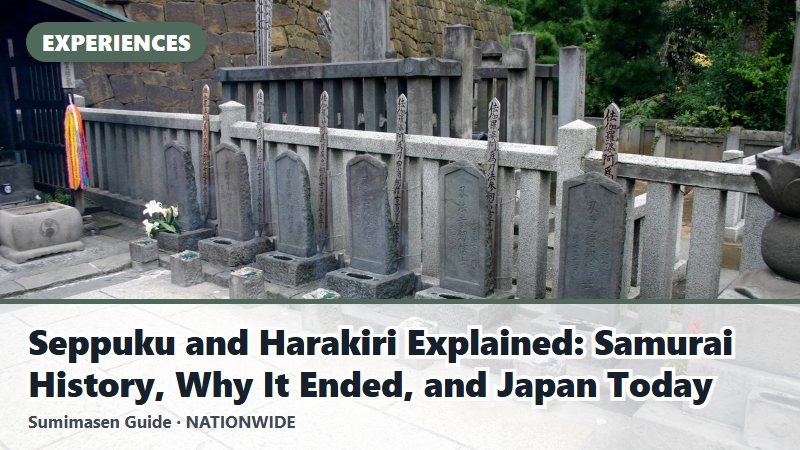
The graves at Sengakuji belong to the Ako retainers known as the 47 ronin; our column on seppuku and harakiri tells their story as history.
How it ended: the Meiji Restoration
The arrival of Perry's ships in 1853 and the treaties that followed shook the shogunate. After years of conflict, the 15th shogun, Tokugawa Yoshinobu, offered to return political power to the imperial court in 1867, and the court accepted the next day, according to Japanese encyclopedias. A new government formed around the emperor, Edo became Tokyo in 1868, and the samurai class soon came to an end. This change is called the Meiji Restoration.
Where to feel the Edo period today
You don't need a time machine. These places, checked on their official pages in October 2026, are good ways to see Edo for yourself:
- Edo-Tokyo Museum (Tokyo): the big museum of Edo and Tokyo history reopened on March 31, 2026, after about 4 years of renovation, the Tokyo Metropolitan Government announced. It is at 1-4-1 Yokoami, Sumida City. The museum's notice gives the hours as 9:30 to 17:30 (Saturdays until 19:30), with last entry 30 minutes before closing, and it is closed on Mondays (or the next weekday when Monday is a national holiday). When we checked, the museum had paused its official website for security maintenance, so check fees and special exhibitions there once it is back.
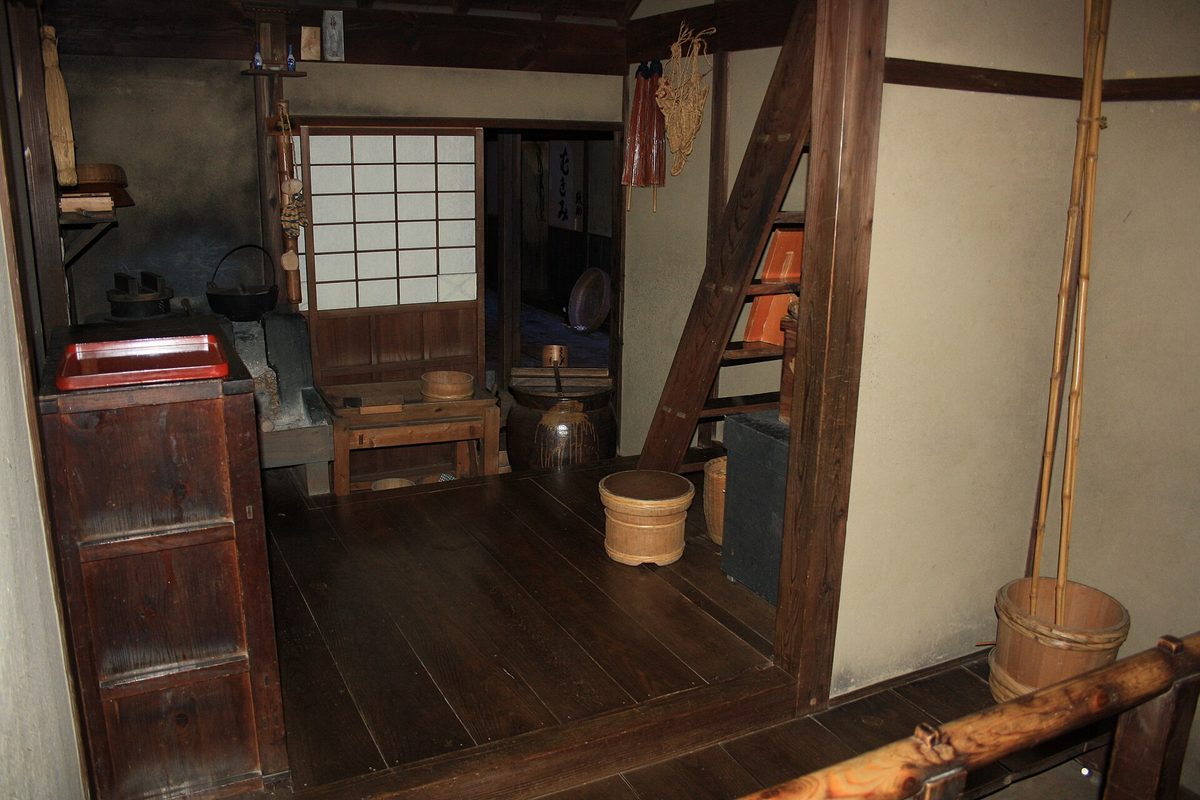
- Fukagawa Edo Museum (Tokyo): a whole neighborhood of the late Edo period, Fukagawa Saga-cho, rebuilt at full size, with a fire lookout tower, a greengrocer, a rice shop, a boat inn and row houses (nagaya), according to Koto City. The exhibition room is open from 9:30 to 17:00 (last entry 16:30) and closes on the second and fourth Mondays of the month (open if it is a national holiday). Admission is 400 yen for adults and 50 yen for students up to high school. It is a 3-minute walk from Exit A3 of Kiyosumi-shirakawa Station.
- Imperial Palace East Gardens (Tokyo): part of the main, second and third enclosures of Edo Castle, laid out as a garden and open to the public since 1968, says the Imperial Household Agency. Entry is free and no booking is needed. It is closed on Mondays and Fridays and from December 28 to January 3; it opens on most national holidays. Hours change with the season: in October 9:00 to 16:30 (last entry 16:00), and from November to the end of February 9:00 to 16:00 (last entry 15:30). You enter through the Otemon, Hirakawamon or Kitahanebashimon gate.
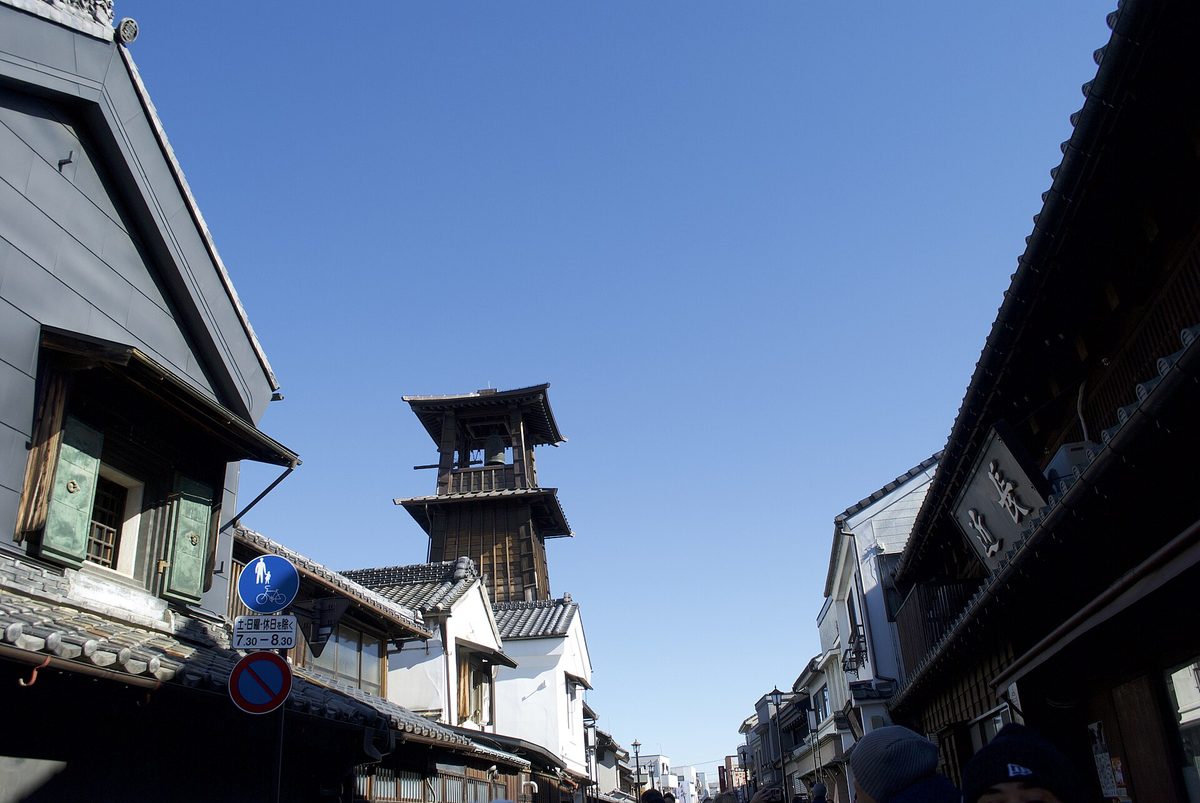
- Kawagoe (Saitama): the street of storehouse-style shops (kurazukuri) looks like old Edo, but Kawagoe City explains that most of them were built after the great fire of 1893, when merchants chose this traditional fire-resistant style to rebuild. The town plan itself goes back to the Edo period, and the area was named a national preservation district in 1999. Its symbol, the Toki no Kane bell tower, was first built between 1627 and 1634 and has been rebuilt after fires; the present tower dates from 1894 and the bell rings four times a day, at 6:00, 12:00, 15:00 and 18:00, according to the city's leaflet. It is a 15-minute walk from Hon-Kawagoe Station.
- The old highways: the Nakasendo post towns of Magome, Tsumago and Narai, and Ouchi-juku in Fukushima, still line the roads the daimyo processions used. See our guide to the Nakasendo post towns.
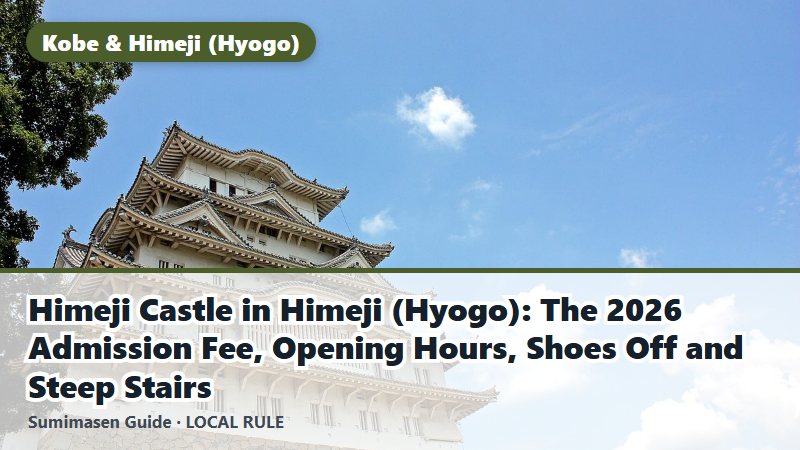
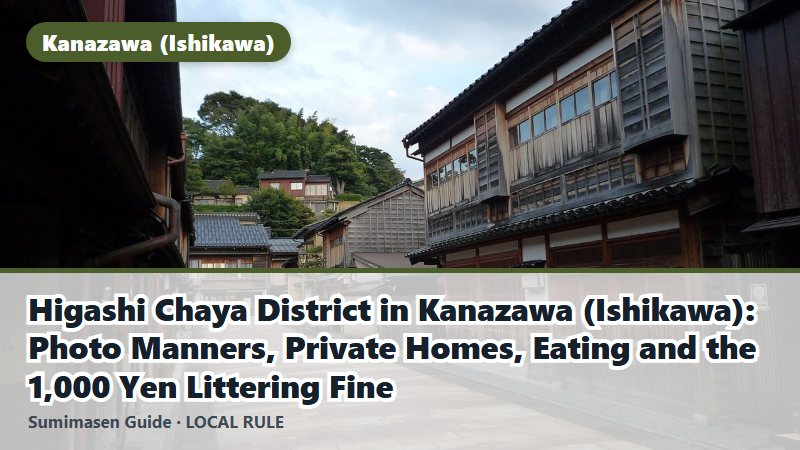
- Castles and old quarters: Matsumoto Castle in Matsumoto (Nagano) and Himeji Castle in Himeji (Hyogo) keep their original wooden keeps, and the Higashi Chaya District in Kanazawa (Ishikawa) is an old teahouse quarter where people still live and work.
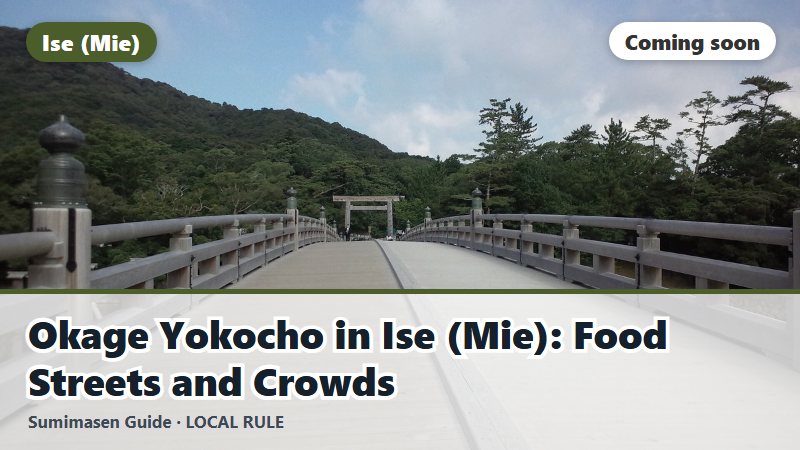
- Pilgrims' Ise (Mie): Okage Yokocho's own page says that in the Edo period several million people are said to have reached Ise (Mie) within just 50 days on a pilgrimage called okage mairi. Our guide to Okage Yokocho in Ise (Mie) covers the street of shops in front of the shrine today.
What to do on your trip
- Learn three words before you go: shogun (the military ruler), daimyo (a regional lord) and sankin kotai (the lords' alternate years in Edo). Museum labels and guides use them all the time.
- In Tokyo, pair the Edo-Tokyo Museum or the Fukagawa Edo Museum with a walk in the Imperial Palace East Gardens, and check the closing days first: Mondays for the first, the second and fourth Mondays for the second, Mondays and Fridays for the gardens.
- For a half day out of Tokyo, Kawagoe (Saitama) is the easiest Edo-style street; for a full day of walking, choose the Nakasendo.
- Many of these streets are places where people live. Keep your voice down, don't step into private entrances for photos and take your trash with you.
Last reviewed: October 25, 2026. Opening hours, closing days and fees can change, so check the official pages below before you go.
References
- Kotobank: The Edo period (entries from Digital Daijisen, Nipponica, Heibonsha's World Encyclopedia and others) (Japanese)
- Kotobank: Sankin kotai (Japanese)
- Kotobank: Sakoku (Japanese)
- Kotobank: Taisei hokan, the return of power to the court (Japanese)
- Ministry of Education: Changes from the draft curriculum guidelines published on February 14, 2017 (Japanese, PDF)
- Meguro City: Learning about the Dowa issue from primary school textbooks (Japanese)
- National Archives of Japan: Edo is named Tokyo (Japanese)
- National Archives of Japan: Edo Castle becomes the imperial residence (Japanese)
- Tokyo Metropolitan Government: Edo-Tokyo Museum reopening (Japanese)
- Edo-Tokyo Museum (English)
- Koto City: Fukagawa Edo Museum (Japanese)
- Imperial Household Agency: The East Gardens of the Imperial Palace (Japanese)
- Kawagoe City: Town planning guidelines for the Kawagoe preservation district (Japanese, PDF)
- Kawagoe City Board of Education: Toki no Kane (Japanese, PDF)
- Okage Yokocho: About (Japanese)