Kabukimono: The Flamboyant Rebels of Early Edo Japan, the Hippies of Their Day, and How They Gave Kabuki Its Name
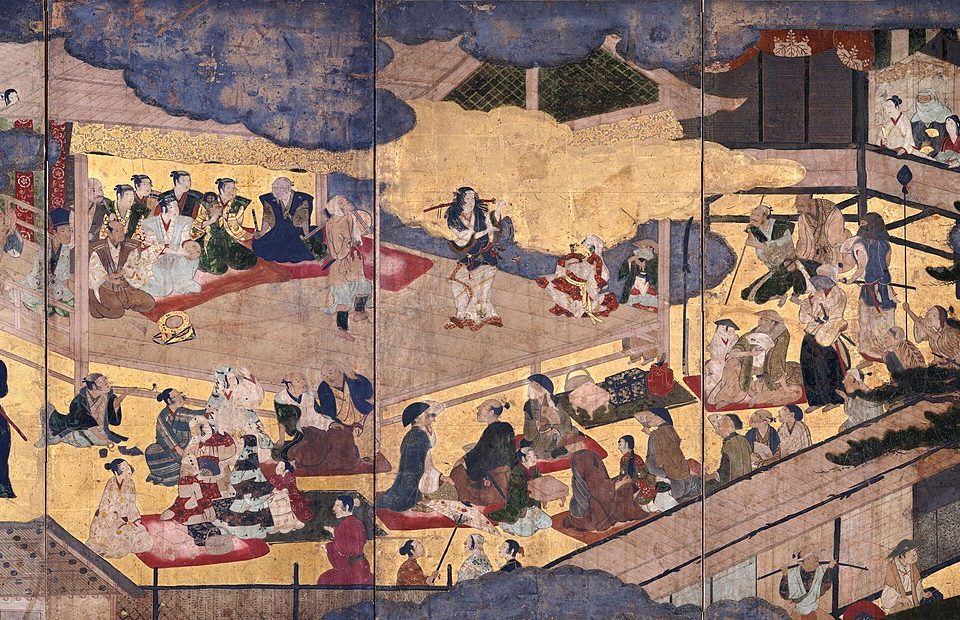
At the start of the Edo period, young men in loud clothes, huge topknots and long swords swaggered through the streets of Kyoto and Edo (today's Tokyo). People called them kabukimono, "the ones who lean off-center". The shogunate arrested them, but their style lived on in a new kind of show: kabuki. This guide explains who they were, how the operator of this site sees them, what history can and cannot tell us, and where you can feel their story in Kyoto and Tokyo today, checked against Japanese encyclopedias on Kotobank, the Japan Arts Council and Shochiku, the company that runs Japan's main kabuki theaters.
- The short answer: who the kabukimono were
- What "kabuku" means
- A hippie culture of the Edo period? Alike and not alike
- The crackdown
- From kabukimono to kabuki: Okuni's dance
- Maeda Keiji: the man and the legend
- Where to feel it today, and what to do
The short answer
Kabukimono were flamboyant rebels of the end of the 16th century and the start of the 17th: mostly low-ranking samurai, their servants and masterless warriors, who dressed to shock, formed sworn gangs and defied authority. The shogunate (the military government of the Edo period) arrested and executed a famous leader in 1612, and they had vanished from the streets by the time of the fifth shogun, Tsunayoshi. Their look was copied on stage by a performer called Okuni, whose "kabuki dance" of 1603 in Kyoto is the root of kabuki theater. To feel the story today, see the stone marking the birthplace of Okuni's kabuki beside the Minamiza Theatre in Kyoto, then watch kabuki in Kyoto or at the Kabukiza in Tokyo.
What "kabuku" means
The old verb kabuku (傾く) first meant "to tilt" or "to lean". According to the Daijisen and Nihon Kokugo Daijiten dictionaries, it came to mean acting as you please and dressing in a strange, showy way, and later also "to perform kabuki". A kabukimono (mono means "person") was someone who leaned away from normal behavior. The Yamakawa dictionary of Japanese history describes their clothes, their way of walking and their way of speaking as all part of it, and says they lived by defending their pride and honor as men.
Who the kabukimono were
The Heibonsha World Encyclopedia explains that the early kabukimono in the cities were mostly masterless samurai (ronin) and samurai servants. They gathered young men, swore oaths in blood, and promised to take revenge even on their own lord or father if he went against what they saw as right. The encyclopedia links this to the spirit of the Warring States period (the age of civil wars before the Edo period), when people of lower rank overthrew those above them. Later the same style spread to young hatamoto (samurai who served the shogun directly), called hatamoto-yakko, and to townsmen gangs called machi-yakko; both were called kabukimono.
A hippie culture of the Edo period?
The operator of this site sees the kabukimono as something like the hippie culture of Edo Japan: young people who turned their backs on the rules of their time and said so with their clothes. This is a personal way of looking at them, not a view from history books, but setting the two side by side helps to see what the kabukimono were, and what they were not.
The hippies grew out of the 1960s in the United States. PBS's American Experience describes how young people poured into the Haight-Ashbury district of San Francisco in the "Summer of Love" of 1967, with ideals of peace and love, communal living, wild colors, rock music and LSD, and a disdain for corporate America and the politics of inequality and war. Within a year, the scene had faded.
The biggest difference is violence. Kabukimono carried long swords, and their gangs were seen as a threat to public order. They were not a peace movement, and many of them were samurai, not people outside the system. What they share with the hippies is the youth, the refusal to fit in, and the idea that how you dress is a statement.
The crackdown
The shogunate did not tolerate them for long. According to the Heibonsha World Encyclopedia's entry on hatamoto-yakko, in 1612 the shogunate arrested and executed a gang leader known as Otorii Itsubee and his followers; an early 17th-century record quoted in the Nihon Kokugo Daijiten simply notes that "a kabukimono called Otorii Itsubee was arrested". An order of 1652 targeted low-ranking men who walked the streets in velvet, with slicked-back hair, huge topknots and oversized swords. In 1686, more than 200 hatamoto-yakko were arrested and punished, and the gangs largely disappeared after that, according to the Nipponica encyclopedia on the same page. The World Encyclopedia sums up that the kabukimono had vanished from the streets by the time of the fifth shogun, Tsunayoshi.
From kabukimono to kabuki: Okuni's dance
While the shogunate fought the kabukimono, a woman called Okuni put their style on stage. The Japan Arts Council explains that Okuni, who said she was a shrine maiden of Izumo Taisha shrine in Shimane, performed a "kabuki dance" whose costumes and movements came from the kabukimono, who "dressed in strange-looking costumes and moved in an odd way". The history book Todaiki records her in Kyoto in 1603, and Nippon.com and Shochiku's Minamiza page date her kabuki dance to that year. The older Heibonsha encyclopedia on Kotobank says she appeared dressed as a dashing male kabukimono, with a sword and a short sword, playing a young man visiting a teahouse. Later stories paired her with Sanzaburo, a famous dandy of the time who died in a fight in 1603, and plays showed his ghost dancing with her, but that is legend.
The Japan Arts Council adds that women's kabuki later became so popular that fights broke out in the audience, and officials banned it. Shochiku's guide to kabuki notes that since a law of 1629, no women have performed on the kabuki stage, and over the Edo period kabuki grew into the theater of male actors you can see today. Our guide to kabuki for first-timers explains how to watch it.
Maeda Keiji: the man and the legend
The most famous kabukimono today is Maeda Keiji (also Keijiro, formally Toshimasu or Toshioki). Here it helps to separate history from fiction. The encyclopedias on Kotobank say his years of birth and death are uncertain. He was adopted into the family of Maeda Toshiie's elder brother, served Toshiie, then left the Maeda house and served the warlord Uesugi Kagekatsu. He was known as a kabukimono, but also as a cultured man who was good at Chinese poetry and linked verse. Much of his popular image today comes from a historical novel by Ryu Keiichiro, Ichimuan Furyuki, and the manga Hana no Keiji based on it, which ran in Weekly Shonen Jump, as Mangapedia describes. Enjoy those stories, but read them as stories.
What the kabukimono spirit led to
Two things are clear in the sources: the word kabuki itself comes from kabuku, and the first kabuki dance borrowed the kabukimono look. Beyond that, these are ways of seeing it, not proven links. Encyclopedias describe the later hatamoto-yakko and machi-yakko rivalry as a more stylized, showy version of the same spirit. The townsman leader Banzuiin Chobei, killed in 1657 according to most of the dictionaries on Kotobank (one gives 1650 as another possible year), was turned by kabuki and storytellers into the model of the otokodate, the chivalrous tough guy, and the play Kiwametsuki Banzui Chobei (1881) is still staged. The World Encyclopedia notes that most of the stories told about him were created for kabuki and storytelling.
Where to feel it today
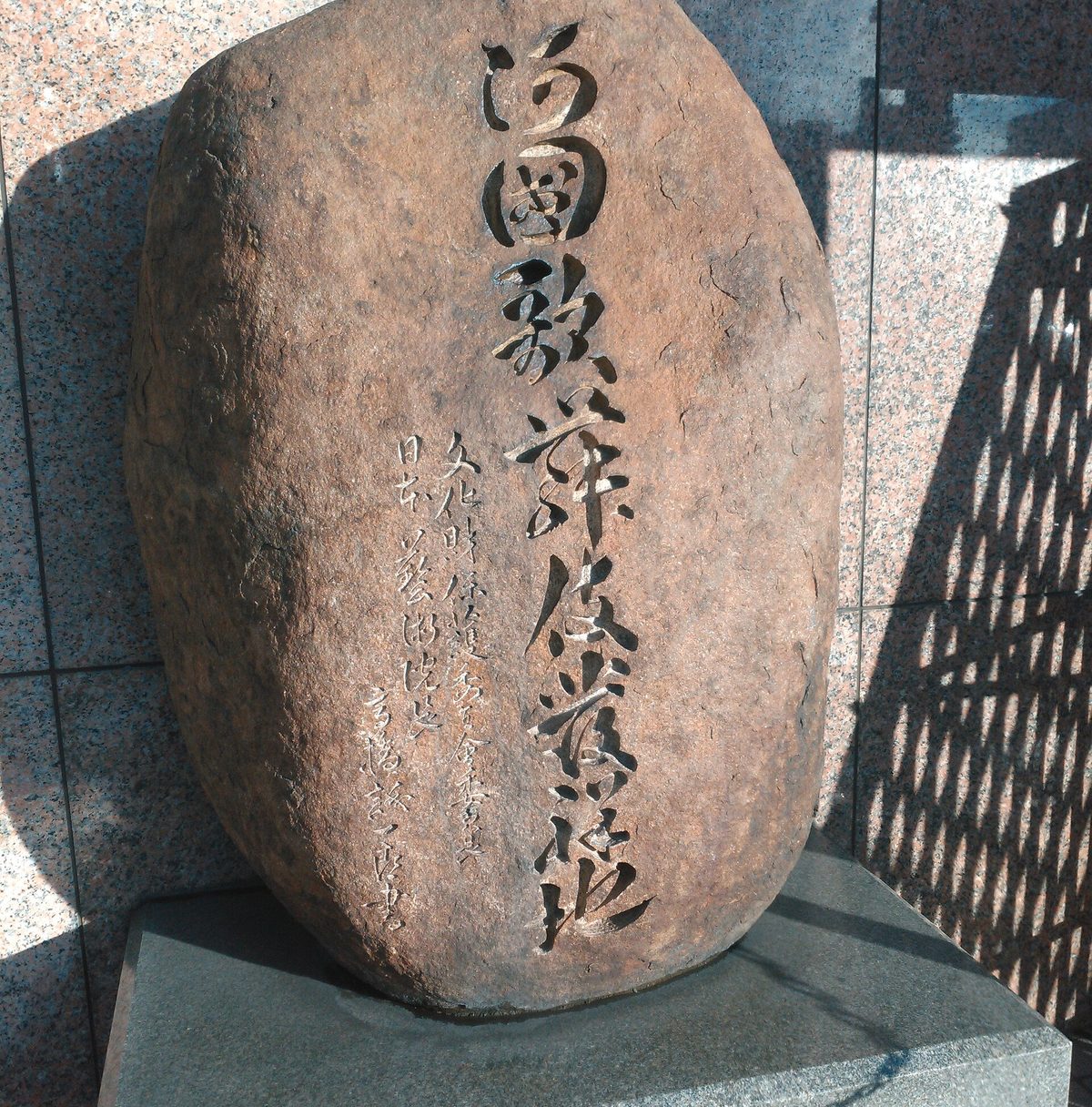
- The birthplace of Okuni's kabuki, Kyoto: a stone marking the birthplace of Okuni's kabuki stands along the west wall of the Minamiza Theatre, and a statue of Okuni stands at the northeast corner of Shijo Ohashi bridge, according to Nippon.com. The sign by the statue says that the area along the Kamo River around Shijo Street is where Okuni performed her kabuki dance.
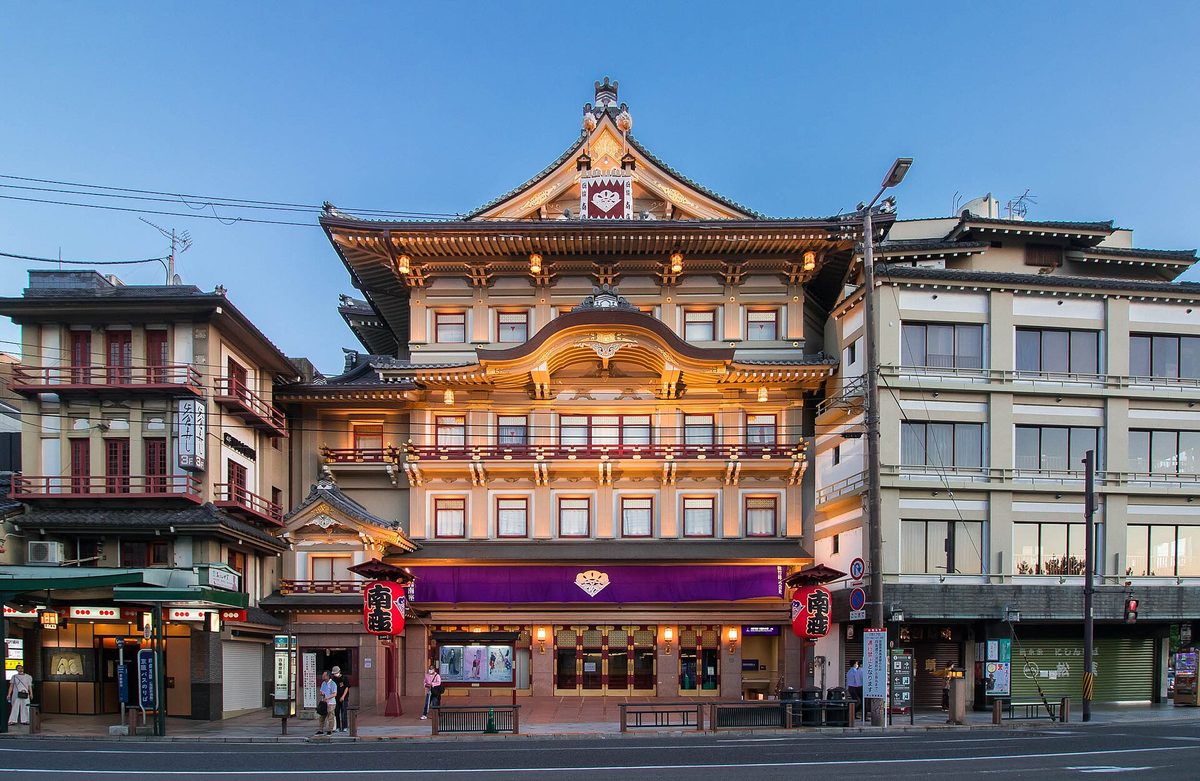
- The Minamiza Theatre, Kyoto: at the east end of Shijo-ohashi bridge in Higashiyama-ku. Shochiku's theater page says it has stood at this place for over 400 years and became a Registered Tangible Cultural Property in 1996. It is a 1-minute walk from Exit 6 of the Keihan line's station (Gion-Shijo Station), or a 3-minute walk from Exit 1 of the Hankyu line's station (Kyoto-kawaramachi Station). Check its schedule, as kabuki is not staged there every month.
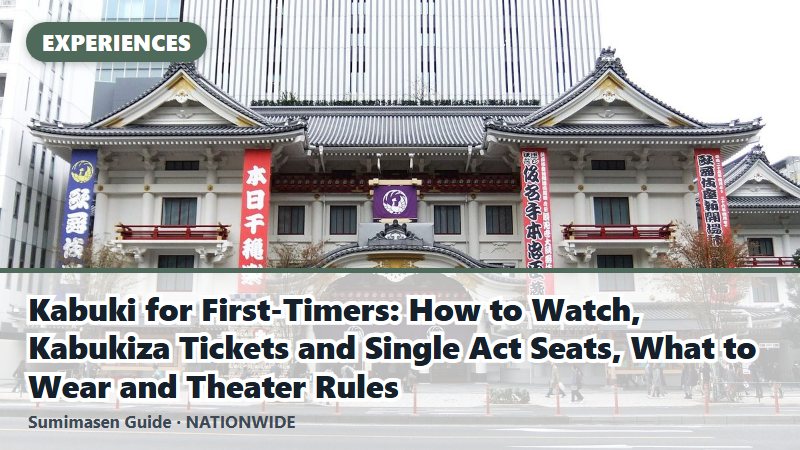
- The Kabukiza, Tokyo: kabuki almost every month in Ginza, Tokyo, with single act seats and English captions. See our kabuki guide.
- The Okuni Kabuki screen: the folding screen of Okuni's kabuki shown at the top of this page is an Important Cultural Property in the collection of the Kyoto National Museum, as listed in a loan exhibition list of the Tokugawa Art Museum. If you want to see the real thing, check the museum's exhibition list before you go.
What to do before you go
- In Kyoto, walk to the east end of Shijo Ohashi bridge: see the Okuni statue and the birthplace stone on the Minamiza wall in a few minutes.
- Check the Minamiza and Kabukiza schedules on Shochiku's KABUKI WEB, and use a single act seat if you only have an hour or two.
- If you read or watch Hana no Keiji, remember that much of it is fiction; the real kabukimono were short-lived street rebels.
- For more of the samurai world behind these stories, read our column on seppuku and the samurai.
Last reviewed: October 25, 2026. Theater programs and access details can change, so check the official pages below before you go.
References
- Kotobank: kabuku (Digital Daijisen, Nihon Kokugo Daijiten) (Japanese)
- Kotobank: kabukimono (Yamakawa dictionary of Japanese history) (Japanese)
- Kotobank: kabukimono (Heibonsha World Encyclopedia and others) (Japanese)
- Kotobank: hatamoto-yakko (Japanese)
- Kotobank: Banzuiin Chobei (Japanese)
- Kotobank: Maeda Toshioki (Maeda Keiji) (Japanese)
- Japan Arts Council: The beginning of kabuki (English)
- Shochiku, KABUKI WEB: Remarkable features unique in kabuki (English)
- Shochiku, KABUKI WEB: Minamiza Theatre information (English)
- Nippon.com: The Minamiza Theater Through the Eyes of a Kabuki Prodigy (English)
- Tokugawa Art Museum: list of works, Ningen Sanka exhibition (Japanese, PDF)
- PBS, American Experience: Summer of Love (English)
- Mangapedia: Hana no Keiji (Japanese)