Aizuwakamatsu and Urabandai (Fukushima): Tsurugajo Castle, Mount Iimori, Sazaedo and the Goshikinuma Ponds
This page contains affiliate links.
Aizuwakamatsu (Fukushima) is an old castle town in Japan's Tohoku region, and Urabandai, on the north side of Mount Bandai, is a land of lakes and forest. In one trip you can climb a castle keep with a red roof, stand where the teenage soldiers of the Byakkotai are buried, walk up and down a wooden temple shaped like a double spiral, and follow a forest trail past ponds of turquoise, emerald and copper red. This guide explains how to get there from Tokyo, what to know at each place, and how to fit it into one or two days, using the Japan Tourism Agency, the Ministry of the Environment, the Urabandai Visitor Center, Fukushima's official tourism site and the sites' own pages (checked October 2026).
- The short answer: a castle day in Aizuwakamatsu and a pond walk in Urabandai
- Getting there from Tokyo
- Tsurugajo Castle, Mount Iimori and Sazaedo
- Goshikinuma: why the ponds have different colors
- Shoes, bears and snow on the trail
- Ouchi-juku nearby, and a two-day plan
The short answer
Take the Tohoku Shinkansen from Tokyo to Koriyama (Fukushima) and change to the JR Ban-etsu West Line for Aizu-Wakamatsu Station, about 2 hours 30 minutes in all. Spend the first day in town: Tsurugajo Castle, then Mount Iimori with the Byakkotai graves and Sazaedo, both on the town's loop buses. On the second day, go to Urabandai by train and bus and walk the Goshikinuma trail, about 4 km one way. Wear real walking shoes, carry a bear bell in the woods, and expect snow on the trail from about December.
Getting there from Tokyo
Fukushima's official tourism site gives these times: the JR Tohoku Shinkansen from Tokyo or Ueno Station reaches Koriyama Station in about 1 hour 15 minutes, and with the change to the JR Ban-etsu West Line, Aizu-Wakamatsu Station is about 2 hours 30 minutes from Tokyo. The site recommends booking a reserved seat on the Shinkansen. There is also a direct expressway bus from Shinjuku (Tokyo), which takes about 4 hours 45 minutes.
In town, two loop buses, Haikara-san and Akabe, run in opposite directions from Aizu-Wakamatsu Station past Tsurugajo Castle and the Iimoriyama-shita stop at the foot of Mount Iimori. According to the bus company, a ride costs 250 yen for adults and junior high school students and 130 yen for children, and a one-day pass for both loops costs 700 yen and 350 yen.
Tsurugajo Castle
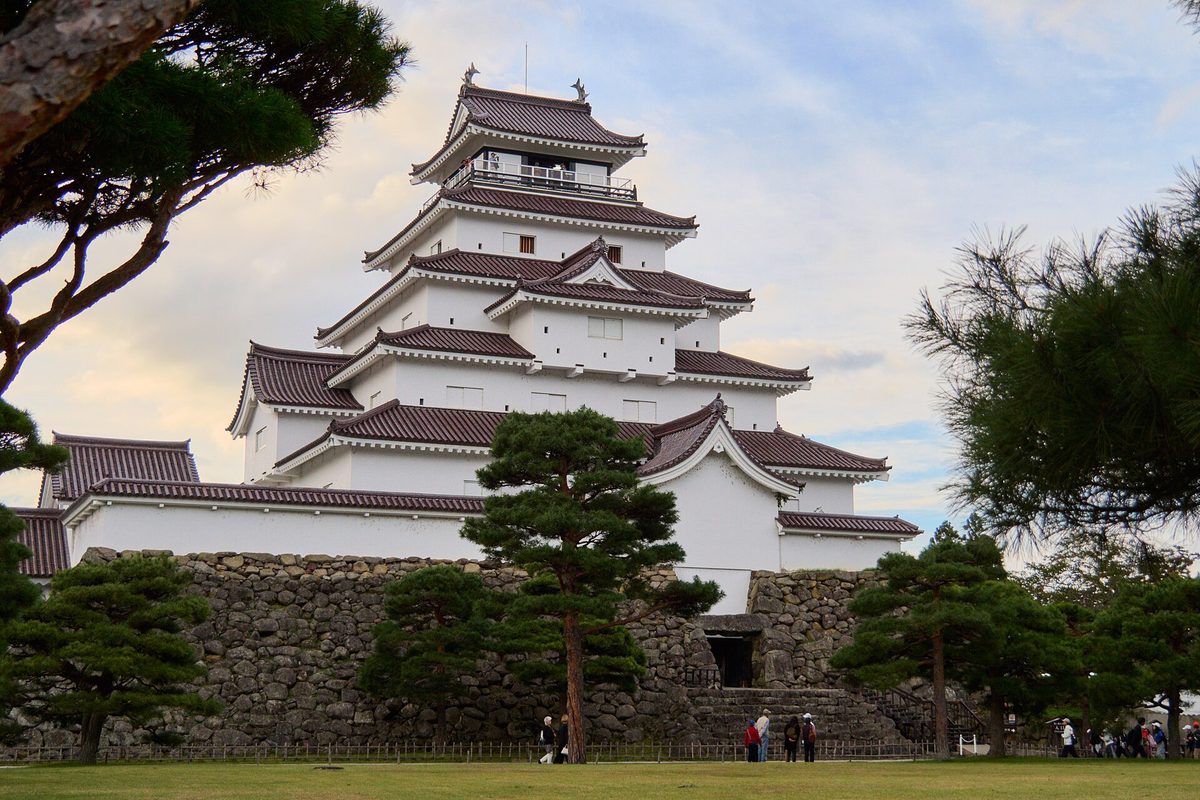
Tsurugajo, also called Tsuruga Castle or Aizu-Wakamatsu Castle, is the symbol of the town. The Japan Tourism Agency's explanation says the castle was badly damaged in the Battle of Aizu in 1868 and largely torn down in 1874, leaving only the stone walls. The people of the town had it rebuilt in 1965, and in 2011 the gray roof tiles were changed to red to match how the castle looked in the mid-19th century. The first four floors are a museum about the Aizu domain, with weapons and armor, and the top floor has views all around. The agency suggests allowing several hours for the castle and its park, and a break at the Rinkaku tea house in the grounds.
- Hours: 8:30 to 17:00 every day (last entry 16:30), according to the castle's official site.
- Admission: 410 yen for adults and 150 yen for children; 520 yen with the Rinkaku tea house.
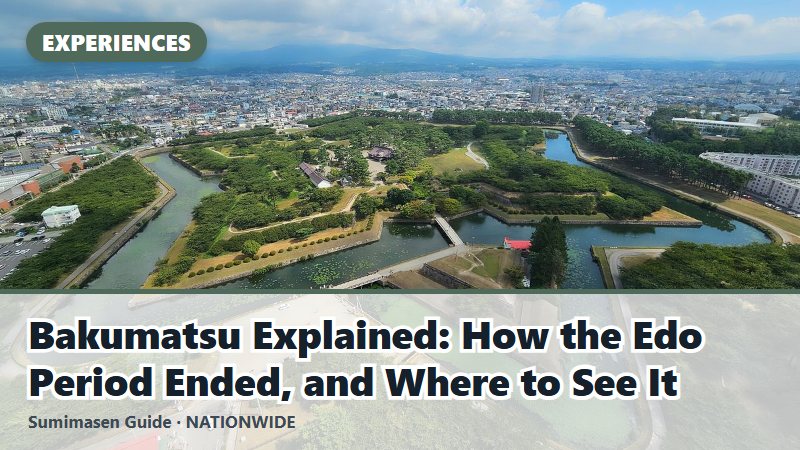
- History: the siege of 1868 is part of the end of the Edo period; our guide to the bakumatsu tells that story.
Mount Iimori and the Byakkotai
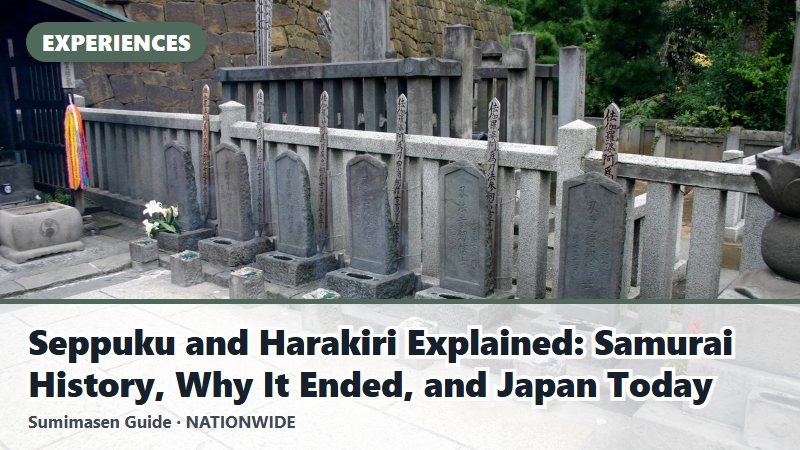
Mount Iimori is a hill in the same city where the Byakkotai are buried. The Japan Tourism Agency's explanation says the Byakkotai ("White Tiger Force") was a unit of the Aizu domain made up mainly of boys aged 15 to 17. In 1868, during the Boshin War, 20 members of one squad were cut off from their unit and climbed Mount Iimori. Seeing smoke over the town, they believed the castle had fallen, and they took their own lives there. In fact, the castle was still standing. One of them, Iinuma Sadakichi, survived because a local woman found him, and after his death he was buried beside the other 19. Our column on seppuku and harakiri tells this part of the story as history.
Visitors can reach the graves by climbing the steps or by taking an escalator for a small fee, the agency says. The Byakkotai Memorial Museum, with documents and belongings from the war, is at the foot of the hill.
My visit
When I was a child, I visited the graves of the Byakkotai on Mount Iimori. Because I was a child myself at the time, I was surprised that children about my own age had risked their lives in service to their lord. If you go on your trip, wear comfortable sneakers that are easy to walk in.
The graves are a place of remembrance. Speak quietly, stay on the paths and don't touch the stones.
Sazaedo: the double-spiral hall
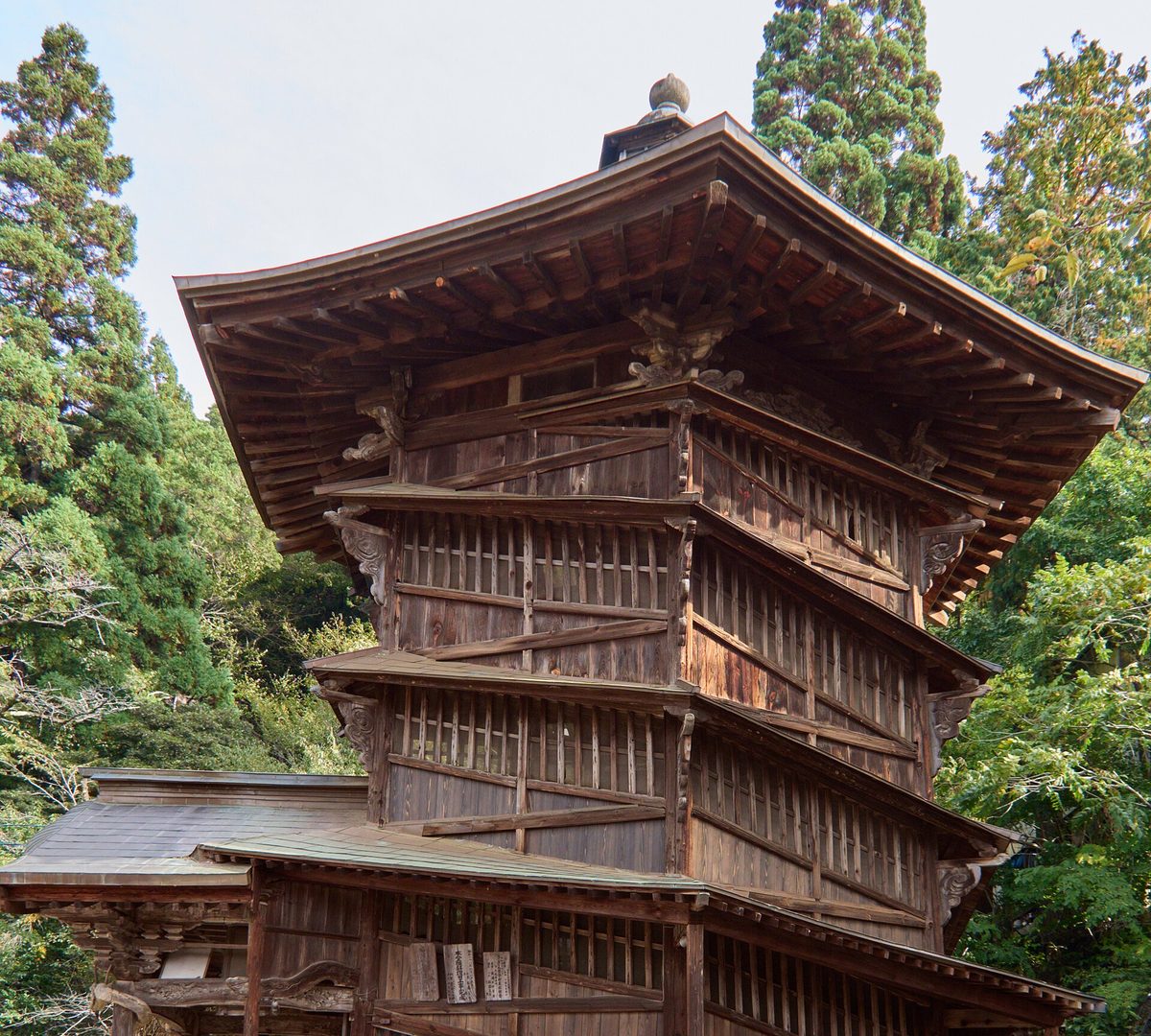
On the same hill, near its foot, stands Sazaedo, a wooden hall 16.5 meters tall with six sides and three levels, built in 1796. According to Sazaedo's official site, its inside is a double spiral slope: you go up one way and come down another, so people going up never meet people coming down. It was made an Important Cultural Property of Japan in 1995.
- Hours: 8:15 to sunset from April to November, and 9:00 to 16:00 from December to March.
- Admission: 400 yen for adults, 300 yen for university and high school students, and 200 yen for elementary and junior high school students.
- Getting there: a 7-minute walk from the Iimoriyama-shita stop of the loop buses. There is no parking at the hall itself.
Goshikinuma: the colored ponds of Urabandai
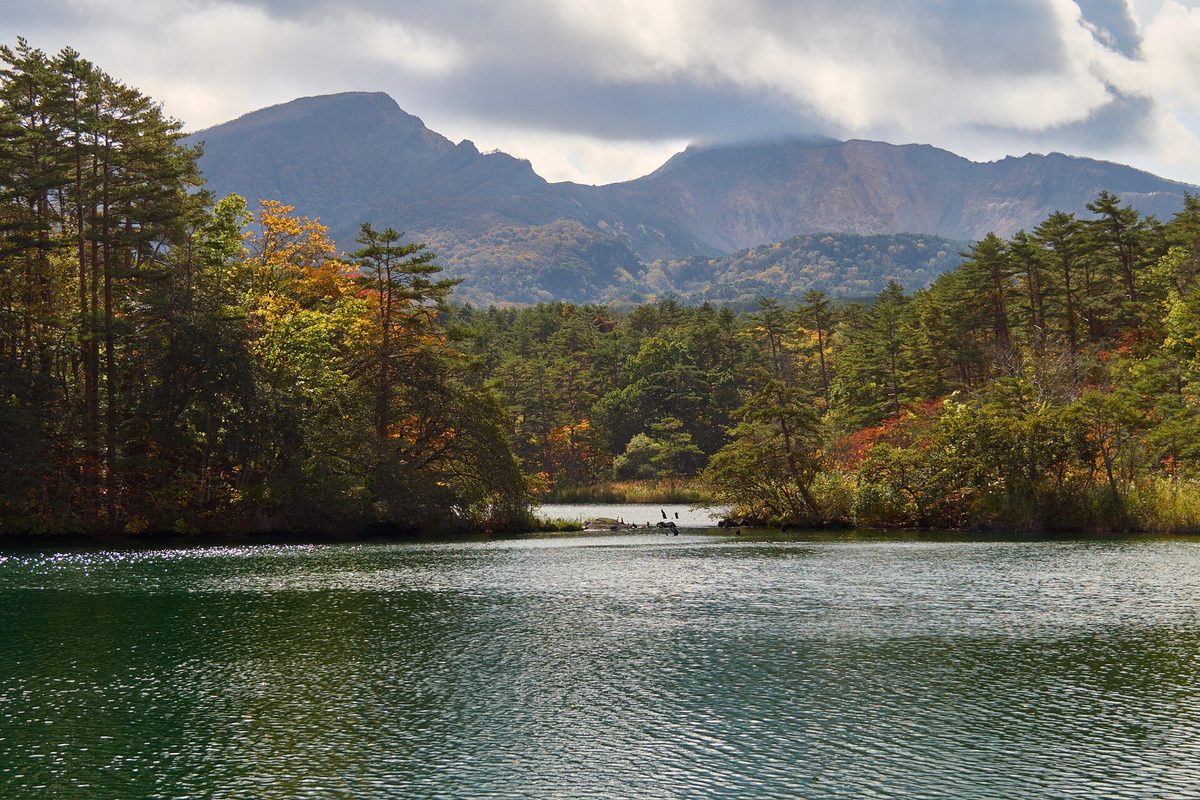
Goshikinuma, a name that means "colorful ponds," is a group of some 30 ponds in Urabandai, in the village of Kitashiobara (Fukushima). The ponds lie inside Bandai-Asahi National Park, and the area along the trail is a special protection zone, where picking plants or taking stones is not allowed. The Goshikinuma Nature Trail runs about 4 km one way from the Urabandai Visitor Center at its east end to the Urabandai Kogen-eki bus stop at its west end, and the visitor center says it takes about 1 hour 30 minutes. You can't drive or cycle around the ponds, and the visitor center suggests walking one way and taking the bus for the other.
Why the ponds are different colors
The ponds were born in a volcanic eruption. The Urabandai Visitor Center explains that when Mount Bandai erupted in 1888, a huge avalanche of rock blocked the Nagase River and its streams, and the water collected into ponds. The water of the ponds starts as groundwater from a pond near the crater of Mount Bandai, and in some ponds it mixes with lake water and deep groundwater, so each pond has different water. Many are acidic and carry iron, manganese and aluminum. Some ponds look blue because tiny mineral particles in the water scatter light, and some look red because iron oxide on the bottom reflects it.
The Japan Tourism Agency's explanation adds that the colors, from turquoise and emerald to copper red, depend on each pond's minerals, the mud on its bottom and its plants, and that they change with the season, the weather and the light, so the ponds look different on every visit. The Ministry of the Environment's national park pages call these vividly colored ponds a unique feature of the park.
My visit
When I was a child, I went to see Goshikinuma. I thought the ponds might be a work of art made by nature.
Shoes, bears and snow on the trail
- Shoes: the paved path from the visitor center only goes as far as the viewpoint at Bishamon-numa. After that the trail is boardwalk and gravel, with rocks and mud after rain. The visitor center recommends trekking shoes or rubber boots, and warns that sandals, heels, leather shoes and flat-soled sneakers can lead to injuries.
- Bears: Urabandai is home to Asian black bears, and the visitor center's bear page asks walkers to carry a bear bell or a radio so bears know people are near, to avoid walking alone in quiet places, and, if they meet a bear, not to shout or run but to move away quietly. The page also has a map of recent sightings. Bear bells can be borrowed at the visitor center in summer.
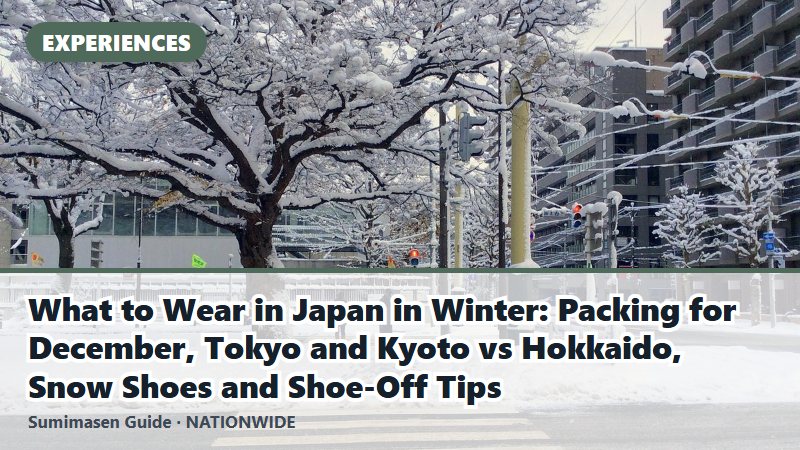
- Snow: the visitor center says snow starts to fall from late November or December and stays up to May or so. In winter you can still walk to the ponds on snowshoes, but come with warm clothes and snow boots, and bring a warm drink and lunch, since many shops and restaurants close for the winter.
- The visitor center: free to enter, open 9:00 to 17:00 from April to November and 9:00 to 16:00 from December to March, and closed on Tuesdays (the next day if Tuesday is a holiday) and over the New Year holidays, according to its facility page. Phone: +81-241-32-2850 (0241-32-2850, in Japanese).
As in every national park, take your trash home, don't feed animals, and stay on the boardwalks and paths.
Ouchi-juku nearby
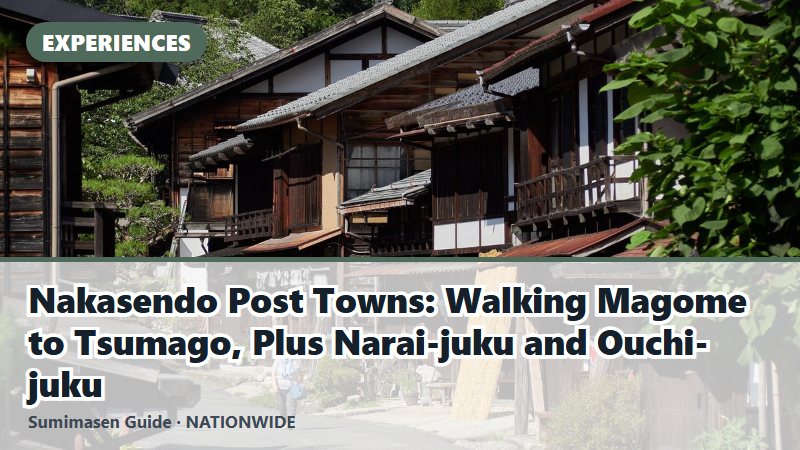
Ouchi-juku, in Shimogo (Fukushima), was the third post town on an old road from the castle town of Wakamatsu, and it is an Edo-period post town where houses with thick thatched roofs still line the old road. You reach it from Yunokami-Onsen Station on the Aizu Railway. Our guide to the post towns of the Nakasendo and Ouchi-juku explains its history and how to get there, so it is easy to add as a third day.
A one- or two-day plan
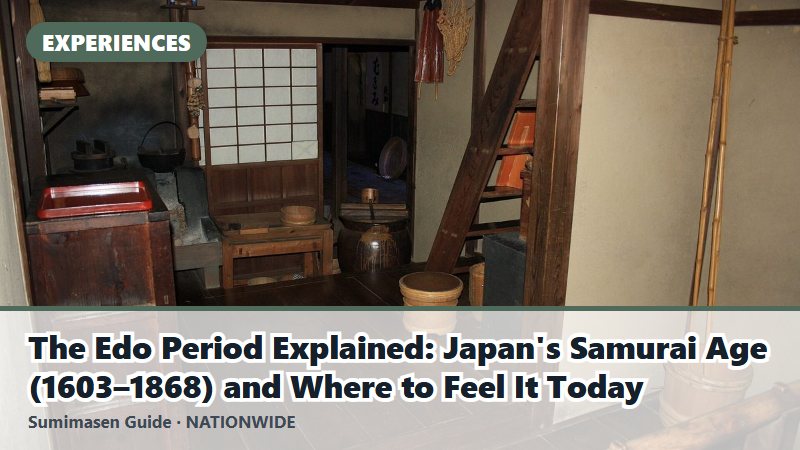
If you only have one day, choose by what you came for: Aizuwakamatsu for samurai history, or Urabandai for the ponds and the forest. Our guide to the Edo period gives the background to the castle towns and post towns you'll see.
What to do on your trip
- Book a reserved Shinkansen seat to Koriyama, and check the Ban-etsu West Line times for your change.
- In town, buy the one-day loop bus pass if you plan to visit both the castle and Mount Iimori.
- For Urabandai, wear trekking shoes, carry a bear bell, and check the bus times back before you set off.
- From December to May or so, plan for snow, or ask the visitor center about the trail first.
- At the Byakkotai graves, keep your voice low and treat the hill as a place of remembrance.
Last reviewed: October 25, 2026. Hours, fees and bus times change, and the trail can close for snow or bears. Please check the official pages below before you go.
References
- Japan Tourism Agency multilingual descriptions: Tsuruga Castle (English, PDF)
- Tsurugajo Castle official: Hours and admission (Japanese)
- Japan Tourism Agency: Mt. Iimori and the Boys of the Byakkotai (English)
- Aizu Sazaedo official site (Japanese)
- Japan Tourism Agency: The Colors of the Goshikinuma Ponds (English)
- Urabandai Visitor Center: About the Goshikinuma ponds (Japanese)
- Urabandai Visitor Center: Goshikinuma Nature Trail (Japanese)
- Urabandai Visitor Center: Clothes and gear (Japanese)
- Urabandai Visitor Center: About bears (Japanese)
- Urabandai Visitor Center: Winter highlights (Japanese)
- Urabandai Visitor Center: Questions and answers (Japanese)
- Urabandai Visitor Center: About the center (Japanese)
- Urabandai Visitor Center: Access (Japanese)
- National Parks of Japan (Ministry of the Environment and JNTO): Bandai-Asahi National Park (English)
- Fukushima Travel (official tourism site): Access (English)
- Aizu Bus: Loop buses Haikara-san and Akabe (Japanese)