Seppuku and Harakiri Explained: Samurai History, Why It Ended, and Japan Today
Visitors to Japan often ask the same questions about seppuku, the samurai custom known in English as harakiri. Do Japanese people still do it? Why the belly? Is there a difference between the two words? This column answers them as history, using Japanese encyclopedias and dictionaries, the Japan Tourism Agency, Minato City in Tokyo, Ako City (Hyogo) and Sengakuji Temple. It explains what seppuku meant and when it ended, and does not describe how it was done. Because this topic involves death, there is a short list of places to talk to someone at the end of the page.
- The short answer: it is not practiced in Japan today
- Seppuku or harakiri: one thing, two words
- Why the belly?
- From a warrior custom to an Edo-period punishment
- Two well-known stories: the 47 ronin and the Byakkotai
- Abolished as a punishment in 1873
- Visiting Sengakuji and Mount Iimori with respect
The short answer
No, seppuku is not practiced in Japan today. It belongs to the age of the samurai. Japanese encyclopedias trace it back to the Heian period as a way some warriors chose to die. In the Edo period (1603 to 1868), the shogunate and the domains also used it as a death sentence for upper-ranking samurai, treated at the time as more honorable than an ordinary execution because of their rank. The Meiji government abolished it as a punishment in 1873. Today you meet it in history books, museums, kabuki and films, and in Japanese the phrase "to cut one's belly" lives on mostly as a figure of speech for resigning to take responsibility.
Seppuku or harakiri: one thing, two words
Both words mean the same thing and use the same two kanji (Chinese characters), 切 "cut" and 腹 "belly", in reverse order. Seppuku (切腹) reads them the Chinese-derived way; harakiri (腹切り) reads them the native Japanese way, "belly-cutting." Japanese dictionaries and history encyclopedias list the topic under seppuku and give harakiri as another name for it.
Abroad, it went the other way. Heibonsha's World Encyclopedia and Shogakukan's Nipponica both note that the custom is known to people outside Japan as "harakiri." Dictionary.com dates the word in English to 1855 to 1860, and English dictionaries also give it a figurative sense, any self-destructive act, as in "political hara-kiri." Exactly how the spoken form, rather than seppuku, became the usual word abroad is not clearly recorded in the sources we checked.
Why the belly?
There is no single official answer, but Japanese reference books point to an old idea about the belly itself. In Japanese, hara (belly) has long also meant a person's true thoughts and intentions. Daijisen and Shogakukan's dictionary list "what one really thinks" among its meanings, and everyday phrases still use it: hara o watte hanasu, "to talk with the belly opened," means to speak frankly. Heibonsha's World Encyclopedia notes that this view of the belly as the seat of the heart is old in Japan, and describes seppuku as, in many cases, a way of declaring one's innocence or sincerity more than simply a way to die. Read it as one explanation of what the act meant to people at the time, not as a reason to admire it.
From a warrior custom to an Edo-period punishment
Japanese encyclopedias date seppuku among warriors back to the Heian period, and say it became common from the wars of the late 12th century or a little later; they differ on the details. For centuries it remained mainly a custom among warriors.
In the Edo period, it also became a punishment. Heibonsha's World Encyclopedia says the shogunate and the domains adopted it as a special death sentence for upper-ranking samurai. Shogakukan's dictionary describes it as a death sentence considered "honorable" and allowed only to samurai of rank, because it was not carried out by an official's hands, and Nipponica explains the idea behind it: a samurai was expected to settle his own wrongdoing himself. Yamakawa's dictionary of Japanese history adds that by this time it had become a completely formal ceremony. In other words, it was a part of a legal system built on social rank, which treated samurai differently from everyone else.
The 47 ronin and Sengakuji
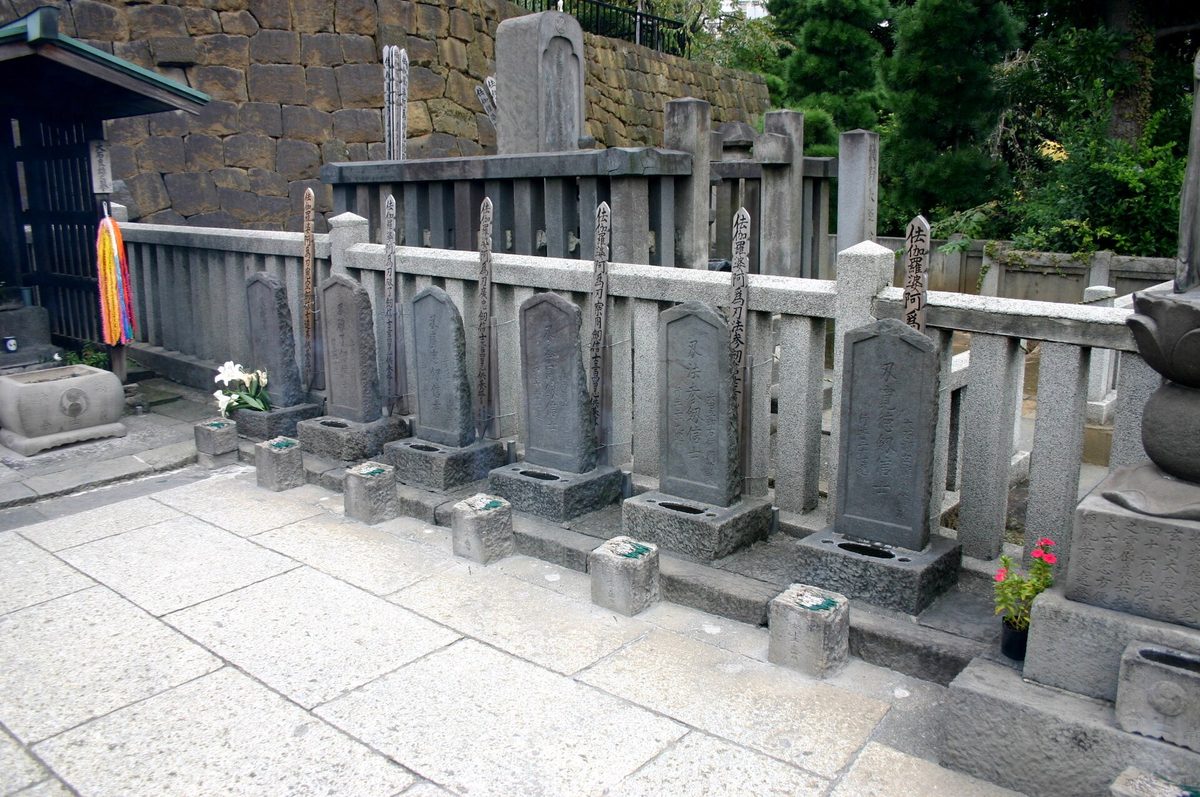
The best-known story is the Ako incident. According to Minato City's historical guidebook and Ako City's timeline, in 1701 Asano Naganori, lord of the Ako domain, drew his sword on Kira Yoshinaka, a shogunate official, inside Edo Castle. He was ordered to commit seppuku the same day, his domain was taken away, and he was buried at Sengakuji in Edo (now Tokyo).
In the winter of 1702, 47 of his former retainers, now ronin (samurai without a lord), raided Kira's residence in Edo and killed him, then went to Sengakuji to report to their lord's grave. The shogunate placed them in the custody of four daimyo families, and in 1703 ordered 46 of them to commit seppuku. They were buried beside their lord at Sengakuji. Ako City's timeline records that the one man not among them, Terasaka Kichiemon, died in 1747.
The story was later retold as Chushingura in puppet theater, kabuki, novels, films and TV. Minato City's guidebook points out that the Chushingura story differs from the historical facts, so if you have seen a film version, keep in mind that the drama and the history are not the same thing.
The Byakkotai on Mount Iimori
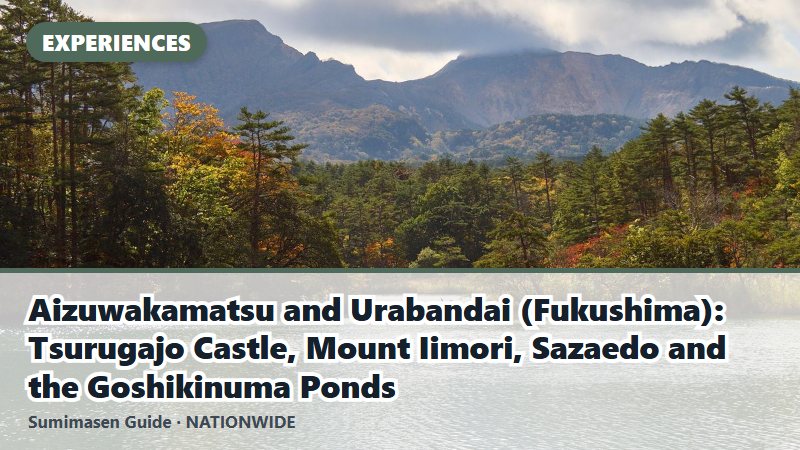
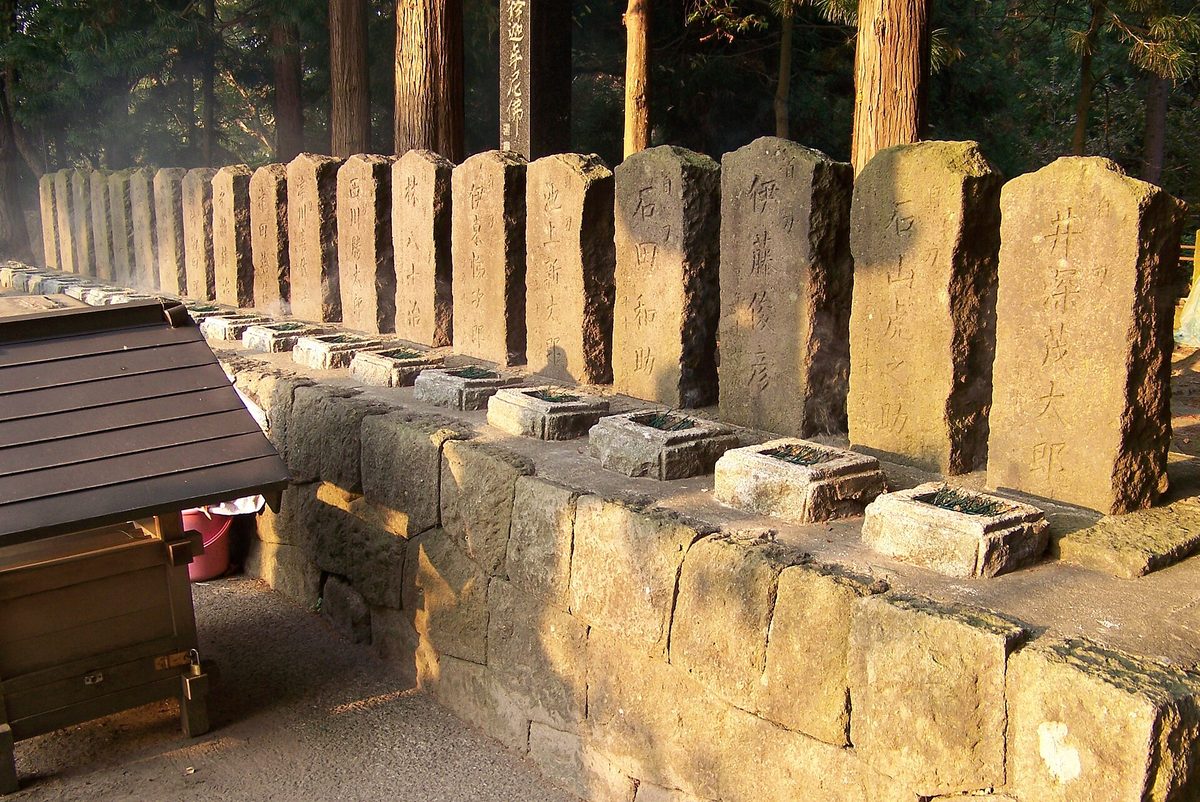
The second story comes from the Boshin War (1868 to 1869), the civil war that ended the shogunate. The Japan Tourism Agency's explanation for Mount Iimori says that the Byakkotai ("White Tiger Force") of the Aizu domain was a unit made up mainly of boys aged 15 to 17. In 1868, one squad of 20 was cut off from its forces. Seeing smoke over the town, the boys believed that Tsuruga Castle had fallen, and 19 of them took their own lives on Mount Iimori in Aizuwakamatsu (Fukushima). In fact, the castle was still standing, and the smoke came from houses nearby. The explanation also notes that historians think the group did not all agree at first. One boy, Iinuma Sadakichi, survived and later worked in telecommunications.
Official explanations simply say that the boys took their own lives, and this guide does not go further. Today, their graves on Mount Iimori are a place to remember the young people lost in the war.
Abolished as a punishment in 1873
The samurai class ended with the Meiji Restoration of 1868. Japanese encyclopedias explain that the new government's criminal code of 1870, the Shinritsu Koryo, still allowed former samurai families (shizoku) a punishment called jisai, a form of seppuku, but the revised code of 1873, the Kaitei Ritsurei, abolished it. Heibonsha's World Encyclopedia, Nipponica, Shogakukan's dictionary and Yamakawa's history dictionary all give the same year.
Do Japanese people still do it today?
No. Seppuku has not been a punishment for more than 150 years, and it is not part of Japanese life, manners or work culture. Nobody in Japan expects it of anyone, and it is not something you will see or need to think about while traveling.
What survives is the language. In everyday Japanese, hara o kiru ("to cut one's belly") is mostly heard as an idiom. Daijisen and Shogakukan's dictionary list the meaning "to resign to take responsibility," with the example "I'm ready to cut my belly if it fails," meaning "I'm ready to step down." It is a strong, old-fashioned way of saying it, a little like "to fall on one's sword" in English, and it does not mean anything physical.
Visiting Sengakuji and Mount Iimori with respect
Both places are graves, and people still come to pray. Treat them as you would any cemetery: speak quietly, stay on the paths, and don't sit on, lean on or touch the gravestones. Our guide to shrines and temples explains the basics of visiting a temple.
- Sengakuji Temple, Tokyo: a Soto Zen temple in Takanawa, a 3-minute walk from Sengakuji Station (Exit 2) or a 5-minute walk from Takanawa Gateway Station (North Gate), according to the temple. The gates are open from 7:00 to 16:00 all year. Visitors to the graves of the Ako retainers are asked to make an incense offering of 500 yen. The Ako Gishi Memorial Hall, with items connected to the retainers, is open from 9:00 to 15:30 (adults 500 yen) and may close for about 45 minutes around midday, the grounds guide says. The temple's festival for the retainers is held twice a year, in December and April, and draws many visitors; in 2026 the winter festival runs from December 12 to 14, when the gates stay open until 20:00. The official site does not list photo rules, so follow any signs and staff on the day, and don't photograph people while they pray. For a base nearby, see where to stay in Tokyo.
- Mount Iimori, Aizuwakamatsu (Fukushima): the Japan Tourism Agency's page says visitors can pay their respects at the graves by climbing the stairs or, for a small fee, taking an escalator.
If you are interested in the older stories behind Japanese shrines, our guide to Japanese mythology is a gentler place to start.
If this topic brings up difficult feelings, you don't have to carry them alone. Talking to someone can help, wherever you are.
- Anywhere in the world: Find A Helpline lists free, confidential helplines in more than 175 countries. The International Association for Suicide Prevention points to it on its crisis centres page.
- In Japan, in English: TELL Lifeline, free phone and chat for anyone in Japan who speaks English: 0800-300-8355 (a free number that works only from a phone in Japan). Hours vary by day and are listed on its site.
- In Japan, in other languages: Yorisoi Hotline, a free line supported by the Ministry of Health, Labour and Welfare: 0120-279-338 (works only from a phone in Japan). After the Japanese guidance, press 2 for English, Chinese, Korean and other languages, from 10 a.m. to 10 p.m. every day (which languages are available depends on the time).
- More places to talk in Japan: the Ministry of Health, Labour and Welfare's "Mamorouyo Kokoro" page lists phone, chat and social media services (in Japanese).
Last reviewed: October 24, 2026. This column explains seppuku as history; it is not practiced in Japan today. Opening hours and fees at Sengakuji can change, so check the official pages below before you go.
References
- Kotobank: Seppuku (entries from Heibonsha's World Encyclopedia, Nipponica, Shogakukan's dictionary, Yamakawa's dictionary of Japanese history and others) (Japanese)
- Kotobank: Hara, the belly (Japanese)
- Kotobank: Hara o kiru (Japanese)
- Dictionary.com: hara-kiri (English)
- Minato City: Historical sightseeing guidebook, the Genroku Ako incident (English, PDF)
- Ako City: A short timeline of the Ako retainers (Japanese)
- Sengakuji Temple: History (Japanese)
- Sengakuji Temple: Grounds guide (Japanese)
- Sengakuji Temple: Access and hours (Japanese)
- Sengakuji Temple: Ako Gishi festival (Japanese)
- Japan Tourism Agency: Mt. Iimori and the Boys of the Byakkotai (English)
- Find A Helpline (English)
- International Association for Suicide Prevention: Crisis centres and helplines (English)
- TELL: TELL Lifeline (English)
- Yorisoi Hotline (English)
- Ministry of Health, Labour and Welfare: Mamorouyo Kokoro (Japanese)