Real Ninja History: Iga and Koka, What Ninja Really Did, and Where to See It in Japan
Ninja were real, but the black suit, the throwing stars and the superhuman tricks mostly came later, from the stage and the screen. This guide explains who the ninja of Iga (Mie) and Koka (Shiga) were, what they did from the Warring States period to the Edo period, how their jobs changed in Edo (now Tokyo), and where you can see their world today. It is based on Iga City, the Japan Tourism Agency, the National Diet Library and the official pages of two ninja museums.
- The short answer: real people, different from the movies
- Who the ninja of Iga and Koka were
- What they actually did in wartime
- Ninja and Tokugawa Ieyasu
- Ninja jobs in Edo: guards more than spies
- Real ninja vs movie ninja (comparison table)
- Where the black suit and throwing stars came from
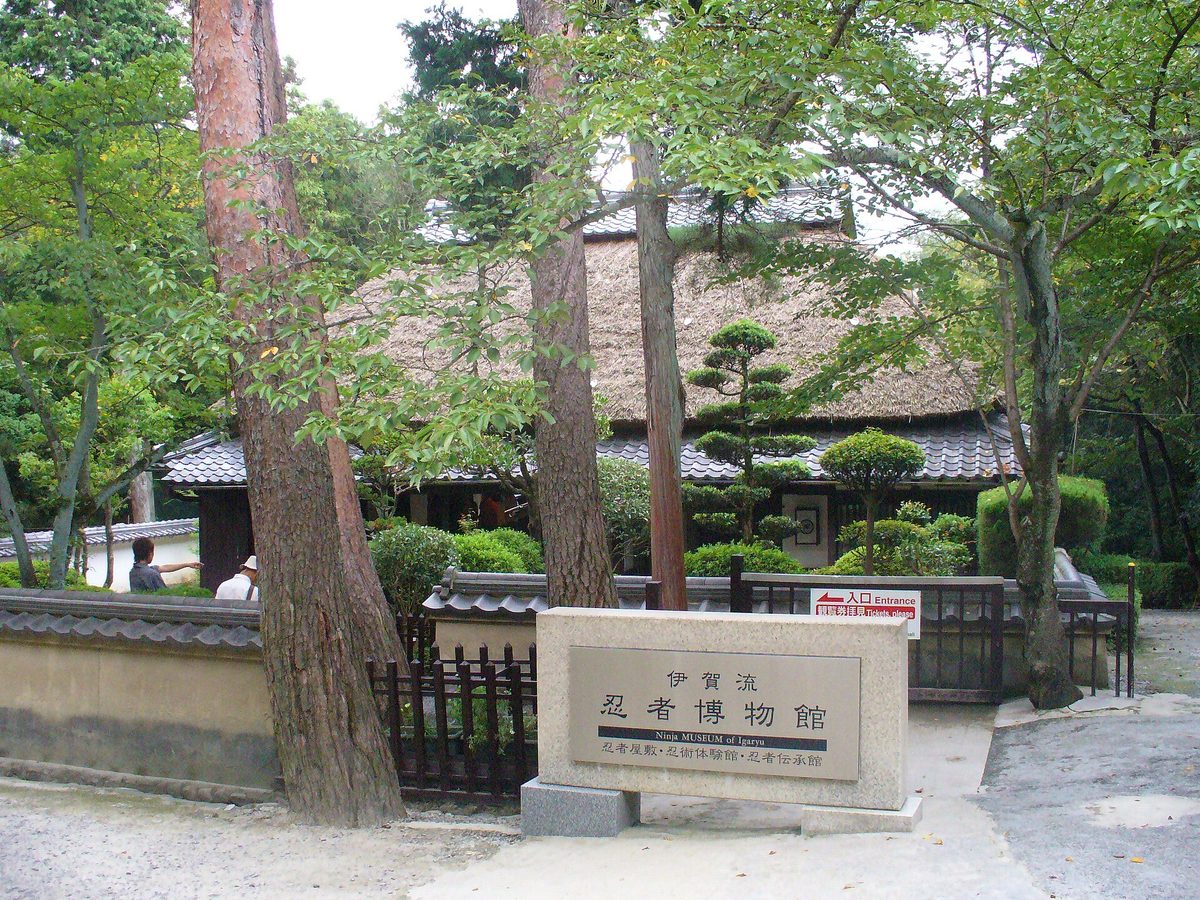
- Where to see it: the Iga-ryu Ninja Museum and the Koka Ninja House
The short answer
Ninja were real people, but they were not the masked assassins of films. In the Warring States period (Sengoku, roughly the late 1400s to the late 1500s), local warriors from Iga (Mie) and Koka (Shiga), two neighboring hill areas east of Kyoto, were hired by lords for scouting, gathering information, setting fires and night raids. In the peaceful Edo period (1603 to 1868), many of their descendants became guards at castles, gates and residences, work that no longer needed secrecy. Even the word "ninja" is new: the National Diet Library notes that it came into use in the Showa 30s (1955 to 1964); at the time they were called shinobi, or simply the men of Iga and Koka.
Who the ninja of Iga and Koka were
Iga and Koka sit side by side, separated by low mountains, with Iga in today's Mie Prefecture and Koka in Shiga Prefecture. Both were areas where no single great lord was in control, and that is the background that produced the ninja.
- Iga (Mie): Iga City explains that the Iga basin, ringed by mountains, was a patchwork of estates owned by great temples and noble families, which kept any big lord's power out. Small local powers fought each other, many small castles were built, and ways of fighting in small groups developed. The city counts more than 650 medieval castle sites in the Iga area, which covers Iga and Nabari (Mie), and calls this the densest in Japan. In the Warring States period these local warriors were known as the Iga-shu (the men of Iga) and fought as hired soldiers on nearby battlefields.
- Koka (Shiga): the Japan Tourism Agency's history of the Koka ninja says that because the lords had little power there, local families set up a self-governing league, the Koka Gunchuso, and warlords from other regions hired Koka men for their skill at gathering information. Their name spread in 1487, when they helped the Rokkaku family against the shogun Ashikaga Yoshihisa; the Koka Ninja House says this battle is what made the Koka ninja known.
The National Diet Library sums it up: the people of Iga and Koka built their own communities that did not depend on a lord, and defended them with ambushes and night attacks.
What they actually did in wartime
The National Diet Library lists the real jobs, taken from records of the period: lying hidden in the grass to gather information, guiding troops along roads at night, setting fires in enemy territory, slipping into an enemy castle and seizing it in the confusion, keeping watch at night by bonfire light, and blocking roads to cut supply lines. The Japan Tourism Agency's page on the Iga ninja describes them as local samurai who also farmed, trained as spies and saboteurs, and were hired by powerful people because good information gave them an advantage over rivals.
Ninja and Tokugawa Ieyasu
The ninja story is closely tied to Tokugawa Ieyasu, who founded the Edo shogunate. According to the Japan Tourism Agency's history of the Koka ninja:
- 1562: Ieyasu asked Koka men to help attack Kamigo Castle (Aichi); around 200 of them helped get inside.
- 1582: after Oda Nobunaga was killed at Honnoji Temple in Kyoto, Ieyasu hurried home through Koka, where the ninja gave him shelter.
- 1600: a group known as the Koka 100 fought for Ieyasu at Fushimi Castle; after he became shogun in 1603, he invited the survivors to help defend Edo.
Not every lord was a friend. Iga City records that in 1581 Oda Nobunaga's army attacked Iga, a war known as the Tensho Iga War, and many of its shrines and temples were lost.
Ninja jobs in Edo: guards more than spies
Once the wars ended, the work changed. The National Diet Library explains that in Edo, the Iga-mono (Iga men) worked as guards, for example at the offices of the Ooku (the shogun's private inner palace, where his wives and their attendants lived) and at residences. Some Koka-mono (Koka men) served as gun-carrying guards at one of the main gates of Edo Castle. These jobs did not involve secrecy, and the library notes that their role as ninja became a formality. Real information-gathering for the shogun was done by a separate group, the oniwaban, which lasted until the end of the shogunate.
Back home, Iga City explains that some local warriors of the domain were appointed as Iga-mono to guard the castle and the domain's residence in Edo, and to scout when ordered. The part of the castle town of Ueno where they lived was called Shinobi-machi, and the district still carries that name. The Japan Tourism Agency adds that the last major battle with Koka ninja was the Shimabara Rebellion of 1637 to 1638, and that by the end of the 18th century their skills were no longer needed.
Real ninja vs movie ninja
Where the black suit and throwing stars came from
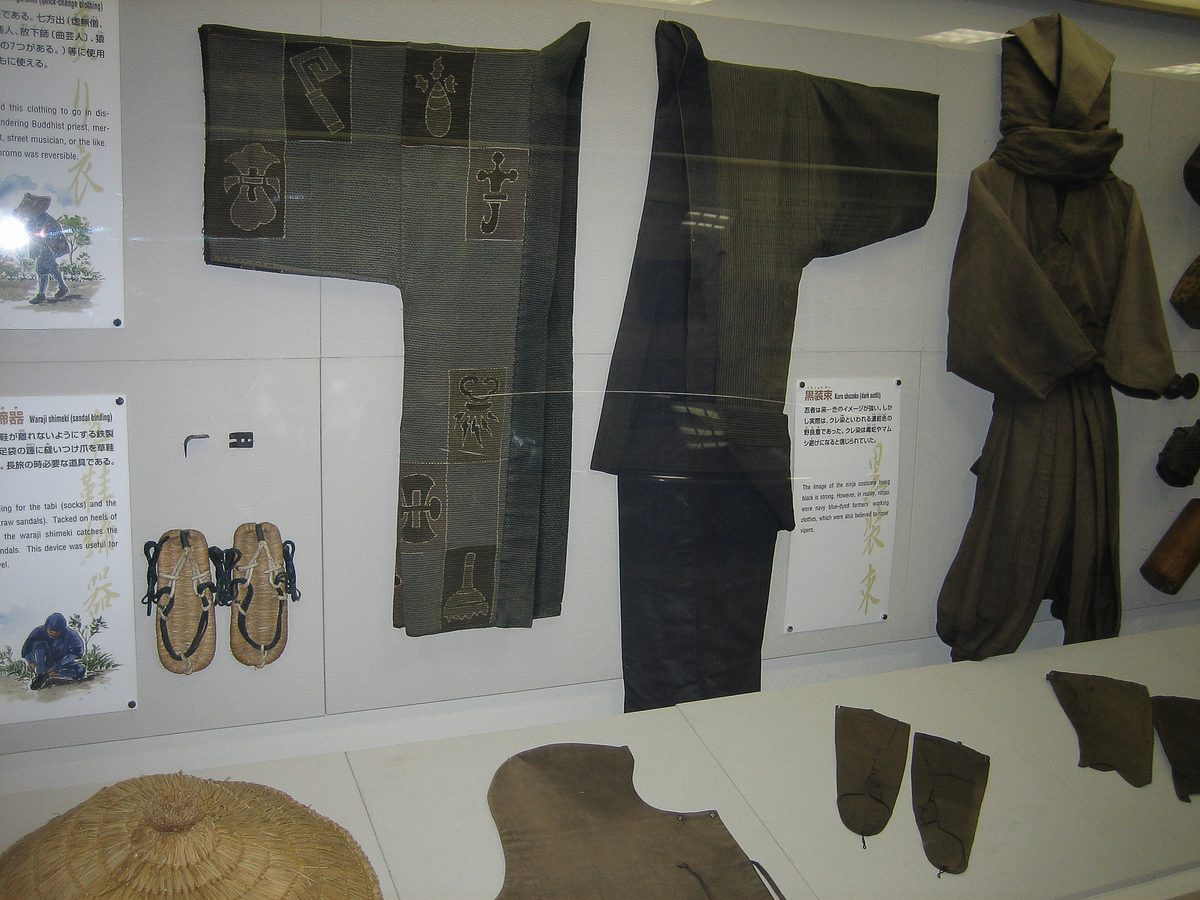
The National Diet Library explains that the all-black ninja is thought to have spread from kabuki and puppet theater, as a stage trick that let the audience recognize a ninja at a glance. The ninja manual Shoninki instead recommends plain colors such as brown, persimmon, black and navy: clothes that did not stand out and made it easy to get close to people. The same page notes that the ninja manuals found so far say nothing about throwing stars, and there is no record of ninja using them; the link between ninja and shuriken is thought to come from kabuki and other entertainment. The word kunoichi for a female ninja spread through stories from the 1960s on. The Japan Tourism Agency also says plainly that the popular picture of ninja as black-clad assassins with near-superhuman abilities is inaccurate.
None of this spoils the fun. The black costume and shuriken are a genuine part of Japanese stage culture; they are just a different thing from the history. Iga City and Koka City were recognized together as a Japan Heritage site in 2017 for the culture of the "real" ninja, and both places enjoy the movie image too.
Where to see it
- Iga-ryu Ninja Museum, Iga (Mie): in Ueno Park, near Ueno-shi Station on the Iga Railway. According to the museum, it has a ninja house with trick mechanisms, ninja exhibits, a ninja show and shuriken throwing. Hours are 10:00 to 16:00 on weekdays (last entry 15:30) and 10:00 to 16:30 on Saturdays, Sundays and holidays (last entry 16:00). It closes from December 29 to January 1 and sometimes for exhibit changes. Admission is 1,000 yen for adults (high school age and up) and 700 yen for children (age 4 to junior high school). The ninja show costs 600 yen extra and does not run every day, and shuriken throwing is 300 yen for 6 throwing stars. Phone: +81-595-23-0311 (0595-23-0311 within Japan). The museum's access page shows routes from Osaka by Kintetsu (change at Iga-Kambe Station to the Iga Railway) or by JR, and from Nagoya (Aichi) by JR or Kintetsu, or by highway bus.
- Koka Ninja House (Koka-ryu Ninjutsu Yashiki), Koka (Shiga): the former home of the Mochizuki family, built in the Genroku era (1688 to 1704). The house explains that its trick doors and hidden ladders were made for getting away quickly, not for attacking. Hours are 10:00 to 16:00 on weekdays (last entry 15:30) and 10:00 to 17:00 on Saturdays, Sundays and holidays (last entry 16:30). It is closed on Wednesdays, the fourth Thursday of each month, from December 27 to January 3, and during a winter closure, according to its visitor page. Admission is 800 yen for adults (junior high school age and up) and 600 yen for children (age 3 and up). From JR Kusatsu Station, take the JR Kusatsu Line to Konan Station, then walk about 2 km (about 20 minutes) or take a taxi (about 5 minutes). Phone: +81-748-86-2179 (0748-86-2179 within Japan).
The two places are close on the map but on different railway lines, so check the route before you try to fit both into one day. If you are based in Osaka, our Osaka itinerary can help you plan the day around it. For the other side of samurai history, see our column on seppuku and harakiri, and for the food the people of Edo ate, read about Edo's fast food.
What to do as a traveler
- Enjoy the movie ninja as stage culture, and look for the real story in the museum exhibits.
- Check the museum calendars before you go: the Iga show does not run every day, and the Koka house closes on Wednesdays and in winter.
- Plan Iga (Mie) and Koka (Shiga) as separate stops, and check train times, as local lines run less often.
- Can't leave Tokyo? A short samurai and ninja museum tour with ninja star throwing (GetYourGuide) (affiliate link) gives you a taste at its branches in Asakusa and Shinjuku (Tokyo).
Last reviewed: October 25, 2026. Hours, fees and show days can change, so check the official pages below before you go.
References
- National Diet Library: NINJA, image and reality, part 2: real ninja (Japanese)
- National Diet Library: NINJA, image and reality, part 3: entertainment ninja vs real ninja (Japanese)
- Iga City: Features of Iga's history and culture, chapter 3 of the city's cultural properties plan (Japanese, PDF)
- Japan Tourism Agency: History of the Koka Ninja (English, PDF)
- Japan Tourism Agency: Iga Ninja, the Ninja Museum (English)
- Japan Tourism Agency: Japan Heritage, Iga and Koka (English)
- Iga-ryu Ninja Museum: Hours and admission (Japanese)
- Iga-ryu Ninja Museum: Access (Japanese)
- Koka Ninja House: Hours, admission and access (Japanese)
- Koka Ninja House: The Koka ninja and the Mochizuki family (Japanese)